By way of introduction, a polder is Dutch for land that has been reclaimed from the sea. As the saying goes, God created the world, but the Dutch created the Netherlands.
So what do polders have to do with this blog?
Post Second World War Dutch society was characterised by, what the British press derisively called, the “polder model”.
In essence, at a micro (and the most practical) level the system would work as follows: everyone who has to live on a polder has to co-operate and adhere to the rules. If someone didn’t stick to the rules the polder would be flooded. A rather unpleasant experience.
At a macro (and at the national) level the concept of the polder model came to stand for the interaction between all stakeholders in society. These stakeholders would need to co-operate to reach a compromise to ensure that the best interests of society, as a whole, were advanced. Cynics (read into that the entire Dutch population) viewed the polder model as simply continuous talking with little action.
Arguably though the polder model served Dutch society well. Perhaps its success can be explained by the emphasis in Dutch society on tolerance but if you didn’t like the polder model then you could always emigrate. As the joke goes, why did the Dutchman move? Because his neighbour stayed behind.
The polder model appears to have run its course in Dutch society with Dutch society becoming increasingly polarised, as witnessed by the rise of Mr Peroxide (Geert Wilders). That does not mean, in my opinion, that the polder model, as concept, is now defunct in its entirety.
South Africa, arguably, toyed with the polder model with the creation of the National Economic Development and Labour Council.
When taking a step back, it appears that South African society is (and perhaps always has been?) becoming increasingly polarised. There appears to be the view that everything (from the top down) is a zero-sum game.
People seem to be incredibly intolerant of other people who express a view different to theirs. It’s Dubya’s “you are either with us or against us” writ large across the whole of society. While debate and disagreements are not bad per se, they can only be useful if they help us achieve something positive. At the moment there appears to be a lot of rhetoric and very little discourse.
Of course, I could be wrong and misreading the situation. But South African society, in my opinion, needs to embrace a home-grown version of the polder model. Perhaps a good starting point would be to remind ourselves of what the founding principles of the New South Africa are.
The Polder model doesn’t mean that you need to compromise your principles or stop disagreeing, it simply means that you need to sit down with other interested parties to find common ground and work towards a common goal.
It does mean some give and take between everyone who is building the “polder”, which means abandoning the zero-sum game mentality.
The outcome is a society that is prepared to work together, despite disagreements, to build a better society instead of being at each other’s throats. I guess it’s a question of what kind of society do you want now and in the future?
To be sure, the polder model would not fix everything overnight but if people were to start looking to try and co-operate rather than looking for ways to screw their neighbours (of whatever ilk) South Africa would be the better for it.
Just a thought.
Author

A prince with dignity and determination
Prince Ngarambe’s goals are to become Rwanda’s first transgender model and to uplift the country’s youth

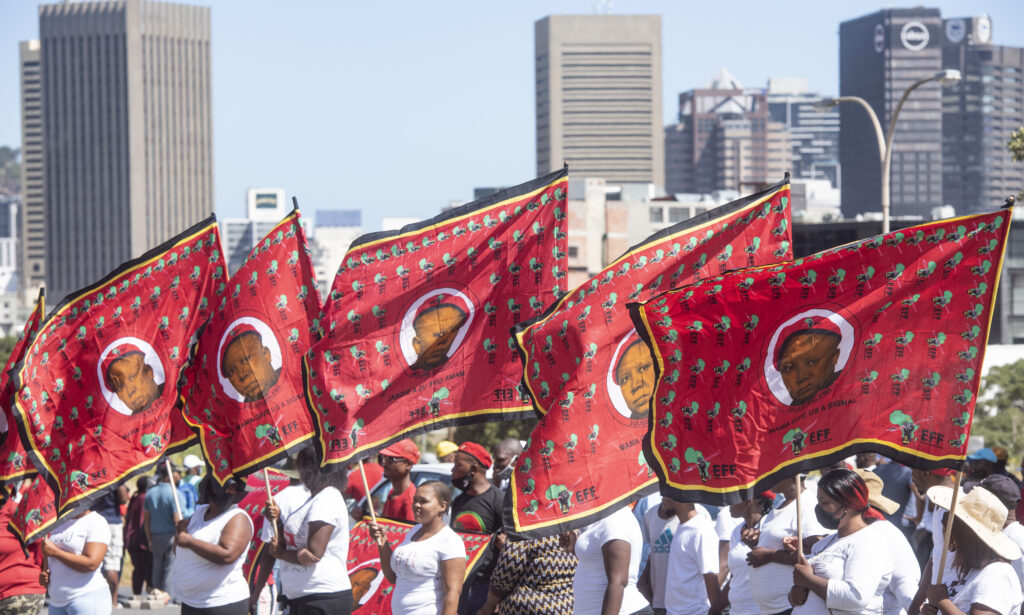
The EFF’s principles are unshakeable
Unlike the ANC, the core values of the freedom fighters do not change with each leader it elects