The theme for this year’s Heritage Month leaves me somewhat cold — even after carefully considering the major statements of the ministry of arts and culture in this regard. “Liberation heritage in honour of heroes and heroines of the liberation struggle”, that is the theme. Not that there is anything wrong with the idea of “liberation (as) heritage”. Nor do I totally begrudge those who continue to employ the nice-sounding and increasingly glib notions of “liberation heroes”, “liberation heroines” and “liberation struggle icons”. Am I the only one who feels the word “liberation” is getting more and more mention and less and less practice — as if repeated mention of the word will substitute for the lack of experience of lived liberation by the vast majority of people in this country?
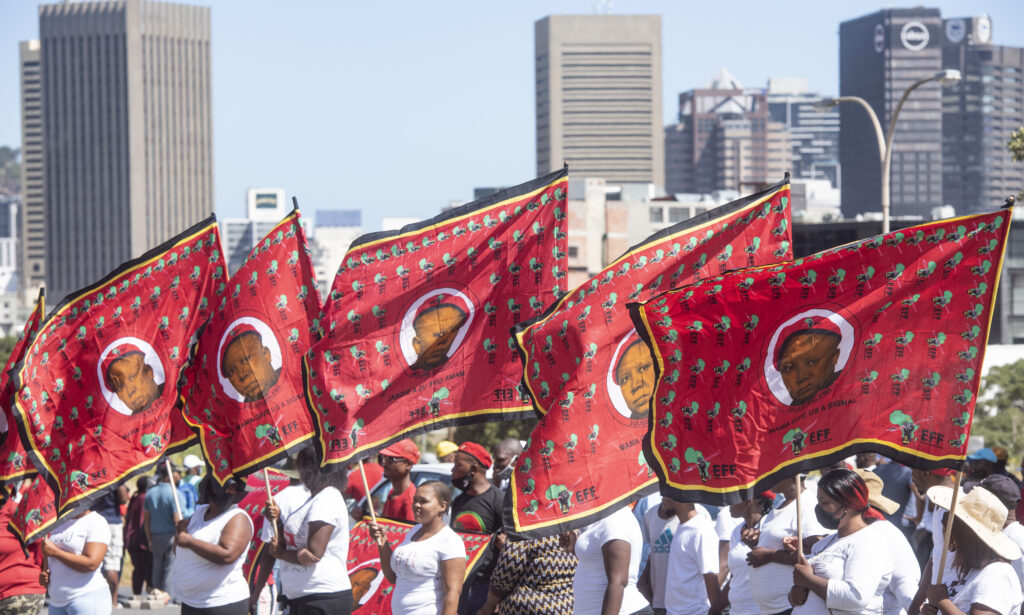
“We will remember the(se) heroes and heroines of our people by erecting monuments in their honour,” said Minister of Arts and Culture Paul Mashatile on September 14 2011 at a parliamentary debate on Heritage Month. But liberation should be conceived of as more than a “heritage” that is capture-able and display-able in monuments, museums, statues, set-aside graveyards and gigantic tombstones — however splendid the visual displays and however carefully thought out the artefacts. Some of these sites run the risk of banalising some rather complex events and persons. They attempt to capture what should not and cannot be captured in monuments — reducing dynamic movements, fully human persons and multifaceted events into monotonous fixed entities. Intending to give ongoing life to people and events, monuments often succeed in “killing” the memory of the very people and events.
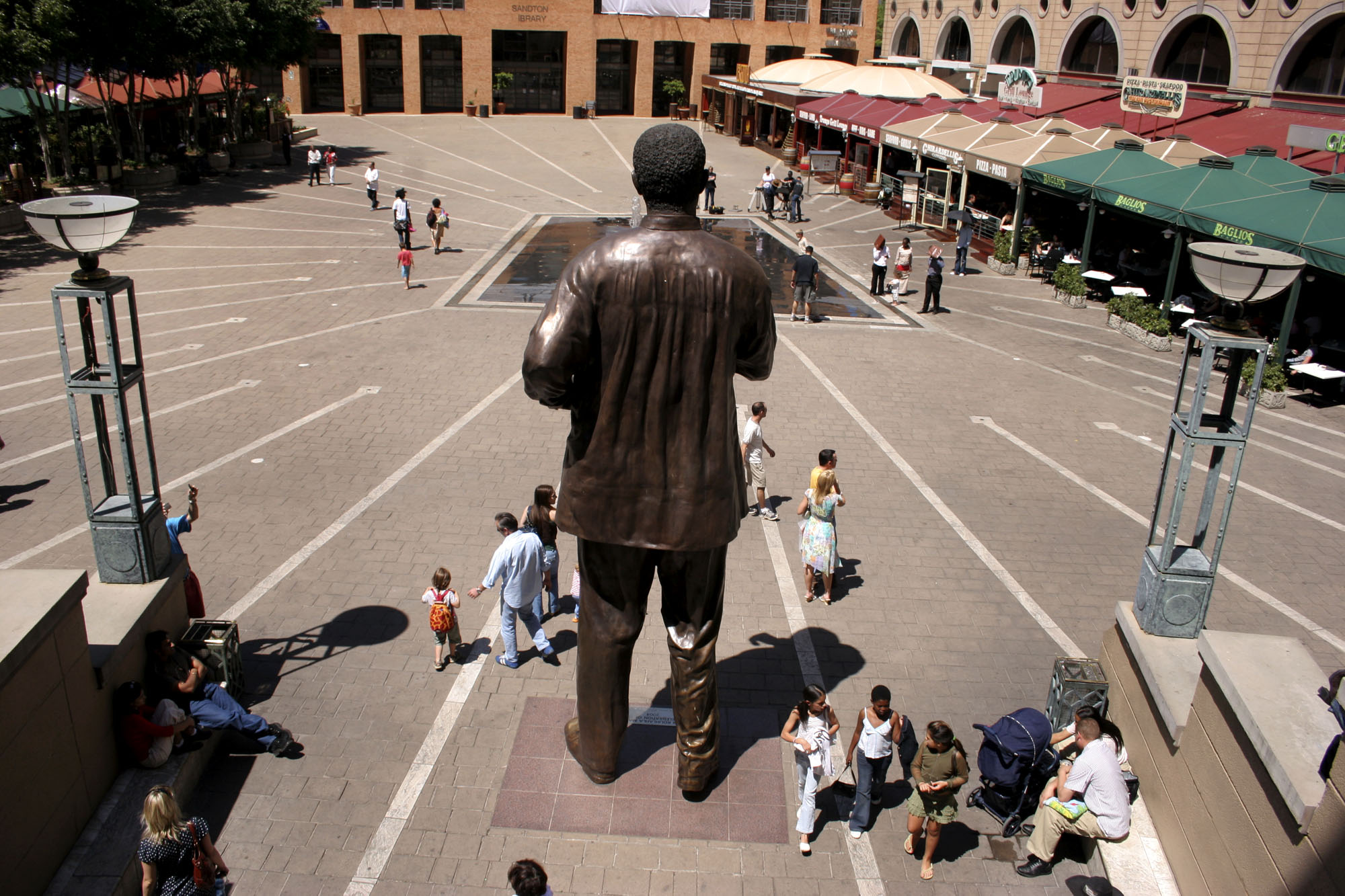
Citizens do not always “connect” with the monstrosities erected to commemorate and memorialise. Daily, they walk past these monuments, see them from the corner of their eyes, subliminally, but barely recognise them as either epoch-making or life-changing. Disconnection is neither the only nor the worst form of reaction towards some politically conjured-up heritage or memorial sites. These monstrosities can traumatise and terrorise. Every time I look at the giant and ugly statue of Nelson Mandela installed at the heart of Sandton’s medley of shopping malls, I cringe and look away with pain. Monuments can traumatise people by dealing trivially and superficially with dear stories, special people and phenomenal events. Trauma can also come when monuments attempt to “legislate” and “manage” how we should remember, which is inevitably what monuments are ultimately about. Terror can occur when we are forced — through monuments to remember stuff we would rather choose to remember through ways of forgetting. Are there events, stories and people who are not worth remembering? Maybe not. But I do think there are people and events not worth monumentalising.
Minister Paul Mashatile presents as part of the rationale for the monumentalisation project the objective of combating the antics of “those who seek to rewrite and distort our history”, those seeking to “wish away the existence of the liberation struggle”. This is ironic because his project runs precisely that risk. Almost by definition, a monumentalisation project seeks to present neat, singular and dominant interpretations of major events — including the power to decide which events are major and worth memorialising. People are instinctively offended by the very attempt to provide one dominating and timeless interpretation of a person, tradition or movement — even if they do not necessarily disagree with the dominant interpretation on display. Surely the meaning and significance of persons and events changes with more/new knowledge and with the passage of time.
The obsession with the role of individuals in the struggle for liberation — a global phenomenon — is part of the problem. This has led to the absurd situation where everybody simply lists as heroes only persons linked to their political party. In this situation, the most powerful party, the ruling party, will supply the greatest numbers of liberation heroes to be mentioned in speeches of national significance and those to be monumentalised in all the sacred sites of the nation. The deeper and related problem lies in the attempt to reduce liberation and struggle heroism to individuals — the cult of individual struggle heroes. What if whole villages and whole townships rather than individuals were the struggle heroes? What if political philosophies and traditions were the real struggle heroes? What if unknown, uncelebrated individuals — men and women — as well as loose groups of individuals, affiliated to no famous political parties, were also struggle heroes? What about those who used means other than the song-drenched protest march, the gun, prison and exile to wage the struggle for liberation? Why are we attempting to limit the notion of struggle only to the known, the obvious and the conventional? Why are we so tempted to reduce the history of struggle to a “beauty contest” of individual heroes and heroines nicely slotted into the narrowest of party political boxes?
One of the greatest liberation heritages of our country, for example, is the Black Consciousness (BC) philosophy. In a context where our grid of criteria for contribution to liberation is the political party and the famous prison-decorated-individual-cum-military-commander, we may miss just how phenomenal Black Consciousness has been for this country. In a context where we are looking for blood-soaked mass events of the “skop-skiet-en-donder” type, as the only milestones in the road to liberation, the more enduring intellectual, psychological and political role of BC can be missed. We all know that the man deserves more recognition than has been given since the advent of democracy, but by BC I mean more than Steve Biko. Nor am I speaking of Azapo or the Black Consciousness Movement — mere political parties which tried to capture (that horrible word again!) the spirit of Black Consciousness.
I am talking about an intellectual tradition that made the pursuit of knowledge a hallmark of the struggle for liberation. Here is a movement that managed to mobilise the arts and sciences for liberation. It helped us reconnect to the Pan-Africanism of Marcus Garvey, Edward Blyden, WEB Du Bois, Kwame Nkrumah and Robert Sobukwe. BC helped us rescale the heights of the intellectual traditions of the Drum magazine generation of black writers and the works of Frantz Fanon in the early 60s. BC taught us that liberation is something to be attained on the inside as much as it must be taken on the outside. In this regard, BC was perhaps the deepest, most creative, and most revolutionary response to the Freedom Charter dictum “South Africa belongs to all who live in it”.
BC is and was not an airy-fairy intellectual philosophy. Nor was it about military bravado. It was a total philosophy rooted in the belief that the oppressed need to help themselves if they and the oppressor are ever to be free. It is and has always been about economic freedom — broadly and comprehensively defined. But this was not economic freedom based on tenderpreneurship. It was economic freedom based on the enlivening and tapping of local knowledge in dynamic dialogue with knowledge from elsewhere. The idea was never about making “the leaders” the richest and loudest men and women in their lifetime — a warped and wicked inversion of the noble phrase “leading by example”.
Look around you; you will see the (brain) children of BC in virtually all the pockets of excellence you find today. Our best and most progressive traditions in journalism owe something to BC and Pan-Africanism. Some of our best literary traditions owe something to BC and Pan-Africanist philosophy. Look at our current judiciary, remove the BC influence and the Black Lawyer’s Association and tell me how many black judges remain. But I am falling into the trap of the cult of the individual struggle hero and heroine — I will not continue with this train of thought, tempting as it is. There are subjugated schools of thought in history, African and English literature, leadership theory, psychology, theology, sociology, public health and anthropology, to name but a few, which were born from the womb of BC philosophy. BC gave us the best chance of entering the global knowledge economy as self-confident equals with something to give and not merely take. It gives us our chance to integrate with science from inside and not to view science as something wholly external needing to invade our space, time and consciousness.
Many drank from the fountain of BC and Pan-Africanism freely and in broad daylight. Others — from here at home and abroad, black and white, male and female — borrowed, stole, adopted and adapted from it. Here is an intellectual tradition — made in South Africa — that has been exported to North America, South America, Europe and the rest of the African continent.
We only ignore and reduce the place of Black Consciousness as a national heritage at our own peril and at the peril of our black and white children.


I agree fully. BC is a deep and wise philosophy that has produced some of the greatest intellectuals, thinkers, humanists and philosophers. Also – BC is not exclusive. Although it focuses on the black experience, it deserves respect and attention from intellectuals of all races. It has deepened our collective wisdom – all of us.
I fully agree with TSM that there are many positives about BC which should be part of our everyday lives not just as empty symbols and ugly monuments. And I say this not just because I’m an angry black man which I do admit I am. I’m a little surprised at the “BC made in SA” line in the artlcle though. Didn’t negritude develop north of here a bit earlier? Senghor, Cesaire, Fanon, Langston Hughes etc. BC and negritude are virtually identical and I think the whole point was that we should acknowledge that our narrow national agendas are not unique. This is why I’m so disgusted at how easily right wing nationalists in SA today carry on about BC like they actually give a shit beyond a racial justification for their greed. Fanon and I suspect Biko both knew that black is beautiful and it’s also a cheap trick for neocolonial bullshitters. That’s what’s become of our national heritage. As for our kids, they can always buy the Biko t-shirt.
The problem with your piece is that it keeps falling on what you are trying to avoid. I was not surprised when you started talking and brandishing BC as THE philosophy par excellence.
You want to depoliticise politics so that you can defend BC outside the hotbed of politics. That is rather intellectual cawardice, dont you think?
Thanks for this thoughtful reflection on Heritage Month. I have done a lot of work, and thinking, on the question of public cultural heritage. I admire our new (1999) SA Heritage Resources Act.
What is notable is that the new act removes out of its discourse the idea of ‘national monuments’ and speaks, instead, of heritage resources and heritage sites, which as you are aware includes non-material heritage. This is where BC is – a whole worldview, not dogmatic or doctrinaire, but performative, inviting, engaging, calling for ways of being and becoming, which must ultimately be as numerous as there are people.
I remember all too well the old regime’s obsession with stone monuments.
The thing about heritage, as a concept, as a metaphor, is that it speaks to past, present and future. It is about us holding in trust the best from the past in order to pass it on to future generations. This means us interpreting what, for us, is best or most significant in our past, and anticipating perhaps too who the future people will be, and assuming that they’ll want and honour what we believe to be good and worthy of preserved legacies.
What does perturb me about monuments, as per both the old regime and the present one, is their understandable emphasis on persons from their own ranks. All very well, but when it comes to national heritage month and national-level heritage issues, I’d imagine that in this day and age we’d be beyond using state resources to honour…
Alrighty then. I give up. What is Black Consciousness? What is it’s cornerstone as a philosophy? How is it defined? We’ve read how it allegedly affects people, movements and thoughts, but we still do not have a solid description, not by you or anyone else for that matter.
The Scottish Enlightenment can be put into a short paragraph (without the need to name names, or tell everyone the effect it had on the world, which was immense by-the-way). The Renaissance (the proper one) can be described in one sentence. The Age of Reason is a simple concept that can be explained in but a minute. So pray tell, what is this elusive, inexplicable, indescribable BC?
We’re forever being lectured how we whites just don’t understand black people. And how things should be done the ‘African way’. And that Black Consciousness is this hugely, magnificent theory on life itself and should be embraced by one and all.
So with all this being said, why is it that I get the distinct feeling that there seems to be so much noise to this empty vessel? And why do I have this sneaky suspicion that this is all one big lie, to pander to white liberals in lieu of an ACTUAL, practical movement that the world could benefit from as well as TRULY respect?
With all of Africa’s bloodthirsty infighting, extreme poverty, disaster piled upon disaster (routinely bailed out by those former colonialists) and depressingly repetitive political upheavals, forgive me for being somewhat sceptical of this BC.
In deed Tinyiko is so right to lament our excessive romanticism, This is what I have also struggled against, more so as a person who has ‘defined’ himself as a Rastafarian for the past 7 years. I came into this somewhat extreme philosophy via the teachings of Marcus Gravey, the Music of Peter Tosh and others who cried out for the proper engagement with the Balck condition as my current people based movemnt SNI -Septemer National Imbizo calls it. This perculiarly lingering state of spiritual and material pioverty that a vast number of Black people are undergoing. What is porblematic with our movements is that we simply do not see our leaders as human beings, but as some kind of messiahs, this takes away our responsibility and we end up ‘celebrating’ their lives and even their martyrdom.’Its a vicious cycle that has to end before we can apply our minds and time to the Wisdom of building Africa from the bottom and from the Top down.
Not to even mention the Mugabe, Gaddafi, Zuma and other unnecessarily complicated leadership(s). The influence of the media and the reactionary nature of the masses causes these leaders to ride the wave of drunken powerfulness to the fullness without real accountability. We should help them become better leaders by stinging them to Do the work rather than simply assuming the position
.
As an Afrikaner I do not share the same cultural tradition and background as Tinyiko Maluleke.
However, I do find his articles well reasoned and thought provoking – and much that I can relate to.
I enjoy reading any article on BC. Like Lockstock I, too, am trying to figure out exactly what it is and what implication it is to have in my white life. I cannot apply something in my life I do not understand. I also find it “interesting” that 300 odd years of oppression could wipe out thousands of years of who you are to such an extent that a movement has to exist to remind people of who they are, or supposed to be. I would greatly appreciate an article on exactly what BC is. Oh yes, I also find the statue of Nelson Mandela surrounded by all the bling and the exorbitant prices that come with it, totally out of place. How about a National Park of statues? All of them from as far back as we can go, one following the other, telling the story. Almost like cave paintings that never got wiped out, and every generation adding their story so that hundreds of years down the line someone who never heard about our history can actually follow things from one event to the other. after all, how will someone in the future understand the liberation struggle if they only see their heroes’ faces, and not the faces of the ones that forced them to go through such a struggle? I’m not much into statues and things, but we should not replace, we should add on.
Eventually we must ask the question: what might have been if armed struggle had not been adopted when it was? Sure, the regime was brutal and had international backing, but the president of the ANC (Luthuli) had just won the Nobel Peace Prize, and the possibility of massive international anti-apartheid mobilisation was there.
Instead, the “rival” militarists entered a phase of symbiotic mutual career-building, much time was wasted, much of Southern Africa devastated, and we ended up with arms deals and mshini wami.
Can one of you clever people please answer the next question for me:
What is the difference between Black Consciousness and White Supremacy?
To me it seems to be just a different emphasize on differences in pigmentation, and comes down to the same old racist claptrap. Both the above-mentioned are as outdated as communism and apartheid, and both should be banned.
I do not believe that there will ever come a time when those who liberated themselves from any despot or tyranny will get tired of self congratulating themselves. To me this is not where the challenge is with South Africans. Our challenge is to ensure that in that self congratulation we do not end up distorting history and end up creating dictators who think they are the only ones who struggled and payed the price for our freedom.
It is our responsibility to ensure that heritage is for the benefit of all south africans.
Me thinks black consciousness is a political philosophy created by African intellectuals to mobilise the unsuspecting African masses. Even Zulu nationalism has achieved some of the things the professor mentioned.
I am still yet to find any ideals in the black consciousness philosophy that my parents never taught us, from self-respect to perseverance, to probity – mind you they had no school education. These three ideals I have mentioned transcend racism, tribalism, elitism, regionalism and religious divisions. Anything else plays second fiddle to these ideals. It is lack of self-respect amongst black people, especially the educated, to feel compelled to criticise other blacks like Malema. If black consciousness has profound ideas, those should be propagated and Malema’s ideas will die a natural death.
Your observation about the rising number of struggle heroes is correct. The longer in the past the struggle is, the more people will claim their involvement. After all, the struggle was not such a struggle anyway as the West controlled apartheid as a buffer against the Russian invasion into Africa. The need for apartheid disappeared with the fall of the Berlin wall and so did apartheid soon there after. The academic struggle heroes could safely return and be celebrated.
I agree with the observation that “black conscious” has not been uniquely defined in one catch phrase for all to understand and rally behind it.
Compare this with the term “low GI” in the food industry. Everybody wants it, very few know what it is or does to the body.
I think that the best projects would be the writing of books, before those who have the knowledge, answers and opinions die. Even if the next generation publishes, it should all be written, from heroes, to BC, to strugle heroism, by yourselves. But frankly, this is an ongoing project the Dept of Arts and Culture should drive. If it published six assorted books each year, the library of knowledge would grow and many more people would have good reading matter to draw on. Including all the 11 languages would also be sensible, then the books could be used as school setworks. I’ve heard so often that children simply don’t relate to the English colonial works; well Guys, only you can change the status quo! Anything from collections of articles, essays, opinions would also be useful; different genres, from fiction to non-fiction, academic to intellectual. It surprises me that so many writers do exist, but so few seem to do much more than concern themselves with modern political/social commentary in our newspapers.
Oh No! asks: “What is the difference between Black Consciousness and White Supremacy?” BC is about accepting one’s African[ness] i.e. blackness and refusing to plaster your face with bleaching creams to be ‘accepted’ by whites. BC is a conviction that all races are superior – that colour means very little in what one can achieve – politically, especially. It’s about speaking one’s OWN language unashamedly AND also speaking English in my OWN tone without trying to sound like a white BBC reporter. BC is accepting my school / college as ‘as good as any other’. It’s legitimate self identity, not self pity. Consciousness is deep, supremacy is superficical, self deception and over blown ego.
Is there ‘black supremacy’? Yes – I think so! When a [former] BC hall of famer [like Mugabe] becomes an oppressor [like Arpatheid] – then he’s practising black-on-black supremacy. The ‘black’ is even more dangerous because it disguises hatred for another [black] merely because he does not agree with one’s primitive political philosophy. BC is positive. WS is negative.
All great movements of social awareness and enlightenment have had their season and their champions, both acclaimed and unsung, and then they withered like grass after the summer and are vital no more. Sure they are remembered by the thoughtful and the informed, but life moves on and whilst there is rememberance and respect for the enormous energy, intellectual excellence, sacrifice and courage that swept the movement through its time and achieved its aims, their legacy is now instrumental and not the ends in themselves.
More humanity, grace and wisdom must be added, therefore needless energy invested in past heroes, monuments and unforgiveness will only serve to stunt further human enlightenment. It is not the ghosts and sacrifices of the past that address the challenges of the present and the future, it is new heroes with equal passion, vision and the skills needed for the the new challenges that will matter.
South Africa needs new great men and not monuments of the former great men (and I include ALL before the ANC) who built this great country, but sadly, renamed streets, towns, municipalities, monuments, unforgiveness, greed and corruption are the order of the day.
Well articulated Professor, but issue the challenge and call more boldly for what must happen to take our nation forward.
Me thinks the horse has already bolted. The process of Zanuification of South Africa started a long time ago. Zanuification is when the struggle, its narrative are stolen by the ruling party as the dominant intelligentsia from the people through hegemonic tendencies.
The party arrogates to itself the role of sole arbiter of what is good for the country as a whole. The party becomes the “people” in a case of party interest is people’s interest.
The party having stolen the narrative in a victor writes the history kind of way. It decides who is a hero, provincial or national (as the Zimbabwe ridiculuos farce shows). Names like Sobukwe, Mothopeng and I dare say Biko are not part of the main hero narrative as they were not cooked in the party. What the party cannot claim as its own it uses as as a weapon. June 16, Biko’s death etc
In the ruling party narrative the human tendency towards freedom (as Mandela more or less put it) is reduced to a conscientisation by an enlightened elite. Hence freedom becomes a project not of the society which comes up with all sorts of movements like the ANC, PAC, AZAPO, Inkatha etc, church organisations, trade unions etc but of the “educated or enlightened” elite who become “our liberators” and demand to be ertenally paid by power, obedience, deference etc.” In other words it becomes a “club” of liberators with particular membership criteria. Direct accomplishment or vicarious accomplishment, political god childrenship,…
@Sam you are spot on! To me what seems to be happening is that our broad liberation heritage is being narrowed down to the confines of a single political party and consequently hi-jacked to become the exclusive property of the ANC. This is a travesty of reality and a tragic loss to us all. The ANC in its current guise is turning our liberation heritage more and more into a race based thing, which it most definitely was not, thus unnecessarily fuelling divisions within our society, an mitigated tragedy.
@Sipho, the idea of the black conscious came from the US and this theory was developed by DuBois. In his book the “Soul of the Black Folk” he talks about this subject. The leaders in African borrowed this idea and used it for their movement.
@ Lockstock
Perhaps BC is a passionate plea for an awareness of self, a means of accelerating the emergence of the individual in traditional and deferential societies that were by their nature too easily made subservient to colonial rule – the evolution of a liberated people otherwise taking many centuries (through the Renaissance, Reformation and Enlightenment) as in Scotland and other countries of Europe.
It’s a bit long, but it is one sentence and it’s quite a short paragraph. Do you think there’s any merit in it?
Should be read as liberating ourselves through true struggle heroism? Ignoring all the recent claims to fame … we’ve forgotten many of our heroes. Jacky Makhatini, Abdullah Haroon …
@ fergie Black Consciouness mirrors many liberation movements, in which authentic self was revered over the imposed “civilised/christian” identity of European colonialist (with all the connotations of colonising land/culture/identity). It can be found in the liberation struggles of the subcontinent, judaism, arab nations, south america etc. It is not in fact black supremacy, but rather, black re-awakening. You cannot stand shoulder to shoulder with someone if you have no self-respect. White supremacy is about dominance OVER others. Today, its more often found in concepts like manifest destiny of western culture.
@Sam – At last a non-emotional, level-headed approach to a subject that I once had empathy with but lately am losing patience with.
We do need monuments to the BC movement, lots of them. At least one a year. I know I run the risk of being told “Shoo, whitey!” but please hear me out. The monuments I speak of will be accessible to all children, filled with high tech gadgets, doodads, computers so that any kid will be able to:
- do their homework in safety and with ample light
- have access to the net
- do research for projects
- play with the gadgets to see how they work
- get help building their own projects.
All for free.
There are many struggle heroes. Each neighbourhood needs one of these buildings. Each building could be named after a hero whose deeds best covered that area. If we start this year, and build one per province per year we could honour a few heroes per year and the kids will then never forget what the BC movement was actually all about, since they will always remember the name on the building where they got their first inspiration to become an astronomer, a scientist, an engineer. No money will be wasted on bad artists and chunks of misplaced granite. I am white but will not mind my tax being used in this way to honour the BC movement. The beauty of this idea is that it will help all children so no kid of any shade will ever forget the history of the people who made it all possible.
@Paul Whelan.
Perhaps.
As an observation, there appears to be a marked lack of teleological belief in this Black Consciousness theory of yours (if it is to be believed), but is merely a deliberate, pointed effort to elevate themselves to the level of westerners and their cultures. A step behind the objectives of the aforementioned periods of Enlightenment et al, who sought to become better, do better and live better. Better than what we/they were, or were doing.
There is a complete contradistinction of Black Consciousness with other Western philosophies, in that it doesn’t appear to actually want to progress, or be better, work harder, or reach any level of perfection. It wants to simply FEEL better. And they insist we understand and accept this.
What a cheek.
The cornerstone I alluded to seems to be nothing more than the belief that white people (or westerners), by virtue of the plain facts that they seek and attain improvement and a balanced, settled life, must have done this at the expense of black people. There is race-envy at play here. Nothing more or less.
Africans would gain some respect in this world if they actually faced their challenges head-on, worked through them (a painful process) and proved to us all that they’re capable of equality in practise, and not by INSISTING that we all recognise them as such. They’re not. And never will be until they accept their cultural failings, just like we in the West had to do.
Zuma believes in neither philosophies.
Nkandla Philosophy may be. And you still expect SA to have something mindful coming out of this administration of Zuma. *yawn*
Atleast we knew which philosophy Thabo Mbeki ascribed to. Pan Africanism.
“BC is about accepting one’s African[ness] i.e. blackness and refusing to plaster your face with bleaching creams to be ‘accepted’ by whites. BC is a conviction that all races are superior – that colour means very little in what one can achieve – politically, especially. It’s about speaking one’s OWN language unashamedly AND also speaking English in my OWN tone without trying to sound like a white BBC reporter. BC is accepting my school / college as ‘as good as any other’. It’s legitimate self identity, not self pity.” That, to me, is wonderful. BC is a heroic and proud concept. And one which people of ALL RACES can embrace and support. Viva BC!
Agree 110% BC in its widest sense was the most important factor in SA liberation. Why we dont accept this is because the Eurocentric Marxist dominant force in the ANC rejected it.
Monuments to honour the struggle heros are important but why not in the form of schools/colleges or housing estates? As an example Vanderbijlpark in named after the 1st leader of Iscor and his name lives on forever. Better than sterile statues. There are plans to build a huge monument where Mandela was captured near Howick. The current little one is fading with neglect so why not instead an innovative cultural/learning/uplifitng establishment that will last for centuries instead of an empty/souless/lifeless monument where only tourist busses will stop for 30 minutes.
Students in 1976 started the liberation of SA so lets focus on learing institutions in place of everything else.
Brent