Fair trade is unfair

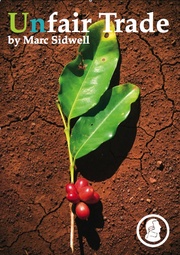
Unfair Trade (click for report)“What developing countries need is to develop, not to have their present conditions of life and work preserved like a museum exhibit,” writes Janet Daley in a column prompted by a report that finds “fair trade” to be fundamentally unfair. Thanks to Alex Matthews, over at the excellent classical liberal blog AfroDissident, for alerting me to his own post on the subject. (Granted, he did so two weeks ago, but I have been very patchily connected, thanks to the electronic-frying power of blackouts.)

As you glide along the supermarket aisle past the smartly packaged Fairtrade coffee and guiltily slip the cheaper arabica into your trolley instead, you may ask yourself how much good your overpriced purchase of the Fairtrade stuff would have done anyway.

Well, now you know. Today’s report from the Adam Smith Institute (summary here, or full report in PDF here) will probably confirm your suspicion: Fairtrade labelling is largely a marketing ploy that makes clever use of the almost infinite capacity for guilt harboured by the residents of wealthy countries over the condition of those in poorer ones, even though that condition is, in no rational sense, their fault.

But rational thinking does not come into this: you and your heaped shopping trolley represent wealth and security, which you have a vague but pretty firm notion that the people who harvest the coffee beans do not have. So maybe you are persuaded to make a gesture: a small strike against “exploitation” and global greed and (if you are old enough to remember this epithet) “corporate capitalism”. And you feel better about yourself.

It transpires that a very small number of farmers are getting a subsidised fixed price for their produce under Fairtrade franchises, and that this is at the expense of most other farmers in their regions, who are actually worse off as a result.

But even more serious, the Fairtrade operation helps keep poor countries and undeveloped economies exactly that — poor and undeveloped.

By sustaining agricultural activity that would not otherwise be sustainable in the global marketplace, it keeps backward populations from developing other forms of modern economic activity that might help them climb out of their backwardness. In order to permit wealthy people to indulge in a bit of sentimental largesse, it effectively preserves an anachronism that locks some of the poorest people in the world in backwaters of primitive economic existence.

What developing countries need is to develop, not to have their present conditions of life and work preserved like a museum exhibit. And the greatest aid to real development — and the proven route out of mass poverty — is through free trade, not Fairtrade.

All of which should cause us to reflect on the various misuses of the word “fair”, and its even more pernicious noun form “fairness”, as it is bandied about in political discourse. As received opinion has it, “fair” means “equal” — in the strict literal sense of the word. Distribution of wealth in a society is “fair” if nobody has much more than anybody else — however much harder they may have worked, or however singular and disciplined their talents may be.

The corollary of this is that taxation helps to ensure “fairness” by seeing to it that those who earn more than others have more of their income confiscated. On this formulation, disparities of wealth are inherently wicked. This is a moral philosophy that you may or may not find attractive. But if you do, you will have to accept that it is fundamentally totalitarian. Disparities of wealth are a sign of a dynamic free-market economy in which some sectors are invariably expanding while others contract: at any given moment, some people’s lot will be improving ahead of others’.

[...]

It is ironic that the very same people who are committed to the idea that “fair” must mean “the same” talk endlessly about “opportunity”. Nothing is a greater killer of opportunities than uniformity.

[...]

How have we come to accept such vindictive uses of the word “fair”?

Of course it was initially the fault of the left and its special pleading lobbies, which — like some Fairtrade promoters — had a lot to gain. But the right has been complicit: it has surrendered words like “fairness” and “opportunity” — and accepted caricatures of other words such as “selfish” and “greedy” — with scarcely a murmur of dissent.

Romantic notions of the noble savage, of the beauty of the supposedly traditional pursuits of poor people, are very common. Many developing countries actively play into this misguided view that Westerners have of them. I cannot count how often I’ve seen beadcraft workshops in South Africa, as if this is the route out of poverty, or wire sculptures in museums, as if simple crafts are thereby ennobled. The only effect of indulging this romantic, condescending image of Africa is to create an industry that produces singularly uniform curios that delight clueless rich people. Absurdly tall wooden giraffes may be a wonderful way to part a fat prat from his dollars, but it is hardly the best route out of poverty.

Do read the full report (PDF); it’s worth it.

In fairness, here’s the rebuttal by the Fairtrade Foundation. It may not surprise you that it finds the report to be utter rubbish, motivated by evil agendas.

It says: “Releasing this report when thousands of people are trying to make a difference to global poverty by promoting Fairtrade products is an insult to the effort and commitment of Fairtrade producers and their supporters in the UK.” Ag shame. Good intentions are so, well, good.

“Moreover, the opinions in this report will be rebutted by the producers themselves during Fairtrade Fortnight …” Well sure, but those producers are of “the very small number” cited in the Adam Smith Institute report. Besides, they comment on only a very limited fact: that they get paid more for their coffee. Of course they’re going to say that’s a good thing. They’re hardly likely to consider their personal windfall in the context of the macro-economic impact on development.

“Those of us who have had the privilege of seeing and hearing at first hand the difference that Fairtrade makes to poor communities are not going to be persuaded otherwise by the rehashing of simplistic economic theories.” Indeed. Economic theory has seldom stood in the way of socialist, statist, collectivist or protectionist preachers. Especially not when there’s money to be made from gullible saps.

23 Responses to “Fair trade is unfair”

  1. Anne #

    look to the tourism industry as well; maybe a survey should be done on how much progress is made when acres of land are set aside for luxury developments to attract wealthy nations’ money; residents are doomed to be little more than constant servants in those resorts and communities are encouraged to consistently be “traditional” exhibits that the visitors gawk at.

    the marketing messages on those body shop free trade products alos kills me. pay exhorbitant amounts for this traditional african moisturiser and you keep hundreds of african women from poverty – “subtext” as you doom them an their daughters to forever producing raw materials, that fetch so much less than processed ones on the international markets. i’ve yet to see the young cosmetic chemists coming out of those shea-butter but producing villages.

    the whole ‘we’re helping to preserve traditional lifestyles” argument is so patronising. people living in conditions westerners would sue someone over want better than a “traditional” life that includes spending hours walking to fetch water and watching women being pushed ever further down the human hierarchy.

    March 10, 2008 at 5:38 pm
  2. I generally agree with you on this one. I wrote a blog on things that are wrong with Fairtrade – and got some flack because of it. Fairtrade as the perfect name. And I like them – and I consume their products. But I have a few issues with them. They are not as perfect as their name implies. For instance, they do not work with the poorest of the poor, but only those organized in cooperatives. And farmers do not get the Fairtrade price, only a part of it and the rest goes to the cooperative. Don’t forget, farmers pay Fairtrade to be certified. More on my blog. But the quicker they come clean, the quicker we can address their reason for existence – making the world a better place. More on My Beef with Fairtrade at http://angryafrican.wordpress.com/2008/02/21/my-beef-with-fairtrade/

    March 10, 2008 at 5:39 pm
  3. Jon #

    I bought Fairtrade pure instant coffee once and it had a bitter taste, as if it had been adulterated with acorns or something. So it’s back to the better-tasting freeze-dried Nescafe again. It’s cheaper too, which is a bonus. Am I a bad person?

    March 11, 2008 at 5:05 am
  4. Great analysis, Angry African. Most enlightening.

    I’m not surprised that farmers are required to form co-operatives. That’s a favourite leftist way of organising production. Collectivism rules. But what I find really shocking is that farmers actually pay to be certified. If true, Fairtrade starts to sound more like a protectionist cartel — no, worse: a protection racket — in the Proudly South Africa vein.

    “Pay us and we’ll put our label on your products, mark it up sky-high, and give you a small kickback,” then comes to mean, “Pay us, or we’ll guilt-trip people into not buying your products, so you can be sure you won’t get your products to market in our rich countries.”

    Fascinating.

    March 11, 2008 at 8:29 am
  5. @Jon: You’re a bad person. You’re buying from someone who puts the effort in to produce good quality at a low price? How dare you, you selfish, greedy sod. Don’t you know that your purpose in life is to get as little benefit as possible in return for redistributing your wealth, because that’s the only way we’ll all get rich? You bad, bad person, you.

    March 11, 2008 at 10:00 am
  6. MFB #

    In general, the Adam Smith institute are a bunch of right-wing wackoes, ergo there is probably something wrong with their analysis. The principle behind “fair trade” is supposed to be promoting sustainable and sensible agriculture in the poorer parts of the world, as opposed to unsustainable and destructive agriculture.

    However, I’m sure there’s a catch in the Fairtrade organisation. There always is.

    March 11, 2008 at 10:04 am
  7. Derek #

    Unfortunately, the true facts about Fairtrade and the good it does among the vast number of producers proves your report emphatically wrong. Ofcourse with some proper research it would have been possible to report the facts genuinely and truthfully, but obviously this is not newsworthy – standing on the edge and being critical of every effor is.

    March 11, 2008 at 11:27 am
  8. @ MFB: That’s an eloquent dismissal. Yes, the Adam Smith Institute is a bunch of free market capitalists. Ergo, their analysis is probably right. Do I win that debate, or shall we toss for it? Name-calling isn’t an argument.

    I know what the principle of “fair trade” is supposed to do. The questions are (i) is it the right thing to do? and (ii) does it achieve its objectives?

    The point here is that you don’t promote “sustainable” agriculture by overpaying a subset of farmers, because no matter the idealistic intention, the realistic effect is to disadvantage the remainder, and to subsidise inefficient agriculture techniques.

    Efficient agriculture is by definition sustainable, since non-sustainability, given that the farmer owns the land and wishes it to be equally or more productive in future, is an inefficient application of capital. Therefore, promoting efficiency by buying agricultural products on the basis of quality and cost is a more effective way of promoting sustainability than certifying only selected cooperatives and encouraging buyers to pay them above market value. This kind of “fair trade” is, in fact, fundamentally unfair to those competitors who use their ingenuity, hard work and resources more efficiently. You’re punishing success, and rewarding failure. Which may not be the intention, but good intentions never fed anyone.

    March 11, 2008 at 11:58 am
  9. Lisa #

    The whole Fair Trade thing has left me feeling a little uncomfortable for a while.

    It is an attractive idea, especially to those who have some concept of the enormous issues that surround products such as coffee and chocolate. But it has to be examined further. I think a lot of people buy it with the best of intentions, but it shouldn’t end there. If you care enough to choose something called “fair”, you should also make the effort to see what other options there are and how the system works.

    March 11, 2008 at 3:03 pm
  10. I forgot to add that I do know the ins-and-outs of Fairtrade and can question some of their practices because I worked with them. I headed up the Oxfam International Coffee Campaign (out of the UK back then) asking for companies to buy more Fairtrade and I work with both Nestle and Starbucks to get them to buy more Fairtrade. It is part of the solution. But not even close to a solution to poverty amongst farmers. So my questioning of their value is based on having worked with them for many, many years. The problems highlighted are based on the real problems I experienced when trying to get more farmers certified by Fairtrade. http://angryafrican.wordpress.com/2008/02/21/my-beef-with-fairtrade/ Needless to say – neither Oxfam or Fairtrade liked my blog on this.

    March 11, 2008 at 7:11 pm
  11. @MFB: Count me in among the “right-wing wackoes”. Just as long as I get my caffeine fix. (EduScho, imported from Germany at around R60 per kilo in your local supermarket.)

    March 11, 2008 at 7:48 pm
  12. CG #

    There wouldn’t be a need for “fair trade” if the US and EU dropped their own domestic agricultural subsidies, probably the biggest barrier keeping African agriculture in the relative stone age.

    March 11, 2008 at 10:51 pm
  13. @ Derek: I’m afraid the “enormous” amount of good it does among the producers does not prove the report emphatically wrong, because the report does not deny this. It says that it is unfair to everyone else, it doesn’t benefit its beneficiaries as much as you’d think, and it has broader consequences that are negative.

    The report specifically says that it does some good among the Fairtrade producers, by paying them a higher price for their goods. But perhaps you can explain how this benefits those farmers who are not paying members of Fairtrade. Perhaps you can explain how this unearned bounty places pressure on Fairtrade producers to improve their efficiency. Perhaps you can explain why only 10% of the Fairtrade markup reaches the intended beneficiaries.

    Of course with some proper reading it would have been possible to consider the facts accurately and comprehensively, but obviously this is not debateworthy — standing on the edge and being defensive of every effort is.

    Please don’t tell me you draw a paycheque from them, but as a stout defender of Fairtrade, perhaps you can explain something, since the Adam Smith report is so emphatically wrong. If all it does is stand on the edge and being critical of every effort, as you claim it does, why does it commend similar certifications schemes, such as the Rainforest Alliance, and approve of alternative means of helping the poor, such as Café Britt or kiva.org? Your caricature “right-wing wacko” (to borrow a phrase from MFB) would not prefer those soft-headed pinko-liberal emo-hippie alternatives, now would they? Or didn’t you read that far?

    March 12, 2008 at 8:46 am
  14. @CG: I agree Japan, Europe and the US should drop their farm subsidies. But that won’t solve the entire problem. Average trade barriers in the developing world are ten times higher than the rich-world’s barriers. Yes, they should drop their trade barriers, but the rest of us would benefit by not waiting and whining, or seeing trade barriers as a negotiating chip, but by dropping our own trade barriers unilaterally. We’d earn much of the benefit from trade with other developing countries alone, would benefit from trade with developed countries despite their farm subsidies, and it would put us on the moral high ground, to boot.

    March 12, 2008 at 10:13 am
  15. Witriool #

    Ivo, I’m intrigued .You claim “…the proven route out of mass poverty — is through free trade…”
    What proof are you referring to? What do you call free trade? The kind the IMF imposes?
    That Fair Trade is unfair was identified by some of those “soft-headed pinko-liberal emo-hippie” types along time before those fine chaps at Adam Smith got round to it. But then they also weren’t hoodwinked into believing that organisations like Oxfam etc are little more than fronts for the honest and fair neolib imperialists.
    Please tell us what free and fair trade looks like to you, and how it brings an end to mass poverty?

    March 13, 2008 at 1:24 pm
  16. I’m no fan of organisations like the IMF and World Bank, no. They’re hardly as evil as they’re often made out to be, they do a lot of good work, and their efforts to make financial aid conditional on free markets or corruption-busting are both justifiable and admirable. But they remain big-government organisations riddled with corruption. They’re hardly the free trade organisations they’re made out to be.

    No, with free trade I simply mean the removal of any and all restrictions on trade, unilaterally if necessary. In the broader sense, it refers to economic freedom, which covers a range of things from low taxes to institutional rule of law, from small goverment to reducing regulatory burdens, from lowering subsidies and trade tariffs to rooting out government corruption. There is plenty data that shows that countries which improve on such measures of economic freedom also tend to prosper. As economies become more free, so average real incomes rise and poverty declines.

    I have blogged about this, with links, here and here.

    March 14, 2008 at 10:47 am
  17. Michael Graaf #

    For goodness sake, how can paying a subsidy to some producers be “at the expense” of their neighbours? and as for “requiring” participants to form collectives, and to pay for accreditation, these are voluntary undertakings, not Stalinist diktats!
    The Adam Smith types are implying that for the sake of the world economy, people should be left to abandon their rural economies and head for urban slums. In their rightwing worldview, their is only one version of development.

    March 15, 2008 at 12:06 pm
  18. I would like to briefly respond to the resent article on the Fair trade label.

    I run a non-profit art and craft trust. I provide full time employment for eight people and home based employment for 25 people. We produce high end beadwork, and to tell the truth are so under resourced, that we have not had time to even consider applying for a fair trade label. I do want to remind people that when they scoff at the notion of art and craft helping people out of poverty, that it does, and that it is happening.While people are sipping on their capuccino’s and debating the finer things in life, there are many people like myself working on the ground with groups of people, and helping people to feel better about themselves, their lives and ultimately to put food on the table. There are many working models like ours, that while people pontify, are helping people to become skilled and have a piece of the pie. No, we are not saving the world, but never dismiss us and what we do, until you have taken the time to come and see what we do and the difference it makes daily in peoples lives. Never deny people their achievements and hope for the future, without informing yourself properly about them. If you can offer something better, I am all ears.

    March 16, 2008 at 7:37 pm
  19. @ Michael Graaf: Well, let’s see: Say two people, let’s call them Mr Smart and Mr Clever, produce the same product. Say Mr Smart goes to market with a lower price in order to compete with Mr Clever — maybe because he’s smart enough to produce at a lower cost, or accept a lower profit margin in return for higher sales volumes. If, then, Mr Clever’s product ends up being bought with subsidies by Fairtrade, because he bribed this cartel to prefer his products over those of Mr Smart, despite the fact that his costs are higher, or his margins less competitive, then Mr Smart — and his staff — is being hurt. Mr Clever is subsidised at the expense of Mr Smart. Is that fair?

    And no, Adam Smith types don’t advocate abandoning rural economies. They advocate letting supply and demand determine such things. Nor do they say there is only one version of development. Quite the contrary: they claim economics is decentralised, and development is the product of many market actors all acting according to their own interest and best judgement. There is no model to be imposed from the top down, as is so popular with the development-aid and fair-trade crowd. And unlike with top-down planning, Adam Smith’s economics have done more to get people out of slums than any other economic theory. Where do you think the middle class came from? How did it become so large? Socialist central planning? Development aid? Fairtrade? I don’t think so.

    March 17, 2008 at 8:24 am
  20. @Robin Opperman: I received a private e-mail along similar lines, taking umbrage at my snide dismissal of crafts. So maybe I should clarify:

    I wasn’t referring to individual cases of poverty, in which case anything (legal) that makes a buck is a good idea. That seemed like too trivial a truism to state.

    Instead, I was referring to the productive basis for a developing country’s economy as a whole.

    Crafts may be a great way to create new income out of relatively little for some people. In fact, I’m sure it is. But it is neither able to provide for an entire population, nor can it do much to create a broad basis for future economic and technological progress.

    NGOs that turn the ideas of poor communities into cookie cutters for the masses risk reducing the market value of those ideas. Instead of an entrepreneur carving three unique giraffes a month, an “empowered entrepreneur” has to carve 30 identical ones a month and compete against hundreds of other giraffe-carvers for a market in which prices are driven down for lack of differentiation and competitive advantage. That is, of course, how it should be: competition lowers prices. But that dynamic suggests that imposing such ideas as “the solution to poverty” on poor people is misleading and is in fact undermined by the very NGOs themselves. That’s far more patronising than sneering at a curio-driven economy as a universal means out of poverty.

    And once everyone is locked into these NGO-imposed ideas of what poor people should be doing to earn a living, such as making nice curios by hand, or quaintly “traditional” farming methods, what then? How will they compete with the rise of commercial farmers, for example? Or should poor black farmers not enjoy the success of becoming commercial operations that can produce cheaper food on a large-scale basis for the benefit of all consumers?

    I’m sure craft-based NGOs do good stuff for a few people, but just like Fairtrade, they seem to want to freeze Africa into this Western image of what Africa should look like: quaint, rural, charming. In the case of craft NGOs, they may benefit some people, but by cheapening the product they do so at the cost of those who were the real entrepreneurs. In the case of Fairtrade, they benefit a few selected people at the cost of hurting the majority of people who simply work hard at good, old productive ideas like farming or manufacturing. If that’s what they want to do, fine. But then advertise that. Don’t presume to call it “fair”.

    These programmes may help individuals, sometimes greatly. But neither is healthy, in my view. Neither is a long-term solution to poverty and the goal of Africa’s development.

    March 17, 2008 at 12:30 pm
  21. I’d like to bring another two thoughts on the how much do poor people in rural communities benefit – or rather how much do others in the value chain benefit.

    1) It seems that the big retail values (almost US$ Billion in 2008) distract us from what part of this is the farmer’s. At a time the GEO Bar was a big Fairtrade item but the farmers only provided the rasins, honey and cocoa – the rest including other ingredients, packaging and processing was for UK industry. In fact in an evaluation Traidcraft reported that in 2006 21.4% of their turnover was spent in the “developing world”, at least this was up from 17.4% in 2002.

    2) The next question is who in the developing world? Besides the concerns about which countries I was surprised to see the FAIRTRADE exporters list from the South African site (click Producers & Traders on http://www.fairtrade.org.za/). None of the 30 certified traders appear to be what I thought the beneficiaries of FAIRTRADE were. The list contains big, previously white owned companies, like Westfalia, Halls and Bergendal with all contacts being English or Afrikaans surnames.

    March 17, 2008 at 11:11 pm
  22. Michael Graaf #

    @Ivo: your attempted rebuttal of my point above relies on an abstract model in which Mr Smart & Mr Clever differ only in “efficiency”. In the real world, as the thinktank types implicitly acknowledge, small rural producers’ main threat comes from agribusiness, which besides being more “efficient”, are able to marshall armed force to displace traditional land use. That’s how all the people ended up in slums, before a lucky few of them were helped out by market opportunities.

    To put it another way, why not see fairtrade as an enterprise like any other in the free market, offering a product for which there is a demand, namely reassurance that your consumption has not increased global injustice?

    November 29, 2008 at 1:18 pm

Trackbacks/Pingbacks

  1. Fair trade is unfair « the spike - March 11, 2008

    [...] Update:A fellow calling himself Angry African posted this link to his own post about Fairtrade as a comment to this piece over at the Mail & Guardian Online’s blog site. [...]

Leave a Reply

 characters available