Since it began centuries ago, the South African struggle has been premised on creating a just and equal society that would, ultimately, be a home for all, irrespective of race, class, position or background.
If African warriors who served under African kings like Ngqika of the Xhosa, Shaka of the Zulus and Moshoeshoe of Basotho among others were to arise from their resting places and brought to the ‘new South Africa’, they would be amazed at what they would witness and experience.
They would be plunged into a nation-in-the-making that comprises not only of descendants from ethnic groups but people from Europe, Asia, America and, significantly, other diverse nationalities in the African continent. They would have to learn not only their mother tongues but English and one or more indigenous African languages depending where they are.
Over the last three centuries, South Africa has become unrecognisably different from what our ancestors left behind. Before 1652, Africans were born into small families, clans and tribes where they would live and grow up among people who did things the same way producing the same monotony and predictability without any significant influence from outsiders. The question of identity, culture and language, for instance, was clear cut as everything was not only made within that clan or tribe but passed from one generation to the next.
There was no complexity in determining ownership and control of the land and its wealth. But this is the experience, heritage and history that shaped our past. This is the background and world that many of us come from.
Now, if you walk down in Johannesburg, Cape Town, Durban, Mbombela or Polokwane on any day, you will encounter people who come from all over the world: Europe, Asia, China, America and, above all, the entire African continent. Between 1652 and the present, many of our forebears have not only fought to occupy space but sacrificed their lives to create a just and equal society that would be a home for all.
It was through a bloody struggle that was finally settled via negotiations that people of this beautiful land now understand that the villages, town and cities of South Africa belong to all people who live in it, united in our diversity.
One of the first Africans to attend university abroad, Pixley ka Isaka Seme returned with a European education to not only espouse a gospel of a new Africa founded on equality, justice and brotherhood but founded the first liberation movement in the continent, the African National Congress. Ironically, it was the last to attain freedom and the right to self-determination.
As early as 1943 – two years before the United Nations Universal Declaration of Human Rights – Seme and comrades released a premier document known as the African Claims Charter that articulated their aspirations for a new Africa that would be a home for all in a non-racial and democratic society.
Previously, they had tried to engage colonial powers in negotiations to make them see sense of making South Africa a home for all. It turned out that they were too ahead of their time and myopic colonial leaders could not appreciate what they were offering the whole world.
The new South Africa that we are grappling to establish in the second decade of the 21st century could have been attained in the 1940s if power-drunk Europeans powers possessed the intelligence and insight of our African ancestors. But in a world where power is defined by guns and tanks, it is easy to mistake might for right.
To keep this dream alive, Professor Zakes Matthews at Fort Hare proposed the idea of the Congress of the People which culminated in the signing of the Freedom Charter in Kliptown in 1955 which built on what had happened before.
In the mid-1960s, following the banning of the liberation movements of the ANC and Pan Africanist Congress, a young Steve Bantu Biko founded a philosophical movement that espoused black consciousness to not only reignite self-pride among black people but to “give the world a human face”.
In 1983 we saw Allan Boesak help launch the United Democratic Front – among many other local and international initiatives – that again spoke of the urgent for a South African society that would, ultimately, be a home for everyone.
It was only when Nelson Mandela was inaugurated as the first president of a democratically elected government in 1994 that we were brought closer to the realisation of this magnificent dream that Archbishop Desmond Tutu called a “rainbow nation”.
Significantly, the turning point was the adoption of our world-renowned Constitution in 1996 that not only encapsulates the ideals, principles and values that are the foundation of our society but should shape and influence our conduct, behavior and attitude towards ourselves and fellow men.
It is through the preamble to the Constitution that “we the people of South Africa declare that … South Africa belongs to all, united in our diversity”.
To keep the current government in line with this prophetic vision, the minister of arts and culture Paul Mashatile has been mandated with outcome 12(b) to build “an empowered, fair and inclusive citizenry” that not only connects this government with what has gone before but brings to the fore the urgency of one nation of many cultures united in its diversity.
Even before the arrival of the white man, Africans have been at the forefront to build these larger societies based on the concept of ubuntu that would transcend tribe, race, culture and language in the continuous effort to “give the world a human face”.
A few weeks ago President Jacob Zuma announced the hosting of the forthcoming social cohesion summit to take place on July 4-5 in Kliptown. It is only in the past couple of days that every South African who is intuitively connected to what the original African warriors were fighting has been aroused.
Unfortunately, South Africa is a society that comes from a conflicted past, except in the last 18 years where sane and visionary citizens continue to translate the ideals in the Constitution into a practical programme of action.
Unfortunately, there will always be blacks and whites. But the time has come for us to be nothing else but what former ANC president Oliver Tambo called “caring and proud South Africans who are neither black nor white”.
Walking the talk will certainly begin, ironically, on July 4 which coincides with America’s day of independence. In fact, South Africans are doing much better than Americans when it comes to building a world with a human face.
Sandile Memela is the chief director for social cohesion in the department of arts and culture.
Author
A prince with dignity and determination
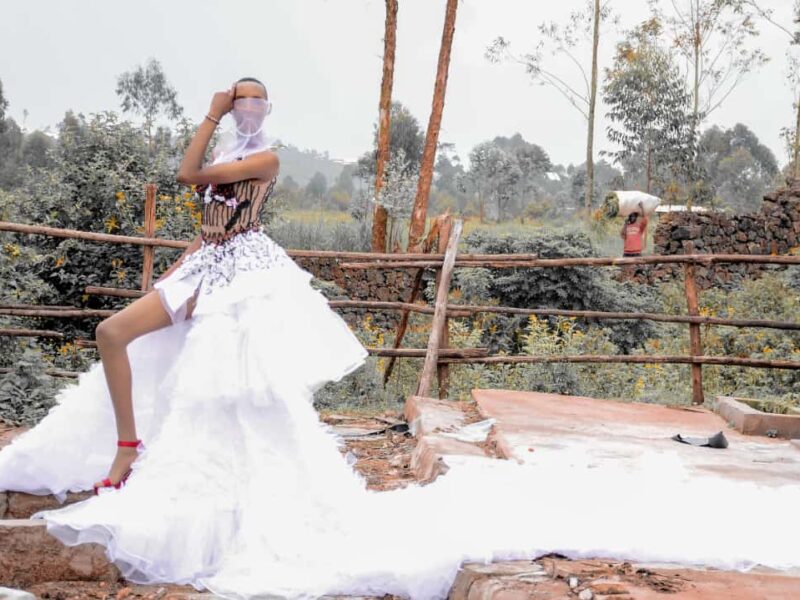
Prince Ngarambe’s goals are to become Rwanda’s first transgender model and to uplift the country’s youth

The EFF’s principles are unshakeable
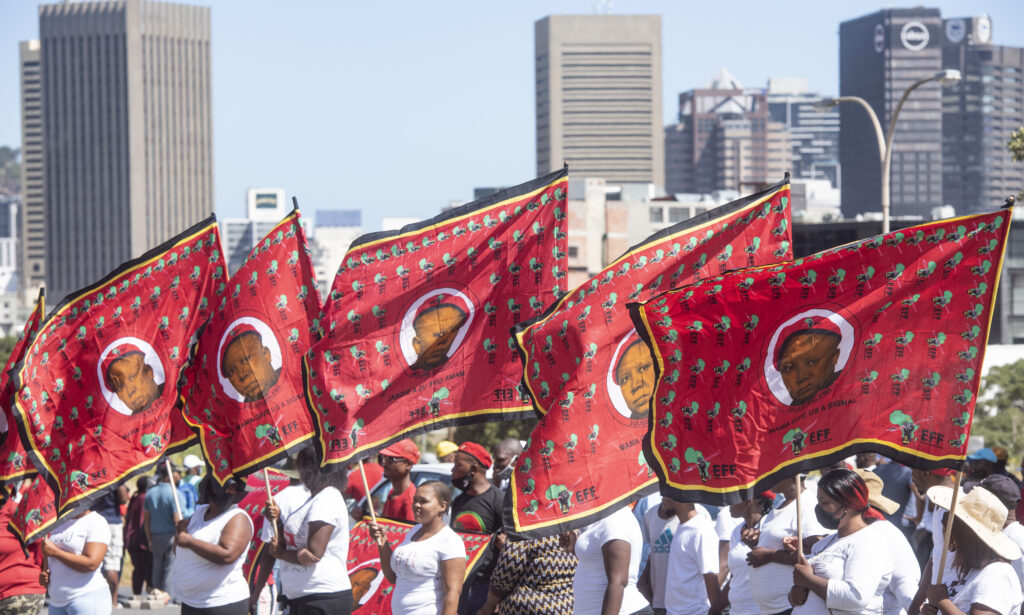
Unlike the ANC, the core values of the freedom fighters do not change with each leader it elects