I get off at the Lu Jia Zui subway stop to go to one of my favourite Western coffee shops, Blue Frog. I have a two-hour break before my next teaching class. At Lu Jia Zui is the pride of the Bund, the Pearl Tower. It comprises two huge purple spheres, one on top of the other, separated by a network of space-age, silvery columns. The sphere at the apex is smaller. The tower is a stylised spider’s web.
As I come out of the subway, brown-skinned Chinese, as they do every week, try and entice me into getting photographed with the Pearl Tower in the background. Some of them now recognise me and have given up. The white-skinned Chinese are the “better” class. Especially among the women, white skin is regarded as beautiful, brown as ugly and you will see hundreds of umbrellas bobbing above the sweet, long-haired lasses in the summer to ward off the sun.
After class I come here most Saturdays for my brunch and to read the papers. I look at them pleading with strollers to be photographed. There is defeat in some of their faces. On the ground squats other brown-skinned Chinese, trying to sell children’s toys. They are also here every week. I feel grateful for my work and the contribution I am making to children’s futures.
At Blue Frog a Chinese waitress, as is customary, opens the door for me and says “Guanyin huanying“, “Welcome to our place”. It is like stepping out of suburban China and into any coffee shop in Sandton except the waiters are slim, sexy Chinese girls who have surely never eaten the gigantic burgers and steak sandwiches served with a tottering pile of French fries and salad that are off-loaded onto the tables as if from the back of a pick-up truck.
Saying nimen hao to the waitering staff while they grin at me in delight, I make my way to my favourite seat, feeling that twinge of regret, almost of betrayal, for not choosing a more Chinese establishment.
But I have spent about four years in China and I really prefer a good cup of filter coffee. Brewing coffee is not a Chinese tradition.
“Please make sure his eggs are solid, not at all runny, otherwise he will send it back.” I wince as I listen to the man giving orders at the table next to me. “Oh yes, ab-so-lute-ly,” chimes his wife, “make sure the egg is com-plete-ly yellow”. They are an obviously wealthy American couple who are lecturing the waitress about their five-year-old son’s preferences for his eggs.
Within a block or two of the restaurant are children who live with their parents in a “space”, not even a room, at the back of their fruit shops or knick-knack stores where having an egg, runny or otherwise, is almost a luxury. “If it is runny he will send it back.” the father dryly emphasises with raised eyebrows as he looks up from The Wall Street Journal,, which costs a small fortune in Shanghai.
I look at the tiny, blonde emperor buttressed between his parents. Later the parents and the child carefully inspect the egg that arrives with toast and bacon. They primly nod with satisfaction. I can see the waitress’s relief. I have seen meals sent back here for the barest hint of a reason. There are seldom Chinese customers in here. Sipping my coffee, I furtively look around at my kind. Europeans. Hawkish faces. Restless eyes and fingers. Faces, even chubby bacon-fed faces, are made thin, sallow, by the fixed scowls of discontentment. They eye their meals and drinks almost sullenly as they arrive, the food and beverage together costing about one fifth of the waitress’s monthly take-home.
After four years in China there is now something ghoulish or horse-like about many Westerners – when I see them – which is still not that often. The boniness of the faces. Some leaner Westerners have long faces, with chins and cheekbones like door handles.
No wonder the Chinese stare.
The fitful mouths pouting redly and wetly: tea spouts serving venom. “Please take this food away. I don’t want it now. Everyone else’s arrived about fifteen minutes ago. Take it back.” “I don’t want it”. The British woman who spits this out does not look like she has ever been genuinely happy in her life; it is in the skein of wrinkles around and below her jittery, pale blue eyes. It’s in the downriver creases flowing floorwards from her mouth corners.
I cower over my coffee. I have also noticed this sort of conduct in the upmarket supermarkets like the one at the Portman-Ritz-Carlton on Beijing West road near where that chicken was being so slowly killed this morning.
In Shanghai some Western foods are a speciality and therefore very expensive. Chinese food is often dirt-cheap. I have seen small cellars of imported sea salt going for nearly a hundred RMB (more now in rand at this time of writing). Some tins of soup cost nearly R60 each, though there are a lot cheaper ones if you know where to look. Women and men, especially women somehow, drop produce like this into their trolleys and never seem to smile. As their eyes rove the shelves, their faces are closed off behind long noses and long chins. I think of glum-looking cartoon crescent moons. Their fingers grouchily rub their faces as they pick and choose.
My travels with the Chook (name for my wife Marion) have had some deeply meaningful hardships where, quite simply, we have learned to be grateful to have some money to shop for food, including “luxury” items like cheddar cheese, which was cheaper than Brie, but still a wallet-wincer at sometimes over forty RMB a block.
I learned a lot when I arrived back in China on my own from New Zealand, almost penniless other than RA’s stuck in Liberty Life in SA. I had to rely on the free school canteen food for a month while the Chook scraped together her airfare to join me. I remember the first time in Shanghai when we felt we had enough money to treat ourselves to a meal at an American diner, Malone’s. Chookie, as is her nature, started chatting to an American sitting next to us at the counter. His burger, potato wedges and salad arrived: a glorious pile.
Mouths watering, we asked how much it was. He looked at us, puzzled. “I don’t know”, he replied, and made a show of looking for the price on the huge menu, which probably had over a hundred items on it, then gave up. He didn’t care and looked at us oddly. There was an embarrassed silence.
Hunched over my coffee in the Blue Frog, I am going into a kind of reverse cultural shock. I do not want to look at the Western face in the mirror. I do not know if I belong in China and, right now, do not feel I belong in the West. I look at the menu, knowing I no longer need to worry too much about what the prices of the meals are. We have done bloody well financially for a good while now, often living on less than half our combined incomes.
But maybe I should start eating elsewhere, I think. I do start eating somewhere else, such as at a Chinese “Western-styled” restaurant called Baker’s on Dong Chang Lu that serves average coffee but great steaks. It is also cheaper. The waitering staff at Baker’s grin in delight, gaping at how much steak or lamb chops this typical Suid Afrikaner carnivore can put away. Nyama. Almost an anagram of yummy! At Baker’s or at the native Chinese restaurants I hardly see foreigners or, when they come, they seem a lot happier, more rooted.
I have recently watched two movies that have a similar theme. The Hollywood film Valley of Elah is the story of a group of soldiers who have finished a tour of Iraq and are now back in the States on leave. Whilst back in the USA one of the soldiers is hacked to death. Only bits of his body are found and DNA testing is needed to determine who he was. The police investigate and the father of the son, Hank Deerfield, a Vietnam War veteran, helps in the investigation. It turns out the victim’s fellow men, even wartime friends, had killed him, chopped him up finely and then went off to get take- away chicken because they were hungry. The final scene shows Hank hoisting the American flag upside down. Message: the country is in grave trouble, is going through a moral and patriotic crisis. The truism offered to us is that warfare, particularly the post-9/11 variety I suppose, obliterates morality in our combat-calloused youth.
Set in the Thatcherite 1980s during the Falklands conflict, the British film This is England is about a young boy, Shaun, surely no older than twelve, trying to come to terms with losing his father in the Falklands war. He turns to a gang of older boys and young men – mostly losers – for father figures and a sense of belonging. His main father figure, Combo, is an ex-convict and a thug. Combo is patriotic about England only for the English and loves to wave the English flag of England about. He also waves pangas in Pakistani faces and tells them to sod off back to Paki and so forth. Shaun happily imitates him. Shaun then witnesses Combo brutally attack and almost kill a young black man, Milky. This is in spite of Milky’s great kindness to Combo. Combo attacks Milky out of sheer rage and inadequacy: Milky has a happy family in England and, ironically, a sense of belonging. Combo does not, even in his own country. The assault traumatises the innocent Shaun. He loses all sense of identity and patriotism, goes down to a nearby beach and tosses the flag of England into the sea.
Having been an ex-pat for years I am starting to wonder if I will ever have a country to belong to, or if that matters. Which flag will I, with shattered expectations, fling into the sea or choose to hang high? None, I realise. China, Zhongguo, means middle country and Marion and I have decided we will eventually settle down either far north in the Czech Republic or Slovakia with our EU passports, or far south again in New Zealand with her family. Probably the latter.
Where will we put down roots, deep or shallow, know we are in a country that is home: a place where we can grow old gracefully and be buried or cremated with dignity? Who will mourn us? Does it matter? That is to say, does it matter … anymore?
Such astonishing questions.
Author
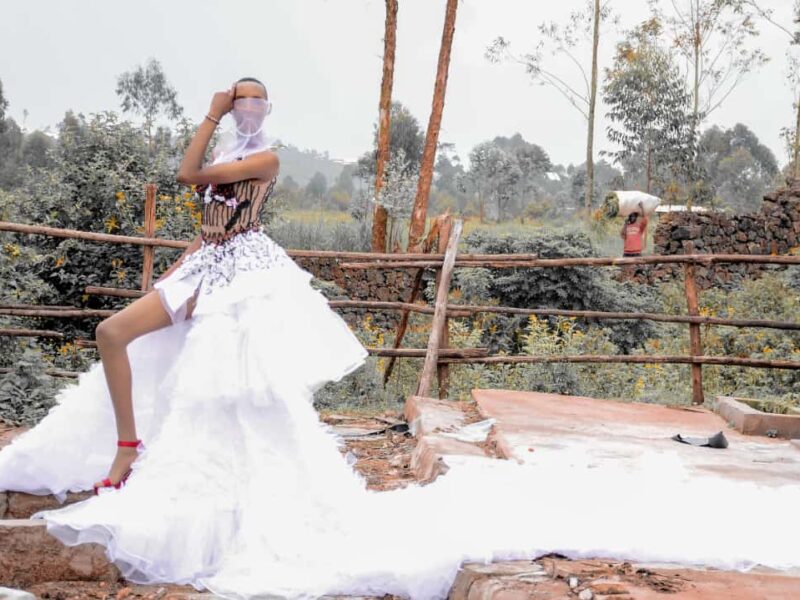
A prince with dignity and determination
Prince Ngarambe’s goals are to become Rwanda’s first transgender model and to uplift the country’s youth

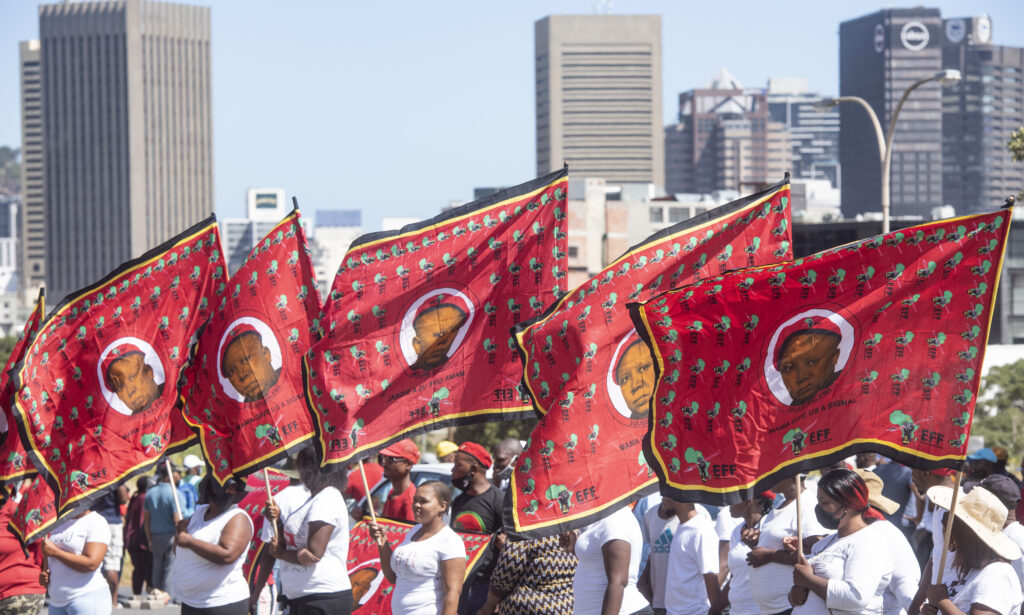
The EFF’s principles are unshakeable
Unlike the ANC, the core values of the freedom fighters do not change with each leader it elects