By Matthew de la Hey
The South African unemployment rate is currently 25.2%. This means that 4.5-million people who had sought employment within the four weeks preceding the reference week were unable to find a job. This figure rises to 38% if those who have given up hope and have stopped looking — the “discouraged workers” — are considered. The statistic is even more bleak when one considers that one is deemed to be “employed” if they had work for one hour during the reference week.
71% of this unemployed workforce is comprised of people between the ages of 15 and 34. 60% of these do not have a matric certificate. It is clear then that we are faced with a startling issue of youth unemployment. In addition to being an indictment of the South African economy this poses a serious problem: a massive body of unemployed youth with little hope or opportunity and very little to lose is a dangerous thing.
There are a great number of things that contribute to this state of affairs. The most pertinent, it could be argued, is that the vast majority of these people are not sufficiently skilled to be absorbed by the economy. The catastrophe that is our education system has not equipped them to assume employment. The dire situation of education desperately needs to be fixed if this number is not to continue growing. This body of unskilled, unemployed and disturbingly often termed “unemployable” youth, however, cannot go back to school. We cannot merely write them off as an abnormal loss and hope for better outcomes in the future.
Another factor that contributes to unemployment is the stringency of South African labour legislation. The World Economic Forum’s Global Competitiveness Report for 2011-2012 contains some startling numbers. Of the 142 countries detailed in the report South Africa ranks very nearly at the bottom of a number of key indicators: 138th for flexibility of wage determination, 139th for flexibility of hiring and firing practices, 130th for the correlation between pay and productivity and 138th for cooperation in labour-employer relations. Much of this is no doubt attributable to the stranglehold that the trade unions have on our economy. This does not bode well for a country that operates in a global economy and makes it very costly for a firm to take a chance on a young worker.
One has to look at the problem of unemployment in this context. There are extraordinary disincentives firstly for companies to set up shop in South Africa and also for employers to take on labour. They are even more significant when faced with a lack of skills or with the uncertainty about an applicant’s skills as a result of the wide dispersion of quality in our education system. If one employs somebody and they do not prove to be satisfactory the process of letting them go is incredibly arduous. Furthermore, wage legislation makes the rates payable to a first time job applicant with no skills and no experience expensive. Why then take a chance on a young person and give them the opportunity to prove themselves and in turn to gain some experience?
So how then do we address this colossal challenge? What can be done to offer jobs at competitive rates to millions more in South Africa? It is likely that a multifaceted approach is required. Partnerships between government and the private sector need to be forged that will tackle the issues faced. Private enterprise, as a key driver of job and wealth creation, needs to be supported: it is vital that government promotes the growth of SMEs and encourages entrepreneurship.
One policy intervention that has been put forward is the implementation of a youth wage subsidy. In 2008 treasury published the recommendations made by the Harvard Group of economists in their document “A Growth Diagnostic for South Africa”. One of their proposals was the implementation of such a subsidy:
” … we propose a wage subsidy allowance for all 18-year-olds that they can use throughout their life to facilitate the school to work transition and to assure that the educational skills of the new cohorts do not deteriorate through a long period of unemployment. We will propose that during the probation period in which the allowance is used, employers be free to dismiss workers without any justification. This will encourage more experimentation and a more efficient matching of workers to jobs.”
It is important to note that a youth wage subsidy would not affect the wages received by employees: government would in effect cover a portion of the costs of employing a first time job seeker for a set period. At face value this seems like an incredibly sensible proposition: employers are incentivised to employ young people and give them a shot. It will also enable them to gain skills and experience that will be valuable in their careers: this is significant when one considers that just under 60% of the unemployed have never worked before. Workers who have been employed will find it easier to find subsequent employment.
The proposal is not without potential problems however: there is a risk that employers will exploit the system, using it as a means to gain cheap labour for a period before disposing of those whose subsidy has run out and employing more young, subsidised workers (“labour churning”) and that the influx of cheaper, subsidised labour will displace those currently in employment who are unsubsidised. The case for labour churning is, however, not very strong: firms will in fact have an incentive to retain labour whose productivity has increased due to training and the learning curve effect instead of employing and training new, inexperienced labour. The same holds for those currently in employment.
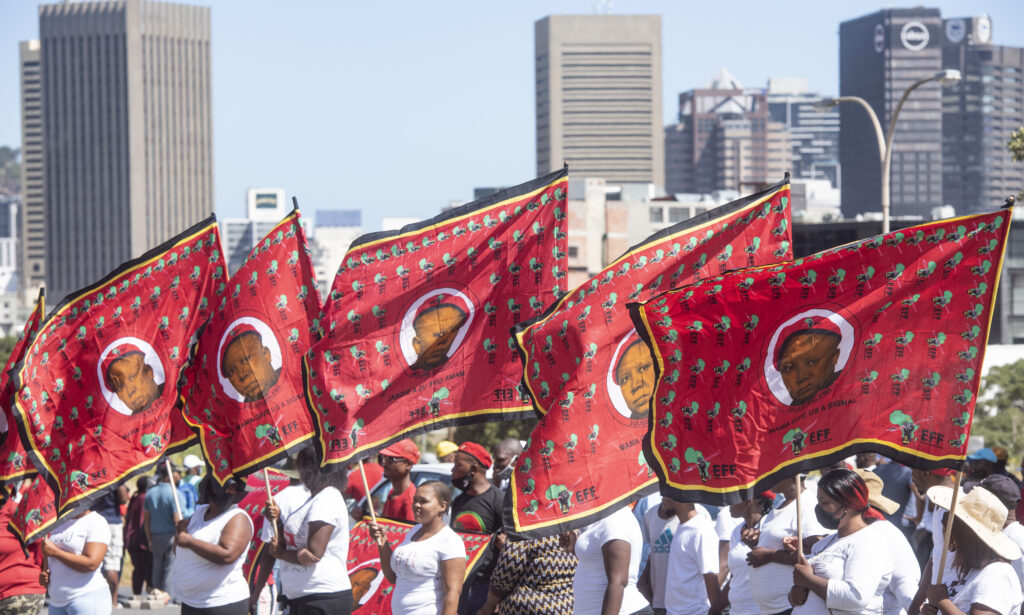
Government is behind the implementation of the subsidy and has approved it as policy: a pilot of the project was meant to start in April 2011. This was, however, stopped when Cosatu objected during discussions at the National Economic Development and Labour Council (Nedlac). This issue was recently thrust to the fore following the “reds vs blues” clash between the Democratic Alliance (in favour of the policy’s implementation) and Cosatu during the DA’s march on Cosatu House.
Why is Cosatu, a body supposed to be supporting workers interests, opposed to a policy that will help our massive unemployment problem? A policy that is expected to create 420 000 jobs and contribute to South Africa’s long term stability, growth and development? They argue that the potential negatives of the policy are too great and that it is “an attack on workers’ rights”. The real reason, I would argue, is that as an organisation it is mandated to protect the rights of its members. Thus a policy that would ultimately increase competition for its members is unacceptable.
Why then has the ANC not pushed ahead with the policy? Helen Zille said at a recent talk at Stellenbosch University that “Cosatu is the main roadblock in the road to job creation and redress for millions of South Africans.” She continued, saying, “It is now clear that President Jacob Zuma’s government is in office, but it is not in power. The truth is that Cosatu exercises a veto over government policy in education, labour and economic reform.”
The delay in implementation of the wage subsidy is estimated to have denied 301 788 young South Africans employment. The ANC needs to stand up and implement this policy, showing it truly is committed to “a better life for all”.
Matthew is an accounting honours student at Stellenbosch University with a keen interest in current affairs and political economy; an aspirant entrepreneur with the conviction to leverage the power of the private sector and business for good. He is a keen canoeist, fly-fisherman and hopeful author. Matthew is a 2012 scholar and interned at the World Bank in 2011 whilst on the South Africa Washington Internship Programme.


@Jac,Narrow, as per usual a lot of generalised ranting and no significant evidencial information. What is the question posed and what is the purpose of the Skills Act, Narrow? Also, you guys have a narrow insight on these things and as even you admit not even a helicopter view of the effect, so how can you possibly use a generalised experience as fact, This is so disingenuous! The capacity to load so much non-sense aka Liendie & Sterling & others, onto this site is sheer evidence of your own limitations. Ps and remember you did enjoy priviledged education!
Let us also not forget that the Setas lost millions of the people’s money entrusted to them by investing it with Arthur Browne and Fidentia, instead of in a proper bank.
@Liendie, which seta’s are you referring to and what has since transpired to date?
Sterling
Both the DR and Haiti were former slave colonies of Catholic colonisers. Both had dictatorships post colonialism.The reason that the one is a collapsed slum and the other a success is nothing to do with skin colour or with slavery but the result of BAD ECONOMIC POLICIES! Haiti cut up its commercial farms, allowed no foreign investment or ownership of land – the DR did the opposite, and imported piped gas to stop the people cutting down the forests.
Jared Diamond details what happened in his book “Collapse”. Google both countries and LOOK on Google Earth for yourself!
@Beddy, I see you and I are on the same page about Haiti however, you missed one thing about Haiti that retarded it’s development and that is corruption. The reason the farmers stop farming in Haiti were the followings: Papa Doc setup the TonTon Macoute (secret police) this dictator would go to western banks and borrowed money on these farmers crops at a fixed price for this commodities. For example, you are a farmer in SA and the government will borrow money on you maize crop for five cent a pound when the farmer got ready to sell their crop the market board that was run by the government would only give you five cent a pound even though the market price was thirty cent a pound. When the farmers saw how they were being robbed, many farmers would not sell their crop and the government would send out the Macoute to beat them up and take their crops. If any of the farmers would resit the Macoute would killed them and take their land. In many parts of Africa this was a common practice with the dictators and the people stop farming.
@Beddy, Haiti is a case study of what could happen to SA and Africa if nothing is done about corruption. There are sections of Port Au Prince where the Haitians lived in home like the people in Malibu, CA and the others lived in shacks. I was talking to a Canadian man whom I met at the air port in Haiti, he told me the story how the Canadian government donated million of dollars to build a road in Haiti and the road was never built. The money was stolen and put in banks overseas by Baby Doc and his cronies. These same scenes are being played out in Africa and this is why there can’t be a better life for all.
Sterling
i agree with you – except that the DR also had a corrupt dictator – just not as corrupt, and although his family controlled all business the economic policy was better. Plus he had 2 sisters very keen on conservation who influenced him.
Sterling
Do you know if American children have any compulsory history lessons at school at all?
Most school history is biased, jingostic, nationalistic and romantisised – but it is SOMETHING!
Most of these myths appear to have eminated from Black America. Do American children study ANY history?
Sterling
And what is this “Triangular Trade” the Americans keep going on about?
White American slavers sailed from America to Africa to buy slaves from the Arabs, and then sailed back again.
How is that a “Triangle”?
@Beddy, in the US there is no one educational system like they have in SA. The US have fifty states with their own educational system and each city/town have their own educational system. However, blacks in American history taught in most schools in the US with emphasis on the slavery.
You asked about the triangle trade, let me try to tell you in a simple way, a ship would leave England or any port in western Europe loaded with cheap goods worth about ten thousandth dollars, this ship would trade off these goods to the Africans for slaves, the slaves would be traded in the Caribbean for sugar and the US ports for cotton and tobacco, this ship would take these commodities back to Europe and sell them for millions. The triangle trade lasted over two hundred years and created a very wealth class of people in the US and Europe. The interested thing about the triangle trade is that it was profitable each step of the way.
There are those that are saying just like Africa traded off her human capital for nothing, she is trading off her natural resources the same way for nothing. Beddy,you can type in key words triangle trade and they would go into more detail. I hope you see why Africa can’t give a better life for all because of her dumb trade policies.
@Beddy, the triangle trade made western Europe rich and it led to jealous between the European countries. These countries used their wealth to build vast military machines to fight wars. The money wasn’t spent on the people in Europe and the people were encouraged to leave their countries.
Sterling
I see – Americans blamed THEIR white slavery on the Brits did they? What a joke, and how typical!
This was how European colonisation happened:
The Spanish and Portugese were the first sent out by Kings and Queens backed by the Papacy who authorised slavery or death fror any “cannibals”
The Protestant Queen, the “Virgin Queen”, Elizabeth ! build up her navy to protect her kingdom while playing off both French and Spanish as suitors – playing a double game. She started with a fleet of pirates to plunder the French and Spanish ships.
They were mainly after a route to the spices of the East – the land route having been blocked by the Muslim Empires of the Arabs and the Turks. Spices were very important in those pre-refrigeration days, both for preservation of food and for flavour.
The only nterest they originally had in Africa was the coast and the ports – as refreshment stops for the ships.
They found a new product – black slaves supplied by the Arabs at those ports, but slaves were a by product of the slave trade.
The Dutch entered the game much later – and as traders not as colonisers – servants of the Dutch East India Company, the first capitalist company in the world. The Dutch were not interested in colonisation but in trade – so banned all enslavement of locals.
The Cape Colony was established in 1652 as such a TRADING refreshment centre.
Sterling
The Brits took over the Dutch Cape Colony in the first decade of the 19th century – at the same time that they and all of the whites were banning the Arab slave trade – EXCEPT for the Americas.
THEN the Americas built slaver ships, built ONLY for slaves, and went to Africa ONLY for slaves. There were no holds providing for spices.
The Brits, from Simonstown naval base near Cape Town sent out ships to catch these American and Brazilian slavers to free the slaves.
Read the book “The Wind Makes Dust” which describes in detail just how those slave ships from the Americas were built and planned – there is even a diagram.
Sterling
Of course, the Virgin Queen was no virgin – she just prefered her pirate captains to her Catholic French and Spanish royal suitors.
England was poor and facing rich Spain and France. She needed all her money to build up a navy – so she spent most of her time “touring her rhelm” – meaning parking herself and her entourage on the aristocracy inslead of letting them sponge off her at court.
Historians know where she went EXCEPT for one period when she dissapeared off the records for 6 months. Common belief is she had a child – which no-one has ever traced.
In my opinion she would have hidden that child in either Protestant Flanders/Holland or Protestant Scotland.
@Beddy, the slave trade was abolished in Brazil in 1888 the last country to do so in the Americas. What you are saying about the US built slaves ships to transport slaves from Africa is true but, the Brits didn’t get involve in what the US was doing because the US had open their doors to England for trade. Another reason why England didn’t do anything is because this country was dealing in drugs in China. There was more money in opium then there was in slavery in the second half of the 19th century. The 19th century is a very important period because the industrial revolution was spreading all over Europe and to North America. So, there was no need to have slaves because machines were doing the jobs of slaves. You should stop trying to make England , France, Holland and other country look like angles because they weren’t angles. Therefore, in order for SA to give a better life for all, this country will have to change their trade policies.
Sterling
The trouble with America is that it spread its Black/White racism over the whole world together with its Pan Africanist/Ubuntu mythology – thereby collapsing Africa, as all their Liberation movements had been taken over by black American mentors; and the Black Power American Civil Rights movement had been penetrated itself by Islamic Fundamentalism under Malcolm X and the Nation of Islam. in the 1960s
The true story of history is NOT about black v white, but about neighbouring tribe fighting neighbouring tribe.
The French, English and Germans were at war against each other for centuries.
The Chinese and Japanese had many brutal wars against each other also over centuries.
When the whites arrived in Africa -
The Xhosa were at war with the Zulu in South Africa – and both despised the Fingo as “sellouts” to the whites.
The Matabele were massacreing the Shona in Zimbabwe.
The Kikuyu (Mau Mau) were killing the Masaai.
ALL of those groups have the same skin colours as their neighbours.
Sterling
“It is all part of the process the Austrian zoologist Konrad Lorenz called ‘cultural psuedo-speciation’ the tendency of human groups to divide themselves into distinct social units almost like species and to create barriers against other groups….what Lorenz called ‘the dark side of psuedo=speciation’ the tendency to consider outsiders irrelevant, uninformed, even subhuman….Indigeneous groups do it implicitly, as Lorenz pointed out when they use the word for ‘man’ or ‘the people’ as the name of their tribe and for nothing else”
Quoted from “The Natural History of the Rich” by Richard Conniff
I have tried to point out time and time again that ‘ubuntu’ to a Xhosa only ment the Xhosa, and to a Zulu meant the Zulus.
This phenonomen of the “Insider” group to which the rest of the world are “Outsiders” and therefore sub-human as defined by the zoologist Konrad Lorenz, is the same phenonomen as defined in the book “People of the Lie” by the psychiatrist Scott M Peck, and the “Outsider” books of Camus and Colin Wilson.
It could even be the reason for the growing tendency of groups of young men gang raping girls.
@Beddy, you can quote many books but, the wars that went on in Europe were over trade and not tribes. I can quote you many historians in Europe that will tell you the same thing that I am saying about the trade wars. WW2 was about trade wars that the Germans and Japan felt left out and England/ France controlling all of these territories. You and Tofolux have a lot in common because both of you are in denial of the reality of the world. You can’t accept the facts that England went to war over the opium trade with China.
Sterling
What the Afrikaner was trying to protect in apartheid was not skin colour but group identity and bloodline. This is important to all cultures. Look how Buthelezi tells us at every opportunity he is a Zulu Prince, and in every version of the Mandela story he becomes more of a Thembu Royal- in the latest version he even is supposed to have been “aristocratic” from childhood!
Some tribes, including African and North American tribes and Egyptian pharoahs, insisted that in their royal families brothers married sisters to preserve the bloodline.
The need to belong to a group is as basic as the need for food and shelter and sex. Rejected by a group men become rogue males – like lions and elephants.
But humans can regroup – and form a group of rogue males – a gang!
Sterling
Men tend to identify their “group” as the office and workplace; women as the family -which makes unemployment a major loss of group identity for young men.
But unemployment is not the real issue – my friends in London in the 70s all chose unemployment and lived off the dole to do other work – charity work and experimental theatre.
When I was studying to be a teacher at the University of Cape Town in the 1960s, we were taught that because population growth was exceeding economic growth there would be major unemployment in the future.
Teachers would have to identify a talent in every child that could connect them to a group to help them to cope with unemployment – sport, music, art etc etc
Sterling
I don’t deny the opium wars, but what has that to do with slavery or colonisation?
Yes the British were after trade, and also tried to induce a market for opium in return for Indian cotton, BUT they were not slavers nor genocidal colonisers.
You have watched Dallas have you not? Do you see Bobby and J R Ewing fighting off land claims or mineral claims to oil off their ranch by any Indian tribe?
NO! BECAUSE THEY WERE DEAD IN A GENOCIDE!
Which genocide the Americans celebrate in all their “cowboy and Indian” films and books.
The Afrikaner could also have simply killed off the blacks and taken the Homelands, doubling their arable land could they not have done?
And the Americans celebrate “Thanksgiving” which commemrates when the Indian tribes had a meal with the Whites.
AFTER which the whites broke every agreement with them,killed them, and drove the remnants off the land – and this is their main holiday? A celebration of a genocide?
Sterling
The bloodline is also very important in religion.
Sunni Islam believes that the leaders of Islam should be the descendants of the Companions of the Prophet (pbuh)
Shia Islam believes that the leaders of Islam should be the descendants of the Family of the Prophet (pbuh)
The Jews believe that their religious leaders should be descendents of the Cohens and the Levis.
But the Roman Papacy has persecuted every group as heretics who believe that the authority of Jesus Christ comes from his bloodline as descendent of David, as the predicted Jewish Messiah -because they would then lose their own authority.
Which is also why the Roman Papacy went celibate – to have no priestly bloodline. Though the history of the Roman Papacy is full of Papal mistresses and toyboy bumchum catamites and the children of Popes but NO legitimate wives! Google some of them and check for yourself!
Sterling
Remember that the Queen of Sheba travelled from North Africa to impart her wisdom to King Solomon in return for “the bread of life”?
All the indications are that She came from Ethiopia, which has a strong Judeo/Christian tradition and culture.
This was the one corridor in Africa not cut off by the Sahara Desert.
And King Solomon lived a long time after Noah and the flood, which is when the blacks started migrating from Asia.
@Beddy, the idea of owning a piece of the rock became the thing to do after 1492. You are quoting people that have a feudal mentality and don’t know that’s there is a world outside of their tribe. The Germans didn’t go any place until she destroyed feudalism and become a modern state under one government. When the Japanese first came into contact with the European powers they, setup a modern state under one government to compete against these powers. So, you know the rest of the story of what happened. In Africa, the Europeans were able to use the tribal chiefs to rule Africa and many of these tribal chiefs still want to bring those days back. Apartheid was able to last so long because the feudal chiefs were bought off by the apartheid government. The corruption that is going on in Africa is done by the ruling parties with the chiefs.
Sterling
Back to the “rogue loner male”.thrown out of the herd.
The young males shooting up schools in America, and youth camps in Norway, and Skielik in SA all fit a PERSONALITY profile – males rejected by the herd, loners, who appear to have gone on killing sprees against “the enemy” to gain acceptance in the herd!
@Beddy, now you are bringing mental illness into this discussion, in every country all over the the world there are mental ill people. I was just watching a program about people who suffer from DID (people having more then two personalities) and some of these personalities are very destructive. There were two cases studies where this woman had fifteen different personalities and a young girl with five different personalities at five years old.
@Beddy, what you are saying makes sense however, in order to give a better life to all ,the countries that controlled the trade were able to give a better to all. if you read the history of the Greeks up until today there many wars over trade. If the African countries wanted to give a better life to all, these countries will have to control their trade.
Sterling
The big problem in the world today comes from fundamentalist Islamic Jihad, which is coming from Saudi Arabia who want a re-birth of the Arab Empire.
The Ottoman Turks were on the wrong side in the First World war, and their Empire carved up into Arab States, with the exception of the Middle East which was divided into a French and British Protectorate.
Those Arab states were put under kings from the Sunni tradition, descendents of the Prophet. The Saud and Wahhabi tribes in Arabia started a Jihad against them and overthrew them between the world wars. The Wahhabi claimed the right to Arab Jihad and to be the religious leaders, the Sauds to be the Royals – which the Wahhabi agreed to on the basis that the Wahhabi mosques and Madrasses would be funded with the oil money.
Between the wars the Sauds started to bus Arabs into Israel, with the Brits turning a blind eye because they would need Arab oil in the coming war. They also obliged the Arabs by blocking Jews trying to escape from Germany and Europe.
After the war the Arab nationalists infiltrated the Black Power Civil Rights Movement in America under Malcolm X and the Nation of Islam, and persuaded the Black Americans that there had never been an Arab slave trade, but slavery was only Christian. Black Americans trained all the “Liberation” groups of Africa.
It is not complicated to understand.
Sterling
Obama’s mother used to wake him up at 4 in the morning to study so he could qualify for a University Education. He must have as good an education as America can provide. But what did he do when he became president?
Say he was prioritising the Israel/Palestine conflict BUT Israel must give up settlements first – immediately taking the Arab side and shooting himself in the foot
When he first put foot in Africa he gave a speech from an Arab Slave Fort which he called “British” and spoke about the “Triangular Trade”. European colonisation was only after they had abolished slavery, and the i.
Some of the best historians and Arabic scholars are in America – so who advises their President?.
Sterling
The Arab slavers also justified their slave trade to Livingstone on the basis that balcks were cannibals. He refused to believe it – the land was teeming with game, but eventually had to accept the evidence, and could not understand it.
Cannibalism was NOT about food, but about the magic of body parts!
Between 1800 and 1870 nearly 2 million black slaves had been exported across the Sahara or by sea to Egypt, Arabia and the Gulf.
This was the Central African Slave trade that Livingstone found was still thriving after Europe and Britain (but not the Americas)had banned the slave trade, and NOTHING to do with the other slave trade to the Americas.
(Ref: “Explorers of the Nile” by Tim Jeal)
@Beddy, when Obama became president of the US this country was faced with a $25 trillion dollars meltdown, two wars, the big banks were folding and investment companies like Merrill Lynch went under. The auto industry was on the verge of collapsing and he had to figure a way to save them along with million of jobs. He was able to get Ben Laden even though the US had been looking for him for ten years. HE got the health care bill passed that five president couldn’t get pass. One of the wars have ended that Bush started and he is trying to wind down the other one. These two wars have cost the US trillion of dollars and lost of lives. The only other president had to faced a problem like this was FDR and he became president when the country was in a depression. Now, what would you want Obama to do and he is not a black knight.
@Beddy, the problem with Israel is the land that she has taken over have a lot of people and the big question what will she do with these people? Israel will not be a Jewish state with all of these non-Jews in this country.
@Beddy, I have been saying for a long time the Europeans, US, black Africans and Arabs took part in the slave trade so, nobody should try to rewrite history. Captain Butler told Scarlett O’Hara after he rescued her from Atlanta because Sherman had burnt it to the ground, look around you because history is being made. This civilization is gone with the wind.
@Beddy,correction. The slave trade went on until 1888 in Brazil and Portugal was still trading in human cargo. How do i write to MG about running a series on the slave trade and colonialism. Based on what I am reading by many people commenting , these people know very little about their history?
Sterling
I think Obama is doing well in America but NOT on understanding Israel/Palestine and Africa – which means he needs some better advisors.
And I think a correct History of the World, including Slavery, should be a UN project for everyone.
Sterling
The belief in “body parts” includes a believe in the strength of white body parts which goes back into the mists of time – Indian traders? Chinese? Phonecians?
When Van Reenen went to look for possible survivors of the wreck of the Groveneor, he spoke to a local Xhosa chief through an interpreter. The chief kept turning around and consulting his elders sitting behind him. Actualyy the “chief” was a fake – the real chief was sitting in the back row studying Van Reenen’s body language, and the interpreter lied. They had the white survivors, but did not want them found. Decades later they were found – and had grown to a tribe of about 500 people.
Google “The White Lady of Brandfort” – the Bushmen/Hottentots/Griqua also had stories of whites in Africa.
The Griqua had a belief that when war broke out in the Nothern Hemisphere “The Queen” would take refuge in South Africa.
Sterling
Even with 2 terms Obama will never accomplish what he wanted to do, because he has had to put out fires instead – wars, economic meltdowns.
So what is the logic that after 2 terms Americans can chose everyone EXCEPT Obama?
If he was a Prime Minister he could have had 15 or 20 years.
In my opinion it is the American Constitution that needs amendment – and, if I remember correctly, the restriction to 2 terms was not in the original constitution anyway, but was an amendment.
@Beddy, the rap against Obama is he got Congress to pass laws regulating Wall Streets and the banks. When Congress passed laws removing the regulations from the Banking and investment companies, Wall Street became a big casino and people from all over the world were coming to the US looking to gamble. Many overseas banks were putting their money in the sub-prime market that led to the meltdown. There were fake investment companies that many people put their life saving in only to find out that they were scams. These companies didn’t own any stock and were pyramid scams to cheat the public out of money. The Republicans were saying that get the government out of business because the market can correct itself.
The people were buying homes and condo for a million dollars only to sell them for two millions six months later. Guess what? These buyers of homes and condo never put any money down and when the market crashed trillions were lost. This is why some people want to remove regulations and bring back the good old days.
Sterling
In the whole history of South Africa we never had a bank collapse – because our bank regulations have always been strict.
We have had banks in trouble – but then the court appointed an administrator/liquidator, and the bank was always negotiated to be taken over by another bank.
BUT we did not rescue management and shareholders like they are doing in the West – we ONLY resued depositors – on the normal formula that liquidators follow all over the world.Putting the SAME management back in place is insanity!
The reason that Spain has a better deal than Greece on their bailout is simple – the Spanish banks have ASSETS behind their debts, the Greeks have none.
Spain’s property market collapsed which caused their crisis – BUT the property market will eventually recover and the assets will recover some value, unlike Greece’s debt on social spending and buying French and German Arms which are out of date in a decade and have no resale value.
@Beddy, SA might not have companies like in the US that are too big to fail. If AIG had been allowed to go under most of the pension funds would have have been wipe out and many retirees would have lost everything. If GM would have went under million of people in the US would have lost their jobs. However, when the US bail out these banks and insurance companies the public benefited from this. This bring up another question, should the government allow a company to become too big to fail?
In the US there are companies that have more income then most African countries.
Sterling
Towards the very Southernmost point of the East Coast of South Africa there is a beautiful stretch of white sand and rocky outcrops between Hermanus and Gansbaai called “Die Plaat” (The Plate) which is a favourite spot for fishermen.
On the cliffs at the start of Die Plaat are a series of Strandloper (Beachwalker) caves.. There has been a board up in one of those caves since my childhood stating that the bones of the oldest domesticed sheep in Southern Africa was found in that cave- if I remember correctly about 20,000 years old.
Sheep. like cattle, are not indigenous to Africa – so this shows for how long there has been contact across the Indian Ocean between Africa and Asia.
Sterling
Our protection in SA depended on our bankruptcy law (written by my grandfather) and companies act – both scrapped by Mbeki and replaced with the American system.
Such companies were not allowed to fail in SA either -BUT management was booted OUT, and SHAREHOLDERS were not rescued.
@Beddy, today many of these global companies are so big that they are a country into themselves. Many of these companies have vast holding that stretches around the world and controlled the world markets for the commodities and goods. If these companies are allowed to fail they can carry a lot of people down with them. I know a lot of people might not like it but, this is how the cookie crumbles.
Sterling
Which is why COSATU and all the National Unions are wasting their time. If they want to fight the multinationals they need to strenghten the INTERNATIONAL trade Union Movement.
As for Israel – I suggest that the young Palestinians get given the CHOICE of a new Homeland around Aden in Yemen, which used to be a paradise before, and which is where the Sauds wanted to dump the Jews at Yalta.
It would be poetic justice – AND it was once one of the most thriving centres of the British Empire and a paradise of fruit trees and gardens.
Sterling
The Australians toured the whole world to fing the best small companies law – and chose South Africa’s Closed Corporations Act – which Mbeki scrapped when he introduced his new laws.
My former mentor, Neville Rubinstein, when he immigrated to Australia in the 1980s became an instant expert overnight- they had just started that law and we had had it for a few years.
Mbeki passed over 1000 laws – scrapping all our socialist laws and bringing in American capitalist laws.
And one of my liquidation contacts tells me his new Companies Act has over 60 flaws in it that have not been recified.
@Beddy, this is why the labor unions in SA should stop fighting the multinational companies and work with them to help SA. SA has open her market for free trade and the unions should be trying to create an environment for companies to come to SA. Slogans are not going to give a better life for all in SA but, investment will go a long way in helping SA to achieve this goal. Zuma should tell this to COSATU instead of beating around the bush.
Sterling
The USA did not get rich on Competition and Free Trade – that is another myth. It got rich on:
1. Genocide of the locals and taking the land for free.
2. Importing Slave Labour
3. Protectionism.
The Boston Tea Party was not about “no taxation” but about protectionism. Americans did protest against taxation, so the Brits taxed the tea in Britain, and because the British East Africa Company was going bankrupt and they bought up their tea supplies cheap, then taxed them in Britain, and sent them out to America CHEAPER than the locals could produce, which is why the tea was dumped.
Nor was there a glorious War of Liberation against Imperialist Britain by America – because, to start with there was no America then- only a scattering of British colonies which the English soldiers were not very interested in fighting for.
America traded on the cheap labour of the rest of the world since then, with the profits going to shareholders in the USA.
When the USA politicians found their labour was no longer competative they were too scared to tell the voters – so forced through Sub-Prime loans, which Europe was stupid enough to buy.