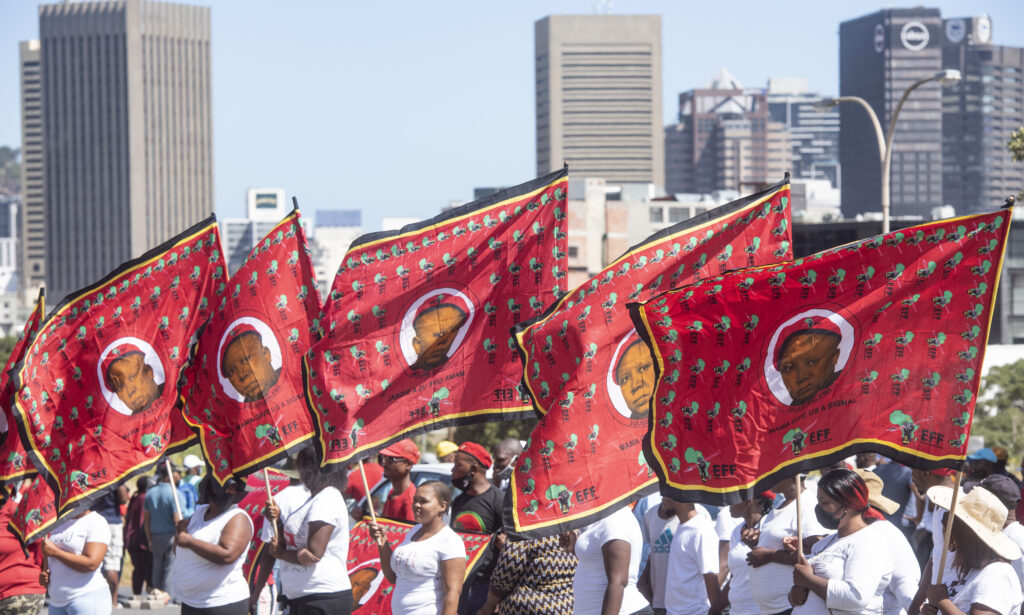
Ever since I was a child many people – young and old – from my village have worked in the mines, from uncles, cousins to friends. One thing remains common, despite their hard work digging precious metals, they have very little to show in monetary terms. They come home at end of the year with next to nothing. They can barely sustain themselves let alone take care of their families.
These men support families, often more than ten people (the miner, his parents, children, siblings even cousins). Literally these families survive on a shoestring, which is tied to the economic fortunes of the mineworker whose death in the mine could shatter the whole household. It’s not just surprising but disgusting that some find justification for the mowing down of more than 34 workers at the Lonmin mine.
Poverty reigns supreme in our communities. The net result is that families get broken. Husband and wife, mother and child become estranged from one another because of financial difficulties. Despite the fact that they work, parents can’t even afford to send their kids to school. As soon as their sons grow up, they work on the mines.
Contrast this with the lavish and comfortable lifestyles of the mine owners who continue to rake in trillions of rands. While many of us, the children and relatives of mineworkers, can barely afford an education, their kids study in top-notch schools where fees are so high they dwarf and far surpass even the fees of a university itself. They prance around wearing designer clothes and live in mansions. Many workers brave the cold and squeeze in accident-prone taxis while their children have never felt the coldness of walking into a taxi rank. So arrogant and proud are they of the wealth they amass that they fly around in private jets overlooking the very taxis and buses that transport many to their deaths.
When the producers of wealth demand an increase to the measly R4000 they earn, employers scoff and threaten them with retrenchment. They tell tales of how these companies would come crashing down if workers get what they dearly need: an increase. They flood us with false stories about how ridiculous the demands put up by workers are but they say nothing about how much they rake in from the sweat and blood of the very workers whose livelihood they care nothing about.
So deadly is working in the mines that one of my cousins who worked in the coal mines was laid off this year because he has TB. This is a young chap, surely he would not have contracted TB had he not been working in the mines but for lack of better jobs he found himself hanging by the noose of the mine bosses. Now at the age of 27 he sits at home unemployed for health reasons. Where else is he going to get a better job with TB?
We see men in our villages going to the mines healthy and coming back injured or having contracted diseases, particularly TB. Many sit at home frustrated with the fact that they have nothing to show for the many years they spent toiling under the noose of the mining industry. Those who are lucky enough to make it out of the mining industry alive and retire of old age barely stay more than 5 years in the village without meeting their maker.
How long will our society allow the mining industry to ruin the lives of poor South Africans? How long will our society allow the mining industry to rake millions out of the South African economy while leaving destitute the very people whose labour it exploited in the process? If the events at Lonmin are anything to go by, one day the South African working class will take matters into its own hands. And by that time it will no longer be armed with spears and knobkerries. It will long have realised that the power of the mine bosses is their relationship with the government and its gun-toting police.
I await that day eagerly and will not complain. I’ll be proud that at last the poorest of the poor have decided to stop the abuse of their labour power.


This article needs to be printed and distributed to all government departments around the country.
Whenever budgets/policies are set, they must be set with these people in mind. I want to live with the belief that the taxes I pay actually benefit the people who require assistance (and not so that the deputy minister of correctional services can drive a Porsche).
As long as education stays at it is (resulting in unemployment staying as it is), then these labourers will have little bargaining power. Why give increases when the mine can find others to to the job for R4000 a month?
Only when this changes, will mine bosses be forced to change the way they do business.
How do mine workers salaries compare to mine managers – their jobs are entirely different? Why not compare their salaries to those of ANC politicians instead! They must be compared to similar middle class jobs – truck drivers for example. But if they really are earning R10,000 a month I don’t see why they are living in shacks?
We don’t seem to have accurate facts.
During apartheid, these multinationals gave white mineworkers houses, living wages and many, many other perks! These days,those multinational mining conglomerates continue to treat their black workers, just as they did under apartheid, as dispensable non-humans, not even fit to earn a living wage.
The Lomin executives, who earn over a thousand times more (executive compensation – annual salary, stock, bonuses, perks etc) than the average black mineworker, will not change until the are FORCED to. The greed of these multinationals is insatiable and they will continue to plunder as long as we give them our permission!
A sincere article indeed. Unfortunately it will be exploited and abused by the callous peddlars of “isms” to badger their opponents. Does this world not have a leader who can provide a different economic model than these we currently have? A model where the public servant is indeed a servant of the people!
If the result of this disaster is miners get their demands as a result of violence – then expect strikes everywhere, especially in the police and civil service.
We are now in a “Catch 22″ situation because the situation was allowed to get out of hand in the first place!
Those shacks are not their homes if they are migrant workers!
Their homes, and probably also their wives and cows and children, will be in their Homelands. You can’t expect the International Media to understand this- they show the shacks as proof of poverty!
Maybe staff housing owned by the mines would solve much of the problem!
Maybe I do not understand things: As far as I can see, we have been encouraging overseas investors to invest in local businesses and mines. At these businesses wages are negotiated on a regular basis, after which, one would think, business carries on until the next negotiation cycle. Perhaps these people at Lonmin took the labour union, supposedly the representatives of the workers, at their word, and thought that business would continue functioning at least for the agreed period.
If these workers now, halfway through the cycle, decide they want more than three times their agreed wage, then these overseas investors naturally will be somewhat surprised. If these workers, and also people like Mr Ndamase, keep on threatening a violent take-over, then these investors will withdraw their investments, like they have already quietly started doing.
I am afraid that, unless people like Ndamase and Malema are reigned in, we will be left with another Zimbabwe, with no place further south to flee to.
fear… fear …. fear. fear of the rising exploited and unemployed….fear of those that know they are earning more than they are worth and will be found out…. fear of those that inherited assets that were unfairly obtained and passed on (which includes excessive capital gains through whatever mechanism). just because something is legal, it doesn’t mean that it is right/honest/ethical/moral. conversely, … think… wasn’t the storming of the bastille illegal under french law at the time?!
A few of the ‘facts’ laid out in this are incorrect and would need correcting, but the emotive value is undeniable. It seems to me that every employer in the country (or SARS) would do well to do an in-depth, ongoing promotion into salaries, bonuses, income/site tax, garnisheeing of salaries, union fees, etc. People seem to be supposing that what they receive is they entire story.
My father worked underground in the mines as a young man and again (for a private company selling pumps) in middle age, latterly working entirely alone, for long hours, without additional labour to help him. There is no doubt that the work is arduous and detrimental to health, however, TB is more likely to be caught from living circumstances such as close association; possibly even closer association than hostels suggest. Also, this is not a job that sees anyone into retirement; the onus is on workers to rise by dint of education and qualification and I believe this is an area that mines could do tremendous social responsibility work.
I feel strongly that in SA, too many people who should be able to progress into jobs that pay better salaries for less arduous work, never do so. Why do we have army privates struggling to keep large families on their pay; it’s an entry-level job and will always remain so. Take that analogy into almost any industry and the same is seen.
Where do the union leaders emerge from? The rank and file of the working miners and they are by then entirely happy to keep the workforce guessing, protecting their own positions and garnering their own wealth.
The first union was the printing chapel and that one educated all its members in deportment, health issues and to learn its industry thoroughly, so that members could progress upwards through the system, until they could open their own businesses or run obo owners. What are the SA unions actually doing for their members? This should be a major consideration…if you want a plumber, why is government training him? If we all agree that our education ministers couldn’t scrub out a toilet, then I suggest we also agree that unions take a far firmer hand in educating their members. A company can only be expected to teach a worker to be of use, not to further his own expectations.
Coming from the same background and having first hand experience of what it’s like to depend on the salary of a mineworker, I have to say it is not easy at all. What happened in Marikana is dispeakable to say the least and for people to even go as far as to suggest that police were provoked, in their quest to justify this, is disgusting.
This is a case of “Trained” cops vs quiet crowd (That was later provoked) which could have been controlled without bloodshed. I am curious to see how this is handled going forward and whether action will be taken against the guilty parties.
There are countries where rock drillers earn $3000 and more per month. A mining industry consultant said Amplats (a platinum mine in NW) pays miners R9000 pm, and he said one would need more analysis to confirm, but R12500 pm may be possible for Lonmin.
it’s time some mining companies operating mines in SA stop treating Black miners like subhumans.
Written from the heart Lazola. Let’s not forget that one of the “mine bosses” is ANC stalwart Cyril Ramaphosa. Also that the NUM, ANC alliance partner, who should be ensuring that the men that do the back breaking work are adequately paid, seem more likley to look after white collar workers, their own personal interests and politics. It’s been suggested that SAPS were encouraged by the NUM and others in government to use force to break the back of the opposition to the NUM. It’s a dirty business.
@ Lyndall Beddy #
“Those shacks are not their homes if they are migrant workers!
Their homes, and probably also their wives and cows and children, will be in their Homelands. You can’t expect the International Media to understand this- they show the shacks as proof of poverty!”
1. What is the definition of a home?
2. What is the definition of a Homeland?
To me a home is the abode where an individual lives… for recreaction after work, etc. That space has to have all the facilities to make the recreation period wholesome.
A homeland, let’s see… I think the USA has evolved this term by its Homeland Security policies to mean the country where an individual is born; and lives; and pays allegiance to; and fight to defend its sovereignty… not the old version during Apartheid when we had the TBVC-bloc.
So the shacks DO PROVE poverty because they do not possess all the human comforts one would like to retire to after a day of hard work… because the miners simply cannot afford them, hence the strike…
u Lazola lo abamaziyo abasoze bamkhohle Leader u never fail to dissapoint, even when you were on SASCO you are never afraid to call a spade and not a Gardening tool…bt cdr it is this Goverment of the ANC that continues to subject our people to these conditions one then wonders why did we defeat the white master and yet we still suffer the same challenges, the only thing that has changed is that black people are alos in the board rooms but the decision makers are still in England South Africa is a semi colony that is why we demand economic freedom without it democract is meaningless
” With the provision of funding for the creation of De Beers in 1887, Rothschild also turned to investment in the mining of precious stones, in Africa and India. ”
http://www.rothschild.com/our_history/1880-1914/
Considering that South Africa was created around De Beers’ need to extract diamonds from the East of the country, I would say it would be relevant to visit who actually owns the mines.
Does anyone know who the most recent share owners of De Beers and Anglo-American Corporation are?
Mack
Migrant workers live in temporary accomodation and go home at the end of their contracts, which is why they are supposed to have management owned housing. You don’t think the oil riggers think of their oil riggs as home do you? Or Fruit Pickers in the UK think of those summer caravans as their winter homes?
Employers of temporary or migrant workers must provide decent housing and employment conditions for their workers (and families if necessary) or be closed down and sent off to the salt mines in Siberia for life.
“These men support families, often more than ten people (the miner, his parents, children, siblings even cousins)”.
Excuse me but why have so many children. Stands to reason a single miner cannot support uplifting education for 6 children (per example – miner, wife, 2x parents and 6 children makes 10) on a single salary. Hence the poverty trap of the next generation having limited education and going off to the mines just to get an income (for the next 10). If there weren’t so many people willing to do this terrible job, the mines would have to pay more and/or make use of robotic equipment.
Its not all the companies fault they are just exploiting the labour situation of excess supply (like the Chinese do). But like in farming if labour becomes too much of a problem they will just automate and then there will be less jobs.
I grew up in a small mining town in the Northern Free State, and even from a young age the mines and everything they stood for repulsed me (I never understood why, but I certainly do now). In my opinion, freeing itself from the “resource curse” would be the most momentous moment in South Africa’s history.
Hi Dries,
Economic diversification is the future. However the way to get there has to be through the mining sector. Right now the profits from mining are developing the $32 trillion shadow economy, through laundering in tax shelters like Switzerland, the Cayman Islands, etc. (Even Glencore International Plc is headquartered in Switzerland.)
http://www.bbc.co.uk/news/business-18944097
The profits from the mines have to go to the state, so the state can put money into infrastructure, agriculture, manufacturing and public (human capital) investments like universal education and universal healthcare.
In a lifetime, someone with a college degree earns $1 million more over their working career. At 25% income tax, that is an extra $250,000 that returns to the state in taxes. And that’s not counting innovation, greater intelligence and productivity in the workplace, greater purchasing power (demand drives the economy, not supply as neoliberals claim). So education is a real investment in the future of the economy, that will pay itself back many times over.
“These men support families, often more than ten people”
To be honest, there are not many professions where a person can get a salary that supports ten people AND leaves anything over for savings or luxuries. I’m a business owner and a qualified professional and my salary wouldn’t stretch that far.
Could it be that the solution would be to get more people working so that the one, lonely miner doesn’t have a noose around his financial neck?
The profits of the mines DO go to the state – both in the sale of mineral rights and in income tax.
When the state (i.e. politicians) run mines they go bankrupt and make no profits at all – that has been the historic result everywhere.
@MLH:
The writer is spot on about TB. Mine Dust inhalation especially Coal and Silica have direct immune effects on the lung that increase the risks of destructive TB. The living conditions certainly play a role, but the mining is the crucial element. Many mines do not follow Occupational Health protocols. And many mines do not compensate miners or their families who contract TB or develop Lung Cancer. There is no denying that the mines abuse their workers.
TB or not TB
My great-great-grandfather and his colleges went on strikes and got shot at to force mines to do yearly tests for mine related lung illnesses as well as compensation for mine related illnesses. The legislation was in place until the unions decided that it was ‘discriminatory’ as a miner with TB was not allowed down the shaft and (as a result) only got basic pay.
Mine Dust affected white workers as well. Bernard Swanepoel’s father, who was a white miner, has the same illness, and Bernard is one of SA’s top mining magnates
They simply did not know about the disease then.
Dave Harris# Aren’t a good number of our ‘nuveau riche’ large shareholders or partners in these greedy multinationals?