“…Perhaps there is an
escape I have not considered, a
voyage I have not heard about.”
Yvette Christiansë (Castaway, Duke University Press, 1999)
The other day I found myself in a discussion with a fellow musician about the merits of Martin Meredith’s well-known book The State of Africa. When I first read that voluminous tome, I couldn’t decide whether it was an impartial account of history or a litany of Afro-pessimism.
However glum Meredith’s account may be, he lavishes some praise on the Afrikaners. On page 412 and 413, he describes how my forefathers built an efficient system of rail transport, roads and other infrastructure in SA. Though, compared with so many failures elsewhere in Africa, this may read like a remarkable success story, there was, as Meredith duly noted, a snag: “Though prosperous, white society under National Party rule became increasingly insular and inbred, isolated from the views and lifestyle of the modern world as well as from the majority of the population.”
In other words, the fantastically efficient transport systems built by the Nats also served to fragmentise South Africans as a nation; hardly a town exists in our platteland where the population is not divided in terms of the “haves” and “have-nots”. In colloquial Afrikaans, the difference between poor and rich is usually described in railway terminology: “Daai mense woon aan die verkeerde kant van die spoor.”
Which was why, when I turned up for my first-ever stint as a performer at the Voorkamerfest in the small town of Darling last weekend, I was filled with foreboding when I glanced at the map of the town and noticed that the venue where I was due to go and play my songs was situated on the opposite side of the railway line from the guesthouse where we stayed in the town centre.
I remember driving over that railway line on the first evening of my scheduled concerts — after stopping to look towards the left and to the right for the oncoming headlights of trains, of course — and into the township, thinking: Blimey, this is going to be very different from the Huisgenoot Skouspel in the Superbowl.
And different it was.
I drove my sponsored Quantum bus, the one with the larger-than-life logo, down a narrow street filled with playing children, bicycles, the smoke from open fires, and all the mad and friendly chaos of a late township afternoon. I parked outside a small house with a pretty enclosed garden, knocked on the front door, and introduced myself.
The family who lived there was in awe; they only had a vague idea of who I was because they had seen me once on TV. I was led through a small room choc-and-bloc with assorted chairs, mostly plastic, and invited to make myself at home in the little kitchen. I made myself some coffee, set up my music stand, and waited. When a kombi-load of festival-goers — the first kombi of many — arrived half an hour later, I picked up my guitar and sang my songs to the accompaniment of the chatting of the parrot in the back yard, the ringing of someone’s cellphone inside the house, and the barking of pavement specials outside in the street.
Perhaps I should explain how I ended up in this unique situation in the first place.
The Voorkamerfest in Darling, which has been going strong for nine years now, is very different from other cultural festivals in the sense that performers do not strut their stuff in concert halls or school halls, but inside people’s homes. Only 26 audience members are allowed to attend any show at any time. What makes this whole experience even more unconventional is the fact that one cannot book a ticket to see a certain artist. You simply buy a ticket to get on the festival kombi, and this kombi takes its captive audience to three different houses in succession. At every house, the kombi stops, people get out, troupe into someone’s private lounge, and sit down to watch a totally unexpected performance. They don’t know ahead of time whether they are about to hear music, watch people dance, see a magician perform his tricks, or listen to the jokes of a stand-up comedian. It’s a learning curve for both patrons and performers, because the festival-goers are exposed to art they would not have heard otherwise, and the performers are forced to perform in front of a bunch of strangers who may, or may not be, from their usual fan base.

Of course, the incredibly small distance between the audience and performer is also highly unusual. I performed on the same eye level as the folk in the front row, and they were so close to me that I could reach out and touch them. I could smell their breath. They could probably see the little hairs in my nostrils. It’s simply impossible to fake emotion when people are that close; not just for me but also for them: if one guy yawns with boredom, or farts, everyone else is aware of it.
It was the most frightening but also the most exhilarating experience of my entire career as a musician. I was out of my comfort zone in every respect. I wasn’t up there on a stage, glaring into stage lights, hardly able to see the public. There was no sound system to enhance my voice. I had to sell my own CDs afterwards, standing between the kitchen kettle and the coffee table.
In the course of the weekend, during the approximately thirteen hours in total that I spent in that house over the course of three days, I felt myself returning to forgotten childhood memories. I remembered my years of growing up in a poverty-stricken Afrikaans family, living in small rented houses in unsavoury streets, being surrounded by pets and unkempt lawns and neighbouring fences and washing lines and familiar faces. I remembered being happy, truly happy, being happy with the kind of simple happiness unknown in the more well-to-do echelons of suburbia.
I absorbed conversations around me. “Last night I decided to give my kids some fancy food,” Mrs Samuels, my hostess, said, “so I made them white bread sandwiches with Viennas”. She placed her emphasis on the word “white”. “And afterwards, we had Kellog’s with long life milk that we heated in the microwave.” Under any other circumstances, I would have been appalled at hearing such recipes. But I saw the joy and contentment on her face as she told me stories like this, and all I was aware of was a happy family, radiant kids, and a group of people utterly free of neuroses, guilt, and the “free-floating anxiety” (to use an old quote from Afrikaans poet Charl-Pierre Naudé) and paranoia which for us white South Africans has somehow become the norm, our default mode.
Coming out of an experience like that, returning to my suburban abode, finding myself now, once more, surrounded by all the usual trappings — flat screen TV, swimming pool, tumble dryer, braai lapa, percolator, laptops, etc — I can’t help looking at things from an altered perspective.
I feel as if, in the course of one weekend, I have made quite a head-shift. It’s almost as if I have emigrated to an entirely new country.
Shall we call this country: the real South Africa?
Author
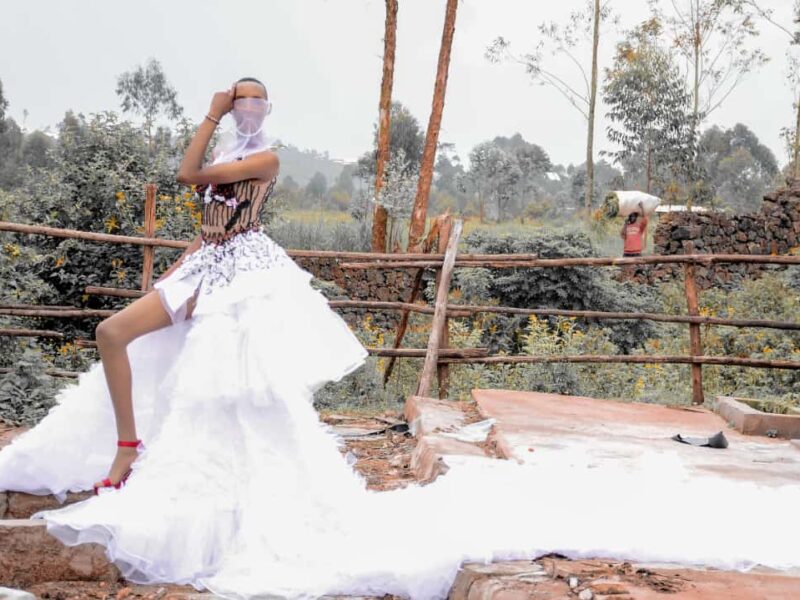
A prince with dignity and determination
Prince Ngarambe’s goals are to become Rwanda’s first transgender model and to uplift the country’s youth

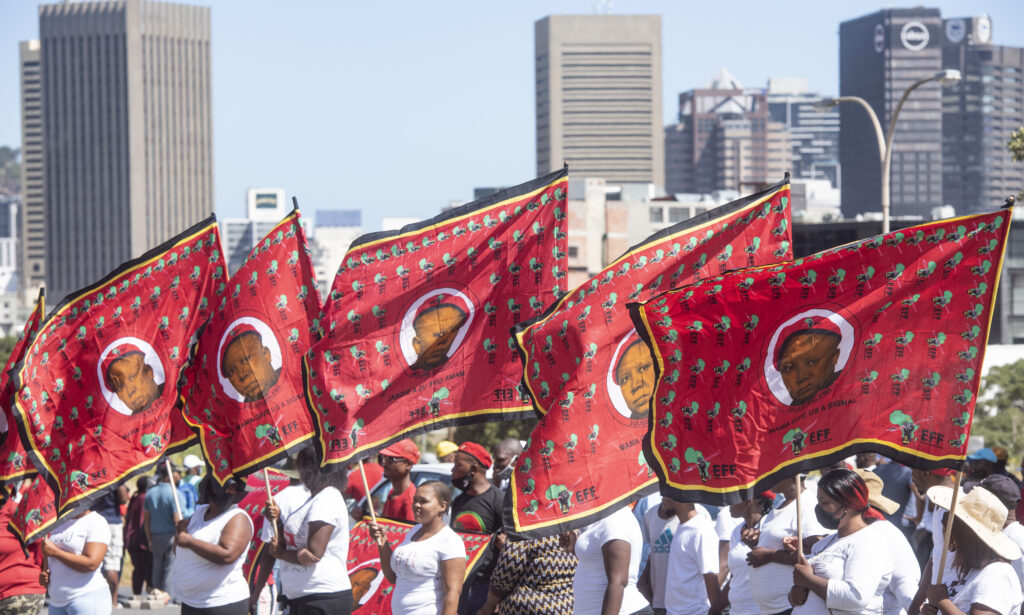
The EFF’s principles are unshakeable
Unlike the ANC, the core values of the freedom fighters do not change with each leader it elects