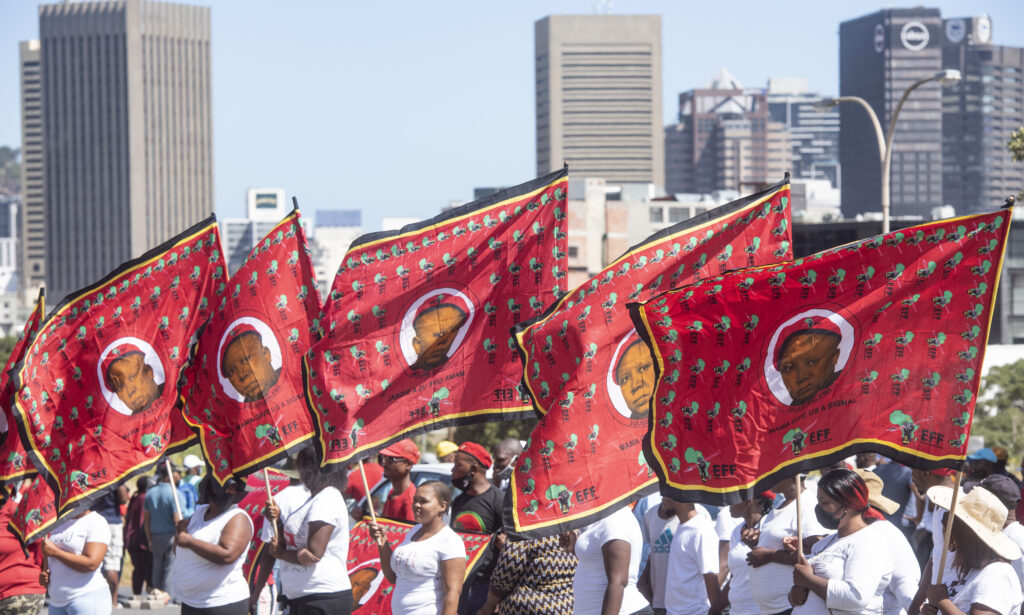
I hope you are well. Even though I’m sure you are not really interested, I am fine. I know that you are not too concerned about others, until you hear about them on Twitter, or Facebook — or someone at the office sends you an angry email, summarising something they’ve heard about that could ruin life as you know it.
I’ve noticed that you seem to live a constant inch away from furious anger, I was curious if you were aware of it. Hypertension is a silent and remorseless killer. My mum told me there was once a white guy (in some drawings, he was blonde — they didn’t have cameras then — but they had faith, which they tell me is similar) who tried to tell you to chill out, rather than resort to mob morality — and you nailed him to a symbolic tree and poked him in the ribs. No one is sure if that really happened, but everybody has felt bad about it since, just in case.
There was another one later on, and I know he was real, because I’ve seen the video — he got shot on the street. Imagine that.
Anyway, I was writing to tell you that I’ve been watching you get tired and angry and frustrated at what you see as the slow decline of all you and your muscular kin acquired, claimed, amassed and constructed in the past. “These blacks break everything”, you don’t say it, but are programmed to think so.
I wonder if perhaps you realise that your involvement in the above is as real as it remains hidden. Circumstantially at least, you are complicit. Historically, you are culpable, and peripherally, your crimes are tangible — in the ignorance of the lower classes, the shared shanty toilet rage and the march of disease, rape, pregnancy and mutilation through our people. Our people. Ubuntu is an African ideal, as African as you, if your loud claims to entitlement hold any clean water. With power comes responsibility, but you knew that, because you have been educated properly.
How quiet you go when our government authorises the execution — on a shit-strewn koppie, via their own law enforcement — of people who pose a threat to the profitability of their silent partners (contracts with whom are buried as deep as the metal they seek). Your distinctive voice is nowhere to be found, above the letting of unhappy blood.
“But they killed people,” I hear you protest — did they? Are you certain? If your child was in that mob, you would agree to a sentence of three in the back, and a final breath on a bed of turds? You don’t really want to know what happened at Marikana, you don’t have the constitution for it.
But when a chain of luxury grocery stores you worship takes a blatant step to speed up the inevitable, and get on with the changes we must see if we are to be real rainbow children, you hurl down your individually wrapped sandwiches, spit out your pre-grated cheese and spew hatred on social networks.
Imagine all the people, living on 702 …
“I said a prayer for those miners, because they spend their lives down there, for what? So I can wear this on my finger — who am I? Some rich cunt, that’s who.”
Thank you, Belinda, you raised a barbed truth. Easy to give up shrink-wrapped, homogenous and irradiated GMO fruit portions in self-righteous indignation in a Summercon unit, a financed Korean entry-level model with airbags and aircon in the bay outside.
How about having a shit job, a shit room and a shit life? How about dead wives and hungry kids? How about believing Vaseline will stop the bullet?
Perhaps it is not just the “savagery” of “these blacks” that renders us ungovernable, but perhaps there is another part to the equation, ironically, one to the right of the equals sign? Perhaps our own moral laziness and selective participation in building a future is a self-fulfilling prophecy?
Is it feasible, brothers and sisters, that our own behaviour is fuel for the pot and the kettle? Reflect on that, my people will tweet yours.
We cannot change the way things are, but maybe our job is not to protest, to be outraged, to add venom and stir. Maybe our job is to be bigger people, to use our clear advantage to elevate us all. We seem to bleat about education for everyone else but we don’t use our own.
Maybe our job is to be grateful, tolerant and show some respect. To stand back in the emergency room queue and make way for gunshot victims before we ask for a Disprin to address the headache their screaming has given us.
Love to the kids.
John.


Seriously, I am so tired of hearing why we must feel even more guilty because we white… This cloak of blame just gets heavier to hide the true causes of our society ills – which is people being angry that their human rights to live and work fairly in a free society is being violated. You can see this in the miners and with the shoppers at WW. It is sad that the only way to publicly stand up is by using a shopping chain to voice their opinion.
The defensiveness of those around us, the false accusations, the re-gurgitating of the propaganda brings home once again that the programming of the apartheid system worked with the full permission of some amongst us. There was no outcry, no rejection and hardly any challenge to these offensive practises. The outcome is exactly the snapshot we see of all the comments defending their actions. WOW.
@Tofolux: You and Harris are as much a product of Apartheid as the very people you despise. You comment negatively on others’ racial classifications, but you are just as guilty. You are quick to make an assessment of someone’s colour and/or politics based on their response to a single issue, rather than trying to evaluate the comment singularly and on its merits (with comments like “you and your ilk”). Sadly, you don’t see you are exactly the same as the very people you are hell bent on putting in a pigeon-hole. If someone doesn’t agree with the government; guess what? They don’t agree with the government. Doesn’t make them any more anti-ANC than Vavi when he criticises the government on issues. Do you understand? I know it suits your argument style to have people in a pigeon-hole, but do try and appreciate that people are individuals and are entitled to their opinions without it being tied to a particular race group or political party.
@David, your reverse psychology might work for you but it doesnt impress me. You and your ilk are anti-black. You have made no effort to build social cohesion and you take no responsibility for your part in dividing us as a nation. This is evidenced by your angst and the anti-SA comments you make. You cannot be absolved of the role you continue to play.
@Tofolux:
Your reverse psychology might work for you but it doesn’t impress me. You and your ilk are anti-white. You have made no effort to build social cohesion and you take no responsibility for your part in dividing us as a nation. This is evidenced by your angst and the anti-SA comments you make. You cannot be absolved of the role you continue to play.[sic]
We can only take responsibility for ourselves, or we will never be adults in control of our own lives, but continue as infants always looking for some external force to blame for our own shortcomings.
I categorically refuse any blanket guilt you or your ilk want to impose on me for apartheid, or to share my ‘privilege’. You are in a free country where you can stand on your own two feet and solve your own problems, whatever their causes may be.
You are a disgrace to the many people who have sacrificed their lives for you to be able to have this basic human right. Now what can you manage to achieve on your own steam? Or do you really expect us to believe you are a failure due to our ‘privilege’?
@ Garg
“We can only take responsibility for ourselves, or we will never be adults in control of our own lives, but continue as infants always looking for some external force to blame for our own shortcomings.
You are in a free country where you can stand on your own two feet and solve your own problems, whatever their causes may be. ”
And your pop-psychology does not impress anyone either, least not me.
The old ‘everything that happens to you in your life is your responsibility” argument is pathetically weak. Because even WHO WE ARE is mostly determined by external factors, the surroundings/home you grow up in, etc. Or would you deny this?
The external forces at play in our lives are very much larger than us the individual, even though they may be subtle and thus appear absent under certain circumstances. But in a war or famine they become all too visible and then your argument about personal responsibility falls almost completely apart.
That is not to say that we are completely free of responsibility for our actions, but this does not justify the extreme that we as individuals are the ONLY ones responsible for our lives.
This very clearly illustrates the false dichotomy free marketeers/libertarians/neoliberals believe/live in, it’s either communism or the free market (even if in reality only distorted forms of these (to benefit elites) have ever existed), or it’s either everything is your responsiblity or nothing is. This is the position of…
@Wynand:
Yes, I would deny that false dichotomy between nature and nurture. Of course, it is both. Of course, there are external forces that have an influence, but we cannot control them, per definition. Nobody chose to be born in a township, just like nobody chose to be born with the silver spoon. Nothing will change this ‘unfair’ distribution, least of all rendering everyone poor.
It’s beyond my control that you and Tofolux confuse my comments with psychology of any kind. It’s also beyond my control that you shave libertarianism with the same comb as neoliberalism, or that you read any ideology in my comments. I suggest some time on Wikipedia washing the dirty laundry.
Your false dichotomy is immaterial. The false dichotomy here is assuming that one is either for AA and BEE, or one is a bigoted racist who wants apartheid to come back. I cannot fix our pathetic education system, nor can I combat the ‘black consciousness’ second-hand and third-rate pseudo-intellectualism that’s the flavour of the month. The best I can do is to promote critical thinking, to point out logical fallacies and to rectify factual inaccuracies. One of which being that the famine in the country is within my control, a result of my actions or my responsibility to fix.
The impoverished poor are not the only ticking time bomb in this equation. Keep biting the hand that feeds.
@ Garg “Nothing will change this ‘unfair’ distribution, least of all rendering everyone poor.”
You look at the world through the eyes of an extremist. I’ve told you that it has been done. In Scandinavia most notably, and everybody certainly is not poorer there for it.
“The best I can do is to promote critical thinking, to point out logical fallacies and to rectify factual inaccuracies.”
The Latin American coutries that we’ve been debating about are doing it while growing much faster than SA economically, but alas, this is a futile exercise, one cannot convince an extremist of anything that is not consistent with his/her position, even when presenting them with hard empirical data.
“It’s beyond my control that you and Tofolux confuse my comments with psychology of any kind.”
“We can only take responsibility for ourselves, or we will never be adults in control of our own lives, but continue as infants always looking for some external force to blame for our own shortcomings” is the worst kind of pop-psychology I have ever come across, and it pervades Anglo-Saxon culture. It is the height of intellectual laziness in my opinion.
“It’s also beyond my control that you shave libertarianism with the same comb as neoliberalism”
I know the difference: Neoliberalism = distorted free market that benefits the rich, libertarianism = jungle economy with the promise of an eventual return to feudalism.
@Wynand:
Are you sure I am the extremist here? Sweden, by the way, is the benchmark for Neoliberalism. Besides the evasive fact that income distribution in and of itself is not a reliable indicator of anything in particular. It means bunk, just like GDP expenditures and your other stats that you don’t seem to be able to contextualise unless the country is a nationalist socialist dictatorship like Venezuela.
You repeatedly build strawmen. Either I am incompetent in expressing myself, in which case I apologise, or you simply have no idea what I am saying and would rather stick with what you think I’m saying. I recommend that you learn about Neoliberalism (a concept entirely unfamiliar to you), as well as Libertarianism (another concept entirely foreign to you). Failing that, stick to the pop pscyhology and hazy generalisations because that’s a great way to avoid addressing the holes in your own arguments.
@ Garg “Sweden, by the way, is the benchmark for Neoliberalism.”
Oh is that so?
“Sweden, despite its reputation as the ‘small open economy’ during the
post-war period, did not enter its modern age with a free trade regime.
After the end of the Napoleonic wars, its government enacted a strongly
protective tariff law (1816), banning the import and export of some items.
As a result of the high tariffs, an outright ban on imported finished cotton
goods, and the deliberately low tariffs on raw cotton, cotton cloth
production was greatly increased.”
“As table 2.1 shows, around 1875 Sweden had one of the lowest tariff rates of any of the major economies listed.
This free-trade phase, however, was short-lived. From around 1880
Sweden started using tariffs as a means of protecting the agricultural
sector from the newly-emerging American competition. After 1892
(until when it had been bound by many commercial treaties) it also
provided tariff protection and subsidies to the industrial sector, especially
the newly-emerging engineering sector. As we can see from
table 2.1, by 1913 its average tariff rate on manufactured products
was among the highest in Europe. Indeed, according to one study
conducted in the 1930s, Sweden ranked second after Russia among
the 14 European countries studied, in terms of its degree of manufacturing
protection.”
“As a result of this switch to protectionism, the Swedish economy
performed extremely well in the following…
@ Garg continued from previous comment:
“According to one
calculation Sweden was, after Finland, the second fastest-growing (in
terms of GDP per work-hour) of the 16 major industrial economies
between 1890 and 1900, and the fastest-growing between 1900 and 1913.145
The tariff protection of the late nineteenth century was particularly
successful because it was combined with industrial subsidies as well as
supports for R&D aimed at encouraging the adoption of new
technologies. Economic historians generally agree that the promotional
efforts of that time provided an important impetus to the development
of certain infant industries, although one negative side effect was to
create the proliferation of relatively inefficient small firms.”
“Tariff protection and subsidies were not the only tools that Sweden
used to promote industrial development. More interestingly, during
the late nineteenth century, Sweden developed a tradition of close public-
private cooperation to an extent that is unparalleled in other countries
during this period, including even Germany with its long tradition
of public-private partnership (see section 2.2.3).”
Re: the welfare state:
Sweden had adopted State-provided: Industrial Accident Insurance by 1898, Health insurance by 1911, State pensions by 1909 and Unemployment Insurance by 1920. See Table 3.6 pp 118-119 in Kicking away the ladder by Ha-Joon Chang.
@ Garg “Are you sure I am the extremist here?”
If you believe in the free market as the only vehicle for solving our problems, then you are by definition an extremist, because this ideology is the opposite extreme of communism, and both are based on oversimplistic assumptions about how economies work and the behaviour of people,
“We can only take responsibility for ourselves, or we will never be adults in control of our own lives, but continue as infants always looking for some external force to blame for our own shortcomings”
being a prime example of this in free marketeers’ limited imagination.
The world is far more complex than either of these ideologies are able to describe.
“Besides the evasive fact that income distribution in and of itself is not a reliable indicator of anything in particular.”
I just love the way neoliberals/austrians pick ‘n choose which aspects of govt intervention are worse when it suits them. Now, Sweden is a benchmark of neoliberal development even though it is the largest social spender as a % of GDP in the world and has one of the highest unionisation/collective bargaining rates.
But how about Singapore? Another important set piece in neoliberal mythology?
Government linked companies contribute up to 60% of its GDP:
http://en.wikipedia.org/wiki/Government-owned_corporation#Singapore
@Wynand:
Did you google false dilemma yet? Suffice to say that diagnosing me as a Neoliberal/Austrian is avoiding the topic. Let’s not start with the glaring error of confusing the two with each other, because you’re chasing enough windmills as it is.
Just because I’ve noted some of the holes in your logic does not mean that I am defending what appears to be the only alternatives you’ve heard of. It merely means that your conclusion does not follow from the premises you’ve presented. Did you read up on the recent history of Sweden, the part that you’d find inconvenient, but is more relevant? Do you realise that Sweden and Finland are both Scandinavian but are not comparable in terms of socio-economic policies? Were you aware that Sweden and Ireland both followed similar levels of surplus throughout the naughties? Where does this leave your favourite scapegoat now? What does this say about the suitability of your indicator in lieu of context?
Once you’ve brushed up on Neoliberalism and Austrian Economics to the extent that you can tell them apart, I suggest you google strawman argument.
@ Garg
“Just because I’ve noted some of the holes in your logic does not mean that I am defending what appears to be the only alternatives you’ve heard of.”
You’ve noted no such thing in my logic, you believe that by repeating “I’ve pointed out holes in your logic” enough that you’ll be able to disguise your own knowledge deficit in this area. You have no substantive arguments, only vague or irrelevant ones
“Do you realise that Sweden and Finland are both Scandinavian but are not comparable in terms of socio-economic policies? Were you aware that Sweden and Ireland both followed similar levels of surplus throughout the naughties? Where does this leave your favourite scapegoat now? ”
When in the 90s and under what conditions?
http://www.imf.org/external/pubs/ft/weo/2012/01/weodata/weorept.aspx?pr.x=32&pr.y=12&sy=1980&ey=2000&scsm=1&ssd=1&sort=country&ds=.&br=1&c=144&s=NGDP_RPCH%2CGGXCNL_NGDP%2CGGSB_NPGDP%2CGGXWDN_NGDP&grp=0&a=
Look’s to me like Sweden engaged in a bit of Keynesian spending when it’s economy hit the skids in 1990 (surplus 3.391%) to (deficit -11.203% in 1993), they only began reducing this when the economy was recovering strongly (+4.103% real GDP growth in 1994), maybe a bit too soon (as growth though +ve slowed downed a bit after).
@ Garg “Were you aware that Sweden and Ireland both followed similar levels of surplus throughout the naughties? Where does this leave your favourite scapegoat now? ”
I read the nineties, not the naughties. So what? Sweden and Ireland had similar interest rates, or cheap money, during this period, yet this did not automatically result in a bubble/malinvestement in the case of Sweden as Austrians would contend.
http://www.tradingeconomics.com/sweden/interest-rate
http://www.tradingeconomics.com/ireland/interest-rate
Plus, it has control over its own currency which the Irish don’t (A combination of deficit spending and currency devaluation (25%) got Sweden out of its crisis in the 1990s). So, Ireland, being in the euro, couldn’t do an Iceland (50% devaluation + deficit spending) and recover quickly after the crisis.(Iceland has now also started drastic austerity by the way (8% deficit in 2010 – 2011 to 2.3% deficit 2011-2012), and it’s growth is falling as a result, just as the Baltic tigers’ growth has due to their rush to austerity – stopping deficit spending too drastically and too soon in an economic climate like this is not a good idea if you are recovering from a very deep recession).
@Wynand:
Sweden didn’t have a housing bubble during this period, like Ireland had. Another key difference: Ireland was part of a single currency where the lender of last resort cannot function as such.
Sweden isn’t part of the Eurozone. Naughties and nineties, the period’s surplus levels apply to both countries. Sweden did have a housing bubble in the 80s, which crashed eventually, and solved that problem with ahem, austerity measures. Of course they could capitalise on a floating currency, in line with Friedman’s monetarism, and their IT sector boomed.
http://en.wikipedia.org/wiki/Economy_of_Sweden
The holes in your logic I’ve pointed out, time and again: You are misinterpreting and abusing your indicators to point out failures of ideologies of which you don’t have a working knowledge. The main problem however is you are jumping to conclusions that do not follow from the figures. Again, I’m not air guitaring for Neoliberalism or Austrian Economics, I’m just pointing out that your reasons for dismissing them do not follow.
In both cases (Sweden and Ireland) there were bubbles that burst, in line with Austrian business cycle theory. We’ve seen 2 extremely different results, which do not follow from the similar figures prior. Conclusion: Our indicator in and of itself is useless, and is inadequate for comparisons between countries.
@ Garg “Sweden did have a housing bubble in the 80s, which crashed eventually, and solved that problem with ahem, austerity measures.”
From the Wikipedia article you’ve mentioned:
“IN 1994 the government budget deficit exceeded 15% of GDP. The response of the government was to cut spending and institute a multitude of reforms to improve Sweden’s competitiveness. When the international economic outlook improved combined with a rapid growth in the IT sector, which Sweden was well positioned to capitalize on, the country was able to emerge from the crisis.”
You are wrong, the economy was ALREADY recovering STRONGLY IN 1993-1994 BEFORE Sweden seriously began austerity.
http://www.tradingeconomics.com/sweden/gdp-growth-annual (take it back to Jan 1994)
http://www.imf.org/external/pubs/ft/weo/2012/01/weodata/weorept.aspx?pr.x=45&pr.y=5&sy=1980&ey=2012&scsm=1&ssd=1&sort=country&ds=.&br=1&c=144&s=NGDP_RPCH%2CGGXCNL_NGDP&grp=0&a=
The effect of govt policies are NOT instantaneous, as you can see DUE TO the DRASTIC austerity starting in 1994 -1995 (-7.4% in 1996 to -1.5% in 1998), the growth slowed down again sharply after 1995.
Sweden did the SAME thing in 2001 -2004 and 2008 -2010 to recover from those recessions.
The growth effect of govt policy lags the implementation of the policies themselves, which is how things work in the real world.
Even the wikipedia article was careful not to ascribe the economic recovery to the austerity.
@ Garg
By the way, Keynesians do not deny the existence of business cycles:
http://www.slate.com/articles/business/the_dismal_science/1998/12/the_hangover_theory.html
Also, do not try to put neoliberalism or Austrian business cycle theory on the same footing as neo-classical and keynesian economics. The latter employ the scientific method, while the former rely on philosophical speculation.
In fact, here are a couple of additional definitions of neoliberalism. The most flattering is “supply-side economics”, less flattering is “trickle down” economics. In practice, due to a failure of govts to implement the policy prescriptions perfectly or completely in the real world, the result of neoliberalism is “crony capitalism” or “trickle up” economics.
I take issue with neoliberalism in SA, because if I had a penny for every time a private sector economist or market analyst has claimed in the media (M&G, SABC news, etc.) that SA’s problems are mostly due to supply constraints, I would be stinking rich by now.
The fact that the OECD in its last economic survey of SA (2010, p 100) states that SA is mostly DEMAND constrained, and that labour laws are not strict (p 103),
http://www.treasury.gov.za/comm_media/press/2010/2010071901.pdf
and that the World Bank scores (doing business index) SA in the top 10 of upper middle income countries (49 of them) i.t.o. the ease of carrying on business actvities in SA seems to fall on the deaf ears of these…
@Wynand:
By the way, your data only stretches back to 1994. This is after the Swedish housing bubble burst and was handled already – although I’d hardly characterise their way of handling it as ‘deficit spending’. Deficit spending is how the Irish rekindled their building sector after 2004. More on that here:
http://www.nytimes.com/2008/09/23/business/worldbusiness/23krona.html?_r=0
Here is a comparison of lending interest rates between Sweden and Ireland for a longer time. Recall that the Celtic Tiger is dated to roughly 1995 up to 2003, while the Swedes have been ‘austere’ since before then.
Here is a comparison of the surplus of Sweden and Ireland.
Apologies to the author this is off topic. More on topic: South Africa is not competitive. Neither is Ireland. Sweden is. Who’s in trouble?
@ Garg “In both cases (Sweden and Ireland) there were bubbles that burst, in line with Austrian business cycle theory.”
It is not inconsistent with Keynesianism that bubbles eventually burst. Dean Baker, (co-director of CEPR at http://www.cepr.net ), one of my favourite progressive economists has been warning about the danger of the bubble in the US popping since as early as 2002. However, being Keynesian as he is, he knows that the consequences of the bubble don’t have to be the long protracted depression that austerity is currently causing in Europe. And in Britain, who, lo and behold, has its own currency and also had a bubble! But it hasn’t recovered like Sweden did after its bubble burst.
Britain again shows that austerity is contractionary and not expansionary, i.e., you cannot shrink an economy out of a recession/depression:
http://www.tradingeconomics.com/united-kingdom/government-budget
http://www.tradingeconomics.com/united-kingdom/gdp-growth-annual
It is also self-defeating, since govt debt/GDP isn’t even coming down as revenue falls due to the contractionary effects of austerity:
http://www.tradingeconomics.com/united-kingdom/government-debt-to-gdp
@ Garg “South Africa is not competitive. Neither is Ireland. Sweden is. Who’s in trouble?”
Ireland is competitive on the Heritage Foundation’s economic freedom index (#9 out of 179), World Bank’s ease of doing business index (# 10 out of 183) (more than Sweden on these last two), and the WEF’s Global Competitive Index (less than Sweden but more than 117 other countries).
What is holding it back? It now has an effective gold standard (the Euro – now truly effective because Ireland cannot lend cheaply anymore), it has high labour market flexibility, it is engaging in harsh austerity (the govt has reduced its spending drastically) to make room for the private sector. What is holding the private sector back in Ireland? Demand is, demand collapsed due to the bubble bursting and the country cannot employ counter-cyclical policies to stimulate demand because of the above constraints.
What about Britain? Why isn’t Britain booming, it devalued its currency and is doing austerity?
What is holding SA back? It is more competitive on all these indices than 80-90% of developing countries (depending on which index you choose), yet many other “less” competitive developing countries comparable to SA is performing much better in terms of GDP growth, improving standards of living, productivity growth, etc.
Austerity doesn’t work. Sweden’s data only goes back to Jan 1994, but its economy was ALREADY recovering strongly by then. The IMF data in my previous posts goes…
@ Garg “By the way, your data only stretches back to 1994.”
I wasn’t aware of Google’s publicdata, it is great, though not as complete as the IMF’s databases.
I looked at Sweden’s Real GDP growth in the 90s. The strong recovery from the crisis started at the beginning of 1994, even though real austerity hadn’t been embarked upon by then. A combination of deficit spending ( yes, bailing out the banks and increased social transfers due to higher unemployment) and devaluation got it out of trouble, and even more spectacularly so in 2009 – 2010:
http://www.google.com/publicdata/explore?ds=d5bncppjof8f9_&ctype=l&met_y=sp_pop_grow&rdim=country&hl=en_US&dl=en_US#!ctype=l&strail=false&bcs=d&nselm=h&met_y=ny_gdp_mktp_kd_zg&scale_y=lin&ind_y=false&rdim=country&idim=country:SWE&ifdim=country&hl=en_US&dl=en_US&ind=false
The IMF’s data bases go back to 1980 for budget deficits:
http://www.imf.org/external/pubs/ft/weo/2012/01/weodata/weorept.aspx?pr.x=50&pr.y=5&sy=1980&ey=2012&scsm=1&ssd=1&sort=country&ds=.&br=1&c=144&s=NGDP_RPCH%2CGGXCNL_NGDP&grp=0&a=
The recovery from the 2008 – 2009 Swedish recession in 2009-2010 is spectacular, and it is again a devaluation combined with counter-cyclical spending that did it, which started in 2008 when the surplus began to come down.
@Wynand:
You can choose the data set in Google’s public data. The IMF’s data is represented there as well. It’s not intuitive since Google messed up their interface, but the great advantage is easy comparisons.
‘Ease of doing business’ does not translate into competitiveness. Ireland fell during the past couple of years in competitiveness:
http://en.wikipedia.org/wiki/Global_Competitiveness_Report
The way I see it is that the Swedes could tackle their 1992 problems in isolation (in a way that Krugman misdiagnoses as ‘nationalising the banks’ – not at all what happened). Mr Neoliberal Milton Friedman criticised the Eurozone idea from the start (not for being too Keynesian, mind you). How is this possible?
A reasonable critique of one aspect of Austrian Economics: the Eurozone functions effectively as a region on the gold standard, minus the gold. Does this invalidate the rest of Austrian Economics?
The Swedes are still highly competitive. Public spending is compatible with Monetarism, Keynesianism and Neoliberalism (to name a few). When their surplus is still in the same ballpark as Ireland, does this invalidate Keynesianism? Or invalidate Neoliberalism?
It’s not about prejudiced ideology, it’s about logic. When two approaches overlap so much and yields wildly different results, the reason for failure must be in the differences, not in the similarities.
@ Garg “The Swedes are still highly competitive. Public spending is compatible with Monetarism, Keynesianism and Neoliberalism (to name a few). When their surplus is still in the same ballpark as Ireland, does this invalidate Keynesianism? Or invalidate Neoliberalism?”
Neoliberalism aka supply-side economics fails during a bust because it fails to recognize that the problem is overwhelmingly one of demand after a burst asset bubble, e.g., the UK which is currently suffering due to austerity, not because it is part of the Euro (it isn’t!)
SA is highly competitive compared to most developing countries, but some supply-side factors aside (I do not deny that there are structural issues, just question their importance in the current context, e.g., Ireland’s labour flexibility versus Spain’s not making a difference at the moment), even the OECD in its last survey of SA diagnosed the problem as being overwhelmingly that of a lack of demand.
Neoliberalism impedes the economic development of developing nations vis-a-vis their more developed counterparts because free trade a la Thatcher’s neoliberalism forces less developed nations to stick to their comparative advantage, low value added economic activities, a dynamic which rich nations exploit to accrue most of the value added (productivity gains) to themselves. And you dismiss Chang, a highly respected Cambridge economist and then refer to Bert Olivier’s pomo as economic illiteracy. Talk about being logical and…