Occupy Philanthropy: From charity to change

What would an Occupy activist say to a group of 100 millionaires?

I was recently asked to speak at the Nexus Global Youth Summit in London, a gathering of the most innovative and influential young millionaires and CEOs in Europe and the Americas. The conference focused on how to make philanthropy and social enterprise work for meaningful social change. In a bid to include critical perspectives, the organisers wanted me to offer insights from the Occupy movement, with which I have been connected. The text of my talk follows here:

It’s no longer news to point out that social inequalities have been on the rise over the past couple of decades. But it’s worth illustrating exactly what this trend looks like. So let me begin with a few numbers. In the United States, the share of national income going to the top 1% has more than doubled since 1980 from 8% to 18%, restoring levels not seen since the 19th century. The same is true of Britain, with a jump from 6.5% to 13%. Meanwhile, during this same period, median household incomes have stagnated and the bottom quintile in the US have actually seen their incomes decrease by 7.4%.[1] To add insult to injury, CEO salaries increased by an average of 400% during the 1990s alone, while the US minimum wage decreased by more than 9%.[2] Today, the average salary of the 100 best-paid CEOs is more than 1,000 times that of the average salary of the employees in their companies.

These trends are largely the result of monetarist and supply-side economic policy and the loosening of democratic controls over the financial sector since the early 1980s, what economists call “neoliberalism” (for more on the history and effects of neoliberalism and for potential solutions to the problems it causes, see this article).

The old view was that making rich people richer would make the rest of society richer too, by stimulating investment and growth – the so-called trickle-down effect. But economists are now recognising that this model no longer holds water. While the top 1% has been raking in the dough, the rest of society in the industrialized world has seen average per capita growth rates halved during the neoliberal period.[3] In addition, new research indicates that there is increasingly little correlation between the rate of corporate profit and the rate of economic growth.

The same thing has been happening on the global stage as neoliberalism is exported by international financial institutions through what economists call “structural adjustment programs,” which forcibly liberalise the economies of developing countries. Not only has this led to a doubling of the income gap between rich countries and poor countries since 1980,[4] but poor countries are actually getting poorer: in Africa, per capita income has fallen at a rate of 0.7% per year during the neoliberal period,[5] and the number of Africans living in poverty has nearly doubled.[6] Today, the richest 358 people on earth have the same wealth as the poorest 45% of the world’s population, or 2.3 billion people. Even more shocking, the top 3 billionaires have the same wealth as all of the Lowest Developed Countries put together.[7] The wealthiest 10% of the world’s population now controls 85% of the world’s wealth.[8]

What we’re seeing here is a massive transfer of wealth from poor people to rich people, and from poor countries to rich ones; essentially, a global tribute system. This is a serious and rapidly worsening crisis. Inequality is worse now than it has ever been in all of human history.

Most of you are here today because you’re acutely aware of these problems and you want to find ways to solve them. You have a couple of options. The most obvious is to get involved with philanthropy. That’s a noble thing to do, but the problem is that, economically speaking, philanthropy rests on a fundamental contradiction. The basic formula is to make as much profit as you can and then give some of it away to the needy. But the problem is that the process of accumulating profit is often extremely violent. Value doesn’t come out of thin air, after all; it comes from human labor and natural resource commons. If you’re trying to boost your profits, the first thing to do is to depress the costs of your inputs: get your raw materials for cheaper and pay your workers less. For example, you might move your production facilities to a third world country where – because of forced structural adjustment – there are fewer labor laws and environmental regulations.

The point is that in most cases, the very process of accumulating wealth through the neoliberal economy is exactly what produces poverty in the first place. In other words, many philanthropists spend their lives trying to repair with one hand what they actively destroy with the other. George Soros embodies an extreme example of this. In the morning he devotes himself to making absurd amounts of money in financial speculation, and in the afternoon he gives some of it back through charity. The only problem is that the stuff he does in the morning is exactly what causes the suffering that he tries to fix in the afternoon. Consider the fact that investors like him were the very folks who caused the housing market to crash in 2008, which forced millions of people out of their homes and set off a devastating global recession.

The problem with philanthropy is that it allows us to believe that wealth is somehow not connected to poverty, that wealth and poverty are static, natural realities. It takes power relations out of the equation. This is a convenient fiction that lets us imagine that we can solve the problems of global poverty without ever questioning our own privilege and wealth and the structure of neoliberal capitalism that facilitates our accumulation. The feeling of redemption that we get from giving charity covers up the fact that our wealth often comes from enclosure and dispossession. Most importantly, philanthropy distracts us from acknowledging the true root of the problems at hand. As Oscar Wilde has put it, charity does not cure the disease, it merely prolongs it. What we should be doing is creating a world in which poverty itself will be impossible in the first place.

The other option is to get involved in social entrepreneurship, which is becoming increasingly popular. There are some great ideas out there: Ethos Water, Product Red, One Laptop Per Child, and so on. The underlying formula goes: “Buy our product, save the world.” It sounds good, but the problem here is that this model transforms an active political urge for change into a passive form of consumerism, and deceives people into believing that they can solve the problems created by consumer capitalism by just consuming more. Furthermore, we have to ask: where does the plastic for those Ethos bottles come from? Who stitches those Product Red tee shirts and shoes? And who assembles those cheap laptops for kids in Africa? Poke around down the line and you start finding sweatshops and child labor. The point here is that social business – just like philanthropy – often produces human suffering in the very act of trying to solve it.

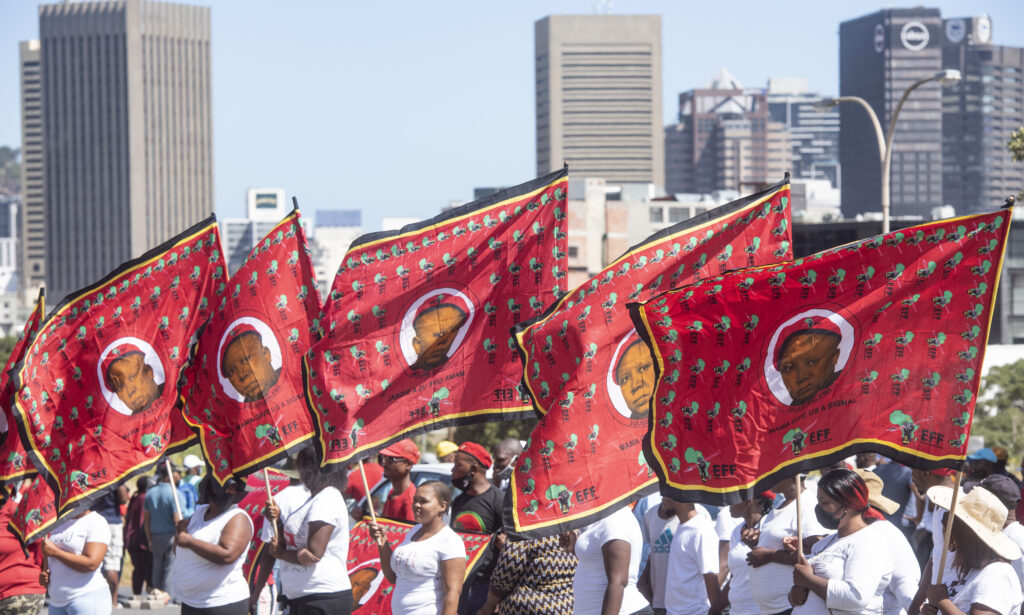
But it doesn’t have to be this way. I recently talked to some of the organisers of the Occupy movement in London, New York, and Chicago – including the wonderful folks at Occupy Philanthropy. I asked them to give me ideas for concrete alternatives that I could pass on to you. Here are some of their thoughts:

First, dispense with the idea that your money belongs to you, recognising that it comes from the commons, the labor of other human beings, taxpayer subsidies, and so on. If your own ingenuity played a role, acknowledge that your mind did not emerge in isolation, but developed in conversation with your parents, your teachers, your friends, and the Internet – the creative commons, or what Hardt and Negri call the Multitude.

Second, move your money. If you have money in accounts with any of the world’s major banks – Citibank, Bank of America, HSBC, RBS, etc. – get it out and move it to credit unions or co-ops, which are democratically run and less likely to invest in predatory companies. Campaigns are already making strong strides toward this goal.

Third, consider where your money is invested. Most foundations aren’t good enough; even if they give away 5% a year, they generally keep the rest invested in companies that exploit workers for high returns. Instead, put your money in community funds that loan cash to local businesses. You can find ideas for this at Capital Institute, which is run by a JP Morgan defector.

Fourth, if you own or manage your own company, make sure that you have a solid triple bottom line. In addition, make sure your workers are paid a full living wage, all the way down to the very bottom of the value chain; this is crucial to the health of the economy, as it stimulates demand and therefore growth. Or, better yet, transform your company into a worker co-op and run it democratically, so that it distributes wealth to the producers of value from the very start. There are lots of innovative examples of this in the UK.

Keep in mind that these measures might mean that your rates of interest and profit go down a bit. But if that’s the price of refusing to participate in violence, then so be it. In any case, how important are profits, really? Not only is it very well documented that more money doesn’t make rich people happier, new studies in behavioral economics show that the pursuit of profit is not actually very good at driving innovation.

Fifth, avoid investing in microcredit. I used to be evangelical about microcredit, but we’re awash now with economic data that shows that microcredit drives the poor into debt peonage, and effectively extracts value from poor communities by tapping into informal economies. New research suggests that the highest-impact way to help the poor is actually – believe it or not – through direct, unconditional cash transfers.

Sixth, use your money to support social movements that actually attack the root causes of the problems at hand. Consider giving to think tanks like the Institute for Policy Studies. Or support the New Economy Network, which is coming up with viable alternatives to our existing system. You could also support peasant movements in the third world, such as the 200 million strong La Via Campesina, which are going up against the IMF, the World Bank, and the WTO. Or consider the alter-globalisation movement, or Occupy Wall Street.

Seventh, do whatever you can to protect the commons from further enclosure – not just the natural resource commons, but also the communication commons, like the Internet, the mobile network, and the broadband spectrum. Put your weight behind open-source and Copy Left.

Finally, consider becoming public critics of your own class. Following the example of Warren Buffet, you could write a collective open letter rejecting the neoliberal system that makes a few people unbelievably rich while immiserating much of humanity.

This is a difficult step to take. To illustrate, consider the South African revolution against apartheid in the 1990s. As you know, the apartheid system was designed to funnel wealth to a small white minority at the expense of the black majority, whose wages were kept artificially low and who were prevented from owning land. While most white people in South Africa supported this system, there were a few white activists who stood bravely at the forefront of the liberation struggle. Why are they important to history? Because they refused to accept the violent contradictions of their existence. They turned against the very system that had handed them their privilege, and they faced ostracism, arrest, and assassination for doing so.

It is incumbent on us to take a similar risk. In the end, the question is not whether we have the ability to change the world, but whether we have the courage.


[1] U.S. Census Bureau, Historical Income Tables: Families.

[2] Executive Excess 2006, the 13th annual CEO compensation survey from the Institute for Policy Studies and United for a Fair Economy.

[3] Chang, Ha-Joon. 2007. Bad Samaritans: The Guilty Secrets of Rich Nations and the Threat to Global Prosperity. London: Random House. Pg. 26.

[4] United National Development Programme. 1999. Human Development Report 1999: Globalization with a Human Face. New York. P. 38.

[5] Chang. 2007. Pg. 28.

[6] World Bank. 2007. World Development Indicators.

[7] Milanovic, Branko. 2002. “True World Income Distribution, 1988 and 1993.” Economic Journal, 112(476).

[8] United Nations University. 2009. 2008 Annual Report.

Tags: , , , ,

  • Africa falling short on millennium goals
  • A vision for an African infrastructure agenda
  • ANC fails the Eastern Cape
  • Economic growth set to reduce poverty in Africa
  • 22 Responses to “Occupy Philanthropy: From charity to change”

    1. Perpetual Emigrant and Immigrant #

      More efficiencies in production by achieving economies of scale do benefit everyone. What you did touch on, that is more the point, is the “locking out” from resource commons (knowledge, resources, licenses) that kills entrepeneurial opportunities. Koos Kombuis makes a good point. What is wrong with trading without a license? Whose license is it anyone ? Some council/state employed bureaucrat who needs the rates from stores to ensure their income? If true pure competition existed, then the rich could be rich with a clear conscience.

      June 26, 2012 at 4:31 pm
    2. manquat #

      As I read this article. The word “Revolution” came into my mind. Occupy Wallstreet and all the occupy movements are basically telling the world that we can’t just think that business is business. The company lives and profit is king. If we fail to have a basic caring attitude towards the people who work for these companies we’ve got a serious problem.

      Hardwork, innovation and brilliance is the way forward to profits, but we should never neglect the fact that the workers in companies are not just resources that need to be exploited so that the company prospers. The person you just decided to layoff has a family to feed. The problem is that it’s a double-edge sword because a rich nation, is a nation where profits are maximised. And these profits are needed in order to invest in social grants and stuff that takes care of the unemployed and marginalised in South Africa.
      So the solution is work hard, do your best, be globally competitive, then use your profits to uplift society.

      June 27, 2012 at 4:13 am
    3. Sterling Ferguson #

      @Jason, a small group of people in the arts and science that made this world a better place to live and should be rewarded for their contributions. It was the people in finance that were willing to take a chance on the new technology to uplift the lives of billion of people. The lay people are not the ones that made this world the way it is today but, they are enjoying the fruit of these people labor. You don’t want to create a world where the blind trying to lead the blind but, a society where there are exception people.

      June 27, 2012 at 7:00 am
    4. Somehow I’m not sure Negri and Hardt would endorse your reformist approach to the economy. In fact I suspect what Negri would say to a group of 100 millionaires would be something along the lines of, ‘jump off a bridge’.

      Sorry for the cynicism, but this doesn’t sound like the ethos of Occupy at all; it sounds more like a TED talk.

      June 27, 2012 at 9:23 am
    5. Aragorn, I’ve just been reading Negri and Hardt, and I don’t think they’d have the guts to confront 100 billionaires, or even one billionaire.

      But I agree that this is a weak article. Rich people did not become rich by being nice (nor, contra Sterling Ferguson, by doing anything of value). They became rich by armed robbery. Don’t expect gangsters to become deeply caring, socially engaged people.

      Those who seem to be, like Buffet and Soros, are almost certainly manipulating people with their money in order to gratify their own overweening self-importance, which is not exactly the royal road to democracy.

      June 27, 2012 at 12:47 pm
    6. Actually human nature does not work that way.

      People pass through the stages of Id, Ego and Super-Ego (above or outside ego)

      In the Id stage people are busy with basic survival stage- food, clothing, shelter.

      In the Ego stage people are building up empires and treading over everyone else to be richer even if it takes corruption to get there.

      There Super-Ego stage is only achieved by a few – the super achievers, who once they have past Ego want more than money and want to improve the human race and leave a legacy that is above money.

      Unfortinately the ANC seems to only have stage 2, and none of stage 3.

      June 27, 2012 at 4:05 pm
    7. @The Creator: “Don’t expect gangsters to become deeply caring, socially engaged people.”

      Exactly! It’s like expecting a sociopath to start looking out for other people, or an abusive spouse to suddenly stop being abusive.

      PS: If you want to learn about guts, you could do worse than read up about Negri’s history. The guy served serious time and was involved in some pretty intense stuff with the autonomist movement back in the ’70s ;-)

      June 27, 2012 at 5:46 pm
    8. Odd how innovative and millionaire frequently go hand in hand. More odd that these one percenters would be at a conference to try and bring about social change. Even more odd that none of them felt the need to correct the problematic mindset that they somehow became millionaires at the expense of the rest.

      The Occupy movement seems much like the same old spin.

      June 27, 2012 at 6:32 pm
    9. Maggie #

      You don’t mention the extreme wealth of our MP’s. Can you explain how so many have become multi millionaires within a few years. Have you found out anything about the riches of a 28yr old who apparently has never held a steady job, owns several farms and properties and is now the deputy minister of education?

      You don’t think that the excessive renumeration (not to even to mention misappropriation of public funds or any attempt for the recovery thereof) of these politicians also contributes to the Gini coefficient in our country? It’s far easier to blame the corporate sector than point fingers at the government.

      The law should be that the lowest paid in any organisation should earn 10% or more of what the highest paid gets. That is the only way that the gap can be closed!!!! Why should that be so problematic?

      June 28, 2012 at 10:17 am
    10. Mandela’s “Ubuntu” is a total myth! If the Xhosa had “Ubuntu” why were they continually at war with the Zulu, and why did they enslave the Fingo and mark them as slaves by cutting off the tip of the finger of their left hand?

      ALL clans/tribes/nations through all of history have seen themselves as the insiders and the neighbour as the outsider.

      To quote the zoologist, Lorenz:

      “”…what Lorenz called ‘the dark side of psuedo-speciation,’ the tendency to consider outsiders irrelevant, uninformed, even subhuman. It is an entirely natural tendency. Indigeneous people do it implicitly, as Lorenz pointed out, when they use their word for ‘man’ or ‘the people’ as the name of their tribe, and for nothing else. ‘From their viewpoint it is not strictly speaking cannibalism if they eat the fallen warriors of an enemy tribe.’ ”

      ( “The Natural History of the Rich” by Richard Conniff, page 36 )

      June 28, 2012 at 12:39 pm
    11. Sterling Ferguson #

      @Creator, one can have the best idea in the world and if one doesn’t get people to invest in this idea, this idea will die by the way side. A good example of what I am talking about is the Joule car in SA, the production stop because nobody would invest in this car. If SA had people willing to gamble that this car was profitable, it would become a reality. One can write a movie script and nobody will invest in this script this movie will be hard to make. Look at Lucas, nobody would invest in Star War and he got actress and actor to work for a percentage of the movie so, you know the rest of the story. Paul Allen and Bill Gates were able to gamble that Windows would be the thing and got people to invest in this idea and you know the rest of the story. The BMW was a big gamble by the Germans and look how many Africans are claiming they can’t live without one . The problem with SA is this country needs their version of Goldman and Sachs to invest in ideas in SA and Africa. Therefore, Soro and Buffet are not gangsters but, playing an important role in the US finance.

      June 28, 2012 at 2:51 pm
    12. Soros, Buffet and Gates have done their best to help both Zimbabwe and SA as well – but Africa bites the hand that feeds it!

      June 28, 2012 at 4:24 pm
    13. Sterling Ferguson #

      @Beddy, the point the Creator missed, the Africans will steal money from the government and put the money overseas in the same banks that they are always bashing, but never invest their money in Africa. This country needs risk takers that are willing to invest in budding businesses to make money. The ANC policy is for others to take the risk and give their members shares in the business through BEE deals. SA needs their version of Goldman and Sachs to invest in people ideas in SA and Africa. Since 1994 the blacks in SA haven’t open one investment bank in SA to invest in their ideas.

      June 29, 2012 at 3:38 pm
    14. I think the author deserves more credit for this article and the sound research that went into it. I’ve recently started a search engine and pay-per-click ad network based on some of the principles of environmental responsibility, job creation and the provisioning of some choice in an utterly monopolised sector. If you care and would like to show your support, please head over to http://www.greensrch.com and http://www.ads4trees.com – Thanks!

      June 29, 2012 at 7:29 pm
    15. I’m amazed at the number of cynics on Thought Leader who proffer no alternative, just caustic, repetitive, tiresome cynicism…

      To the author…hats off! The world needs more people like you to tell it like it is.

      June 29, 2012 at 7:31 pm
    16. Cora Dolph #

      Just makes me mad. They hate street racing but where else can you race. I’m teaching my kids the right wayti the piont i was getting parts to build a bolandero for my daughter to race at irwindale. I have been at everyracetrack that has now closed in the la area from my local backdoor track San Fernando as a kid. Sad turning to mad.

      June 30, 2012 at 7:26 pm
    17. Sterling Ferguson #

      @Charles,there is no better system that replaces doing thing for profit. The big wheels in the ANC all have made the membership in this organization a very profitable business. The only alternative is for the masses to go and start their own businesses to make profit for themselves.

      June 30, 2012 at 7:56 pm
    18. Sterling

      When the Afrikaner took over from the English is 1948 they did not cut themselves a share of English business, but started NEW Afrikaner businesses.

      And the Afrikaner was only in power for 40 years. The ANC has been in power for half that time and has established NO NEW BUSINESSES! So NO NEW JOBS!

      July 1, 2012 at 9:19 am
    19. Brent #

      Jason, your 5th point could you give the research and details of your view, besides one book. Why is giving unconditional cash transfers better than giving direct micro loans, surely the poor will use both sources of money with wisdom.

      In all your ditribe you leave out the politicians (Western) that are key to causing the economic mess and are mostly squarly part of the 1%. Giving these people more power/taxes is only rewarding those who are the main cause of the world’s economic imbalance.

      Brent

      July 2, 2012 at 9:56 am
    20. Sterling Ferguson #

      @Beddy,Moeletsi Mbeki talked about this in his book “Architects of poverty” in this book he talks about how the African leaders have taken their resources out of Africa and didn’t try to build industries around them. Take the case of Nigeria and Angola, these two countries are the leaders in oil production Africa but, none of these countries have built a chemical industry around their oil. In the case of Nigeria, this country has been sending all of her oil overseas to be refined into gas because two of her four oil refineries don’t work. In the case of Angola, the Santo’s family have taken everything and put all of money overseas. In the case of SA after 1994, the ANC decided to export all of their natural resources to China and buy finish products from China. The ANC was able to do this with the blessing of COSATU and million of jobs were exported out of SA. Some of the best cotton in the world is grown in Africa but, where are the textile mills? The best coffee in the world is grown in east Africa but, how come these countries aren’t roasting and marketing their coffee? This was never brought up at the meeting held last week by the ANC because this was too progressive for them.

      July 3, 2012 at 1:09 am
    21. Sterling

      All the post Liberation African States landed up in the same post Cold War toxic mix that South Africa now has

      July 3, 2012 at 7:40 pm
    22. Amr Ahmed #

      it is a nice article but lacks solid knowledge of Corporate Social Responsibility as a solution to most if not all the problems mentioned, they key success factor is to integrate a CSR strategy into your day to day operations, you do that slowly so it does not become a burden on the business. You don’t really need to do dramatic changes like turning your company into a coop actually staying on top of your company will make the change easier, logical and profitable. Many executives see CSR as a nice thing to do although it is the right thing to do.

      July 4, 2012 at 5:07 pm

    Leave a Reply

     characters available