Torture, it’s cowardly and cruel

The death of Black Consciousness leader Steve Biko this month 35 years ago shocked the world. It was the cruel manner in which he died that highlighted the undesirable effects of torture by law enforcers. Biko was tortured to death while held at Pretoria Central Prison in 1977. Apartheid security policy allegedly tried to get a confession out of him.

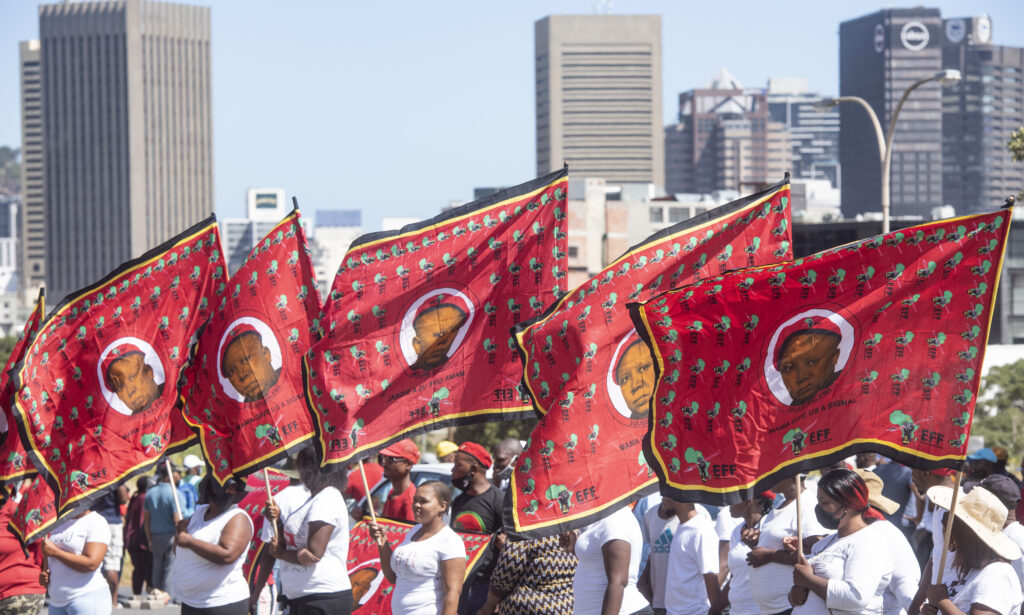
Recently we saw how miners died at the hands of those meant to protect them in Marikana. This episode reminded us of our painful past – in the way it was conducted and the subsequent reaction by the justice system. The miners were charged for the death of their fellow workers in what we now know as the “common purpose doctrine”. But I’m not here to talk about this legal doctrine, it’s been debated many times in recent days.

I’m more interested in the torture that allegedly took place during and after the riots, mostly in police custody. In recent days we have seen torture meted out mercilessly on protesters during service-delivery protests. I cannot talk about whether it did indeed happen in Marikana because I wasn’t there. A commission has been put together by the president that will tell us that.

There’s also Independent Police Investigative Directorate investigations. The South African Human Rights Commission is also investigating a complaint by a Cape Town-based NGO on the conduct of the police. We are all waiting with baited breath on what all of these investigations will reveal.

The issue of torture came under the spotlight again this past week. The Prevention and Combating of Torture Bill, approved by Cabinet a few months ago, was opened for public submissions. The Bill is looking at criminalising torture as it is treated as mere assault. By definition, torture is the physical and mental pain intentionally inflicted to obtain information or a confession, punishing a person for a crime they are suspected of having committed. Assault? I have my doubts.

The UN classifies the most common forms of physical and psychological torture as beating, electric shocks, stretching, submersion, water boarding, suffocation, burns, rape, isolation, humiliation, mock executions etc. All of these sound too familiar, whether in SA, Africa or elsewhere. Apart from the allegations made in Marikana, we saw on 3rd Degree recently how the amaberete cops (tactical response team) went around kicking and beating taverners in the townships. And they’re allowed to get away because the law protects them from prosecution.

The Sunday Times recently reported on “predator” police officers in Cato Manor who push “the boundaries leaving hordes of physically and mentally tortured victims in their wake”. Most, if not all, were arrested and the Cato Manor “hit squad” disbanded. What we saw there was the tip of what has become endemic in the police service.

The Independent Police Investigative Directorate stated recently that more allegations of torture are being reported against the police and the Hawks. Human-rights organisations that made submissions in parliament recently called for the speedy finalisation of proper legislation in the wake of the Marikana massacre. It’s sad that 35 years after Biko’s death and 18 years after new dispensation, torture is still taken lightly by the ruling authorities.

SA has no law aimed specifically at combating torture even though the country is a signatory to the UN Convention against Torture. Article 4 of the convention states that “each state party shall ensure that all acts of torture are offences under its criminal law”. Many regional countries look up to SA and if we don’t take the lead we can forget our neighbours up north from moving on this anytime soon.

It’s not enough that the country has created a number of oversight mechanisms to combat torture such as the Independent Police Investigative Directorate, the Judicial Inspectorate of Prisons and the human rights commission. More needs to be done.

Political leaders need to speak against this and ensure the bill is finalised. If the bill goes through the penalty provided is imprisonment only, with no option of a fine. Our government makes promises, in the form of these laws, but develops no implementation mechanisms.

“Legislation is only as effective as the ability to implement it.” The Democratic Alliance cautioned against celebrating early victories a few months ago. Perhaps our leaders should have listened to the chairperson of the African Commission on Human and People’s Rights, Dupe Atoki, last month during the 10th anniversary of the Robben Island Guidelines in Johannesburg. She said: “Torture is inherently evil, morally outrageous and legally impermissible under international law. It’s the assertion that others are less than human and are simply things to be manipulated without regard to any sense of morality. And because it’s cowardly and cruel, torture degrades those who do it as well as those on whom it’s perpetuated. Torture remains a grotesque evil and a crime and it is precisely for this reason that the ban against the practice remains unconditional.”

There’s hope. Let’s see.

Tags: ,

  • It is all The Media’s fault
  • Behind the shock and awe, the violence is ‘normal’
  • Lynching black men
  • South Africa and that Time cover
  • 12 Responses to “Torture, it’s cowardly and cruel”

    1. southcross #

      The real incitement towards violence is the one Lonmin did by paying so low salaries and keeping infrahuman living conditions for workers. The torture reports are always a boomerang. It will come out as a headacke for the cop. I have never agreed with the way South Africa came out of the reconciliation process. Aparthaid is still a problem (Marikana is also a social result of mistreating blacks). The Truth and Reconciliation shall be reviewed. Too easy for cops if they are always forgiven.

      In Argentina the Militars who tortured people and throw thousands in the River by the city of Buenos Aires are in jail, not matter how old they are, they are in cells and the jail related human rights is still opened. This process is continuing every single day. If you stop it, new cops will feel that apartheid or fascist regimes can start again. Remember the Marikana film in TV showing white cops with their fist closed and arms up us a signal of victory? So…be carefull!! HISTORY REVIEW IS A CONSTANT ACTION. Remember Gramsci.

      Steve Biko will never be forgotten!! He or somebody like him should start writing again and again. His legacy needs to be in everyday consciousness as one who is alive and fighting for us.

      September 10, 2012 at 2:24 pm
    2. Stephen Browne #

      @southcross: Hate to spoil this for you. but a single raised hand with clenched fist has two (possibly more) interpretations. One is a sort of wannabe-facist thing. The other is ‘ceasefire,’ as in ‘shit, shit, shit stop shooting this is NOT going to look good on the news.’

      September 10, 2012 at 6:30 pm
    3. Lennon #

      The lesson of Marikana is that no matter who is in charge, those at the bottom will still be screwed over. If anyone wishes to dispute this then ask yourself this: How the f*** could this be allowed to happen by the very political party which, during the 100th year of its existence (as we are constantly reminded), supposedly liberated South Africa?

      FYI: One of the heavyweights within this great liberation movement is also a director at Lonmin: https://www.lonmin.com/about_us/Management_Profile.aspx#ed

      Can anyone guess who it is?

      September 10, 2012 at 8:26 pm
    4. Indeed you are right. But the torture which seems to be happening at the moment seems very different from the state-sanctioned torture under apartheid, which was largely aimed at the specific goal of extracting information. Today, the police don’t seem to torture people to get information, or even to frighten people, so much as that they do it because they think they can get away with it and because they enjoy doing it.

      Laws are not going to prevent that; the solution is to ensure that the police must obey the law of the land, and that sadists and thugs do not gain control of the force.

      September 11, 2012 at 9:30 am
    5. Touchy subject. While you are at it, do blame the National Prosecuting Authority for relying largely on confession statements obtained through torture to get convictions. You get court cases where there is not a single piece of forensic evidence. Judges are also equally guilty.

      September 11, 2012 at 1:15 pm
    6. MLH #

      Andries Tatane’s death should have been all the wake-up call we needed; it clearly wasn’t, as far as needless killing and torture are concerned. So much in this country is now ‘out of hand’, it’s going to take miracles to reverse the situation.

      September 11, 2012 at 4:12 pm
    7. BKC #

      Toture in all its’ forms is inhuman and degrading!

      It is this element that makes the less skilled, less equiped and psychologically twisted force to rely on it to induce compliance. Because they lack the intellect to convince others to agree with their point of view. Because they are intolerant of differing opion.

      It is the tool that was used by the emasculated apartheid regime to try and repress the masses that were alleging the inhumanity of the then political system.

      But its’ re-emergence in the days of ANC government and leadership is shocking-these are the very People that stood in public platforms to speak against toture, saying how evil it was.

      When today they have become the perpetrators of toture it is bound to raise many questions-is it because they want to terrorise the People from questioning how they have suddenly amassed huge amounts of wealth while the majority of the People remain to live in squalor and porverty?

      One thing is apparent though, they have wronged the People and mean to terrorise then into silence through the use of the barbaric means of toture!

      September 11, 2012 at 4:57 pm
    8. Jack Sparrow #

      @The Creator, I fear you are right and there does not appear to be any sign that this behaviour is being sanctioned. We seem to have got the worst of the apartheid regime SAP and the Quattro campers in the SAPS.

      September 12, 2012 at 11:56 am
    9. Yaj #

      Excellent article. It is sad and appalling that this continues to happen in a so-called “liberated SA”. SAPS and ANC political masters have betrayed the people and together with the corporates and private banks are the new oppressors.

      September 12, 2012 at 12:24 pm
    10. Enough Said #

      Support Yaj comment on this article.

      September 12, 2012 at 9:51 pm
    11. janniejammergat #

      How does it come about, this politically correct language of calling “evil, good” and “good, evil”? Shame on the commentators here!
      The police have every right to protect themselves and based on the number of people these miners had already killed I have no sympathy with them. They took muti and had a sangoma cast a spell over them, that they would be invisble to the police and that the police bullets would bounce off of them, therefore they intended to attack the police and got what they had c0oming to them. South Africa can no longer continue to allow these groups of strikers/protesters to hold the whole country to ransom, whereby foreign investment and therefore jobs are lost to the rest of the SA population. Every act of violence should be met with violence and I`m happy to have the police protect themselves and the citizens of this country. Another thing, why did these miners accept the jobs they are doing, if they are unhappy with the salary? They should have declined the job offer and moved on, there are millions who would be too happy to take their place? Yes, they have a right to strike, but when their rights start infringing on my rights and the rights of others, the line should be drawn, step over it and a bullet to the brain is legal and justified!

      September 13, 2012 at 1:48 pm
    12. jandr0 #

      I’m with Isaac, Yaj, and other on this. My concern is that a law, however good the intent, is only worth the paper it is written on, unless it is enforced.

      One of my previous employees was apprehended and interrogated by police for hours on the flimsy basis that he stole his company laptop which he was carrying with him between office and home. No rights were read, no officer’s names were provided to him, when I was finally contacted I made it to the police station but was completely stone-walled in the charge office, I got no joy out of the ICD, and so on… when he was finally released (as completely innocent) his mom and dad prevailed on me to rather not take the matter further.

      Do I trust our police? Sadly, my personal experience says that – although there are clearly some good police officers – I cannot say I trust the police completely.

      @janniejammergat: The key point is NOT about Marikana. Please read the excellent thought piece again.

      @southcross: You say: “The real incitement towards violence is the one Lonmin did by paying so low salaries and keeping infrahuman living conditions for workers.”

      Please go and get some reality. Compare wages across countries, industries, and in economic context. Then think about it, carefully. If you still come to that stupid absolutist conclusion, go take a course in logic.

      September 13, 2012 at 8:21 pm

    Leave a Reply

     characters available