
Marikana is a name like Soweto, June 16. Like Sharpeville. It is a turning point. History will record it. Future generations will shudder.
There are few South Africans whose hearts are not broken by those eight letters.
Here where I live in the United States, Americans have bought into the South African Dream, the Rainbow Nation, Mandela’s land, a special place, a nation that rose above pettiness, pain, and barbarism to set an example for the world, a peaceful negotiated settlement to five decades of growing conflict.
Marikana has woken them up to reality.
After apartheid, many South Africans, lawyers mostly, got rich on traveling the world and advising Israel, Palestine, Northern Ireland, and East Timor on how to broker peace. Those who returned from Israel were always shaken, “both sides hate each other so much, there never will be peace”. We gloated in our specialness.
Marikana.
We are not different. We are not special. Our egos became inflated, our arrogance exceptional, our change was as lasting as the highlights I have every six weeks at the hairdresser — cosmetic, an attempt to hide decay, to renew by superficial and unsustainable means.
We lie about our history; Makana was a false prophet who has been made into a mythical Africanist hero by those who haven’t bothered to do the archival research. Mandela was a real hero, he walked from prison and opened the door to our national and personal liberation, come in he said, all of this can be yours, but first you need to forgive, to humble yourselves, to pay attention to others especially the most vulnerable.
We ignored his words and his example, we rode on his coat tails to glory, we acted as if it was each one of us who had received his Nobel Peace Prize. We forgot the man standing next to him, Frederick Willem de Klerk, a real hero too; a man who betrayed his ancestors, and the path mapped for him, to take a risk, to bring justice to his people, his nation. We ignore him now, FW de Klerk when we should be begging him, father, teach us, show us how to be humble, to put aside our egos, tell us how to take risks, educate us in putting our nation above our petty interests. Teach us to extend a hand to the other, to ask our enemy to be our friend. We’ve ignored the lessons of Mandela and De Klerk, and look at us now.
I was 16 when as the youngest crime reporter ever in South Africa, and the first woman in that post; I covered the June 16, 1976 uprising. It transformed my life. South Africa would never be the same for me ever again; I was as horrified then by the injustice, as I was yesterday when viewing the Reuters footage of the Marikana massacre. In three decades of covering violence in southern Africa and beyond, I have never yet seen anything as brutal, as deliberately murder as what I saw at Marikana. Never. And I have seen an awful lot of death, more killing than any person should ever see in a single lifetime.
But what June 16 did to me then was create a passion for my country, a desire to see it heal. The two great loves of my life are my children and my country; no other loves come even close.
So why do I now live thousands of miles away? Because I can’t bear what we are becoming: a nation of people who scream at each other (a sure sign of fear), a nation who blame each other (a sure sign of personal reluctance to accept responsibility), and a nation which turns its face away from the dreadful suffering of the poor while we dine at sidewalk cafes, luxuriate next to our swimming pools, vie for the most expensive handbag, the biggest house.
How petty South Africans have become. How shameful.
Democracy has been betrayed.
Some asked why I never left after I was raped, I’ve never understood that question. A man harmed me, his race was never relevant, he was a criminal, he was an individual, and he was not my country. My country was so much greater; so much better, my country filled me with desire and passion, and belief, and such deep love. I love my people. How I love my people, this argumentative, rowdy bunch. These sweet mamas and jovial car guards. The bolshy self-opinionated young. The leftists who still speak in old-fashioned terms about neocons and whose views are better served to the Cold War era than one wracked by the greed of banks, and a paucity of global leadership.
South Africans, I now believe, are better at slogans than governance. More adept at blaming, than reforming. Quicker to criticise (myself included), than to look for a strategic solution that embraces and benefits all.
I left after a friend and neighbour two houses away was murdered, another neighbour, a politically connected lawyer, and I investigated. We were consistently ahead of the cops, we fed them phone records, car-tracking info, we had better access than they did. We gave them a computer because although each had an average of 200 murder dockets, they had no computers. They were kicked out of their office for the 2010 World Cup and would come and work at my dining room table. In the end we knew who the killers were, Nigerian mafia, the cops were too afraid to make an arrest.
Still that was not enough for me to give up. But the public sector strike of August 2010 was. I volunteered to work in hospitals, I never thought I would be a scab, but if children were being abandoned, the elderly, sick, and the vulnerable? I’ll be a scab every time. Babies died, hospitals began running out of food, I coerced my friends who donated food in abundance. I drove with carloads of food into the basement of Raheema Moosa. I scrubbed industrial ovens, swept floors, and folded surgical blankets so frayed and flimsy I wondered why we even bothered.
I began feeling rage. Is this what liberation was? I’d look at friends who had been comrades in the 1980s, we’d all been so passionate, risked so much, but now they drove in big cars, had huge houses, and wives that endlessly shopped. Was this what it was all about? Were we all thinking of the same thing when we said, “each one teach one”? When we said, “an injury to one was an injury to all?” I believed that, all of it.
I’d rather live humbly and feel there was justice and opportunity for all, but instead I was prospering, I’d counsel endless rape survivors and those with HIV. I’d help with my part-time gardener’s endless struggle in shackland. Take the security guard to get a hearing aid. Help Zimbabwean refugees.
But I gave up. The rape reforms I pushed for were rolled back by Mbeki, women pliantly accepted faux commemorations instead — Women’s Day, the Sixteen Days of Activism. How easy it is to buy us off. Zuma, who I thought would care for the poor given his own background, cares only about his libido.
At Marikana we saw the product of a fat and lazy cabinet. At Marikana: in those policemen we saw the result of two corrupt commissioners of police — one of whom was recently released early from jail. Our police are poorly trained, badly equipped, and scared. We saw in Lonmin the sort of uncaring corporate bullying that we see with the banks. And among the miners we saw the desperation the poor experience, we saw in their violence the futile rage that unless South Africans wake up and start pushing for social justice — that rage will sweep across the nation.
Today you’re safe, but only just. You can’t afford to be an observer. And for those of us who live outside? It is not enough for us to write blogs like this, to criticise or pontificate, we have to find ways of doing more to encourage the change our birthplace, our motherland, deserves.
Author
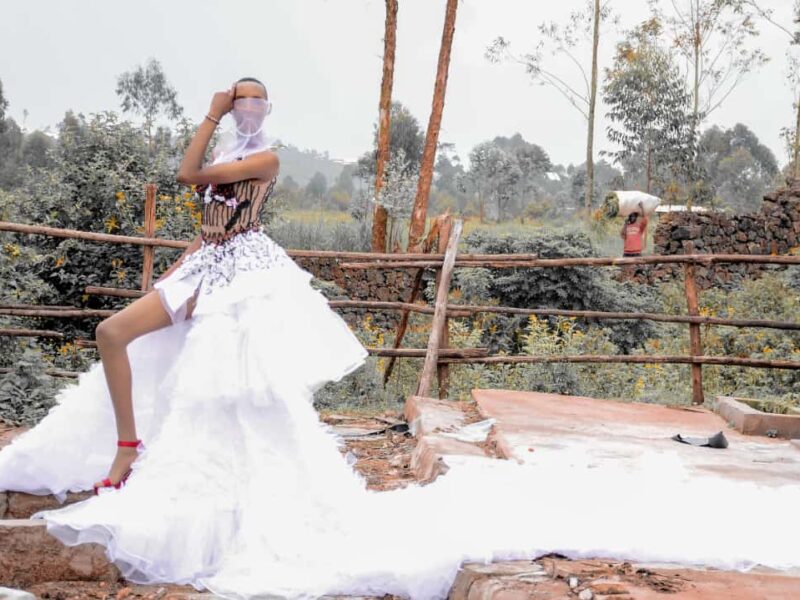
A prince with dignity and determination
Prince Ngarambe’s goals are to become Rwanda’s first transgender model and to uplift the country’s youth

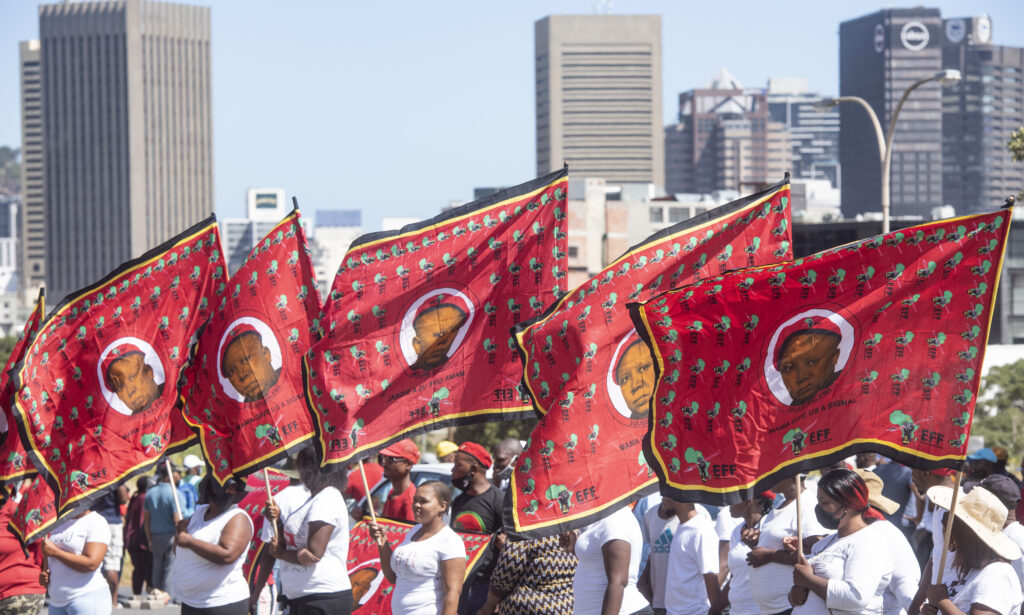
The EFF’s principles are unshakeable
Unlike the ANC, the core values of the freedom fighters do not change with each leader it elects