The above title is one that’s often seen in sensationalist news reports these days. But is it true? Is China really taking over Africa? And what does “taking over Africa” really mean?
“China has supported development in Africa since independence,” said Sanusha Naidu from the social networks movement Fahamu. She was speaking last week at the colloquium on China-Africa Economic Relations hosted by the Confucius Institute at Rhodes University. “So what makes it different now? This old ally of Africa is not just continuing their historical efforts but also sourcing and extracting energy and natural resources.”
The Chinese economy continues to grow and reports show that within months it will overtake Japan and become the world’s second-biggest economy. While at least half of the world’s major economies hold current account deficits and need more foreign currency than they hold, China has one of the largest current account surpluses and holds the world’s largest holding of US dollars.
China, which is essentially the planet’s factory for cheap goods, has a growing consumer base that is also demanding goods. For all of this China needs energy, raw materials and oil. But a country that has about 22% the world’s population and only 7% of the world’s arable land needs to find alternative sources. China has found that the African continent is the answer to their problems. In order to access Africa’s plentiful natural resources, the Chinese are forced to introduce the necessary infrastructure. “China now has over $4 billion of direct investment in Africa, up from just over $50 million about 20 years ago,” said Professor Tang Yuhua from Jinan University in China, speaking at the Rhodes colloquium. “It is also the largest consumer of oil after the US and imports a fifth of its oil from Africa.”
But the building of major transport networks and infrastructure is not enough to solve Africa’s problems. “While Beijing sees itself as partners in African development, unless Africa picks itself up, this won’t do no good,” said Professor Ron Sandrey of Stellenbosch University. “Africa is underperforming and lacks the policies and leadership required to turn things around on the continent.” He argued that Africa is in a terrible economic situation and though interactions with the Chinese may bring some improvements, “Africa has missed the bus and China’s growth is making it very difficult for Africa and South Africa to get back onto the bus”.
Most speakers at the colloquium criticised the claims “that China is taking over Africa and colonising it”. The relationship between Chinese enterprises and African companies and governments varies and though most deals and experiences are good for the continent, those that are not need to be exposed and changed. It was suggested that perhaps the “West is disturbed by the fact that Africa only recently gained independence after centuries of exploitative colonialism and now China seems to have replaced them at a time when these Western countries are in a shaky economic state”.
Yuhua was challenged when he spoke about “China’s non-interventionist policy” because this has dangerous implications, especially for African countries that are run by ruthless dictators. But others questioned whether encouraging Beijing to adopt interventionist policies will be much better. “Does Africa, or the world, need another global superpower that feels it can decide what is best for citizens of other countries?” questioned one delegate, without needing to mention the US and the Bush administration. Naidu cited examples of how China is becoming increasingly concerned about negative publicity and is making active efforts to address its global image.
“China is doing business in socially and politically less stable countries because Western countries have already scooped up all the other markets,” claimed economist Hannah Edinger of Stellenbosch University. She admitted that though bad examples do exist such as the arms shipment to Zimbabwe that was turned away at South African ports, the Chinese have actually rejected many more deals with Zimbabwe than have been accepted. But this does nothing to alleviate concerns and a vigilant eye needs to be kept on Chinese-African relations.
The Chinese presence in Africa seems to be bitter sweet. “China is inhibiting the African manufacturing base and is also squeezing Africa’s international growth,” said Sandrey. Africa needs visionary and dedicated leaders more than foreign investment and infrastructure development. Africa needs to get its house in order before the benefits of Chinese involvement mean anything. “Where is all the oil and mineral wealth gone? In the past 3 years alone, millions of dollars have poured into the African continent and most African people haven’t benefited.”
Though one may be naïve to believe that China’s interest in Africa is one of philanthropy, Naidu argues that Chinese development aid to Africa is important. “While there is confusion around what actually constitutes aid from China, they have promised to double aid to continent by 2009,” she added. What this means is still unclear but what is clear is that the relationship between China and Africa is a complex one.
South Africa has a bigger responsibility to the African continent and is best suited to positively influence the Chinese-African relationship. China recently overtook the US as South Africa’s biggest export destination.
What implications does this have for Africa’s biggest economy?
Author

A prince with dignity and determination
Prince Ngarambe’s goals are to become Rwanda’s first transgender model and to uplift the country’s youth

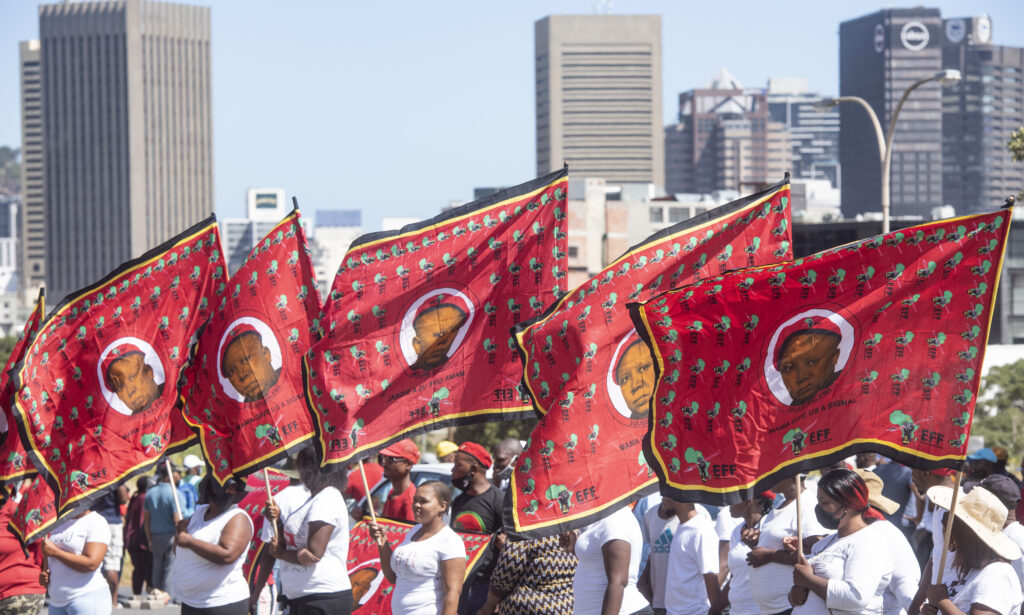
The EFF’s principles are unshakeable
Unlike the ANC, the core values of the freedom fighters do not change with each leader it elects