In my previous post, I wrote about the rather paradoxical nature of autonomy — that “complete” autonomy is impossible, given everything around one that one unavoidably depends on, or has to take as a basis for exercising one’s “autonomy” — language, for example, as well as other conventions so that, in the end, the best one can do, is attain “relative” autonomy.
I also pointed out that this is not at all easy to do in the face of all the dominant discourses that shape one’s subjectivity and fashionable behaviours that constantly direct their appeal to you in a society that does not really tolerate autonomous behaviour of the kind I am promoting. All in all, to be autonomous takes a great deal of strength, inventiveness and persistence on the part of anyone who wishes to break free of the hold that the hegemonic informational practices of today have on most people.
“Autonomy” can therefore be understood as being, in Deleuze and Guattari’s idiom (in What is Philosophy?), an “incoherent concept”. And indeed on closer inspection one discovers that many, if not most, of the concepts (such as justice and democracy, for example) one tends to use as if they are unproblematic, are, indeed “incoherent” — but (and this is important, as I tried to show regarding “autonomy”) not for this reason to be discarded. They are all the more important given their “incoherence” because “incoherence” is here an index of their axiological (value-related) significance.
Another such “incoherent” concept — and one that is easily bandied about as if it is totally unambiguous and self-explanatory is “diversity”. It is no exaggeration to say that in the (oh, so popular, if not mandatory) mission statements of many institutions, “diversity” features as one of the so-called “core values”. But what does it mean?
Ostensibly “diversity” denotes first and foremost in post-apartheid South Africa diverse races or perhaps more accurately, diversity of people in terms of race and we should add — because these cannot be separated — culture. And to respect such diversity or differences is surely a good thing. But should we respect diversity for its own sake or is there something tacit, unspoken, behind the exhortation to respect diversity or differences in this context? Surely apart from the wonderful richness imparted to experience by racial, cultural (and natural) diversity, the tacit implication is that there is something more fundamental that makes diversity something valuable, not merely from a cultural perspective but also from a moral one.
And how far should we go in our respect for diversity? ONLY as far as racial and cultural differences? Most people would probably say no to this question because one cannot forget gender differences or disability as a mark of diversity, especially when it comes to different needs. But once gender differences and disabilities have been included, is that how far our consideration of diversity should go? Anyone who answers affirmatively here is on thin ice.
What I am working towards is what should be clear by now to anyone reading this. Firstly, to value diversity for its own sake does make sense at a kind of aesthetic level — that of the “rainbow nation” — because it would be a drab, boring world if everyone were the same. Think of diversity in nature and in different cultures — would travelling to distant shores be as interesting as it is if all natural landscapes, cultures and societies were completely “standardised”? To be sure, as several social scientists have remarked, globalisation does pose a threat, it seems, to diversity through the “McDonaldisation” of global society and some have even spoken of a frighteningly homogeneous “McWorld” emerging in this era. Hence, diversity, one can safely affirm is aesthetically and culturally valuable insofar as it endows the world with richness and colour.
But here one faces a dilemma. Are all differences comprising the diversity of the social world equally valuable? One often gets this impression when we see “new age”-type of posters at clinics and in waiting rooms asserting that one should “embrace one’s difference, one’s uniqueness because that is what makes one valuable” (in the eyes of God, supposedly), and so on. How far should we take this valorisation of difference for its own sake? If you take it all the way it means that, in terms of individual diversity, Ted Bundy or Boetie Boer (both serial killers) are/were as valuable as Mohandas Gandhi or Nelson Mandela as individuals or as valuable to society as nurses who care diligently for patients in a hospital or refuse removers who, equally diligently, remove trash from suburbs every day. Again we are confronted by the implication, that, at least at a moral level, there is something more fundamental than mere diversity that demands our respect, and that diversity, or individual as well as cultural differences themselves, should be judged in terms of this “something”.
In other words, one should pursue the questions opened up by the implicit moral imperative (referred to earlier) that we should value diversity a bit further. As indicated above, categories such as race, culture, gender and (dis)ability are broad, descriptive categories under which innumerably many individual differences are subsumed. It is so easy — too easy — to stop thinking at that point where diversity of race, culture, gender and “able-bodied-ness” has been invoked for political correctness’ sake. In a sense, that was the mistake (a huge mistake) made by the architects of apartheid. I recall debates where, against my claim that it is wrong to discriminate (with detrimental consequences that is) on the basis of race, defenders of apartheid claimed that they were not “discriminating” but simply showing a respect for racial differences (that is, diversity). Hence the policy of “separate development”. They were merely (they claimed) creating the political circumstances where racial and cultural differences could flourish.
Needless to emphasise, such racially charged rhetoric hides a more fundamental “racism”. This is demonstrated clearly in Jacques Derrida’s wonderful, deconstructive essay on Mandela, “The laws of reflection”, where he argues that what Mandela showed in court in his defence address, during his (and others’) treason trial, years ago, was precisely the LIMITS of recognising diversity of races (which the Nationalists claimed they were doing with apartheid). Here we encounter one of the most important considerations in the pursuit of (the valorisation of) diversity. What the apartheid authorities had not done, according to Mandela, was to recognise the common humanity that black people share with whites, DESPITE their racial (and cultural) differences or diversity.
In other words, today, too, one should be very careful in promoting the notion of diversity. Not to do it to the point where the shared humanity of all people, regardless of cultural and racial differences, is simply ignored. It is so easy to classify someone as NOT belonging to one of the categories of people who should be privileged and prioritised in certain ways in the current political dispensation (justifiable as such privileging may be to a certain degree, in view of past disadvantages) and then to discard such a person as not being worthy of the epithet “human”. Given the individual differences among people, the talents and abilities of such individuals are often much needed for making extant society a “better” one.
One sometimes encounters a view such as the one referred to above among those people who, given the past wrongs committed in the name of patriarchy, believe that men — particularly white men — should be sorry and apologetic about the fact that they are men. By implication men do not really make the grade as “humans”. Such a prejudice overlooks the fact that the only way to improve society is to work towards a non-patriarchal society — something that cannot be done without men, that is, without changing men’s attitudes. But this means that they ought to be given a chance to do so. “Men” are unavoidably part of a diverse society. The same could be argued about any other group of individuals with a distinct “group-identity”, whether it is a race, cultural or religious group — all of these diverse groups should be recognised as adding to the diversity of society. Tolerance of any such group’s activities is therefore also required of everyone else, although it is important to acknowledge that the limits of tolerance lie in the ability of others to tolerate or be sensitive to one’s own unique difference (which Bundy, for example, did not respect). In brief: intolerance should not be tolerated.
But let us carry our deconstruction of diversity — because that is what this is — even further. Once one has reached the point of admitting that there are important individual differences within races, cultural groups and individuals belonging to the same gender, what are the practical consequences of respecting diversity at all these levels? In a nutshell: is anyone able to acknowledge and respect differences that are completely and utterly individual? Nietzsche once remarked that every leaf in a tree is different from every other one, if one looked at all the detail comprising it, and that as such, we cannot grasp its utter singularity. That is why, Nietzsche argued, we need concepts — while they falsify the individual leaves regarding their singularity, we would be caught in a mute world without “understanding” unless we used concepts pragmatically, like a kind of scaffolding, to negotiate this world of ungraspable differences.
This is the dilemma as far as individual differences among people are concerned: if we push the recognition of diversity to its limits, we reach a point where we cannot grasp what is truly “diverse” or different about anyone. We need “concepts”, which by their very nature tend to universalise or generalise, to come to terms with people in their difference. And one of the most important concepts here is “humanity” — the same concept that Mandela appealed to in his charge, that the policy of separate development (apartheid) was ultimately irreconcilable with the very democratic tradition of the West, which the apartheid state was SUPPOSEDLY heir to but ignored by treating racial differences as sufficient reason to exclude some races from the family of humans. We should not make a similar mistake again: the recognition and promotion of diversity and difference should not blind us to what we have in common.
Author
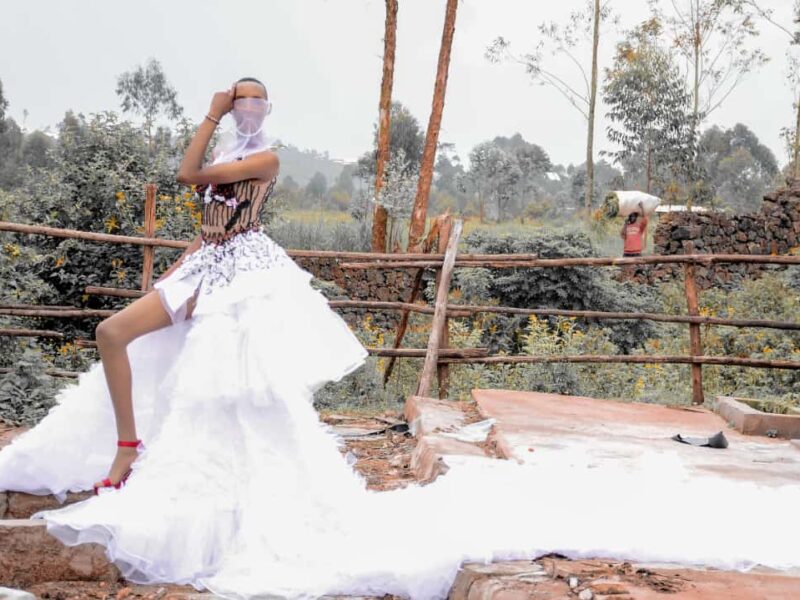
A prince with dignity and determination
Prince Ngarambe’s goals are to become Rwanda’s first transgender model and to uplift the country’s youth

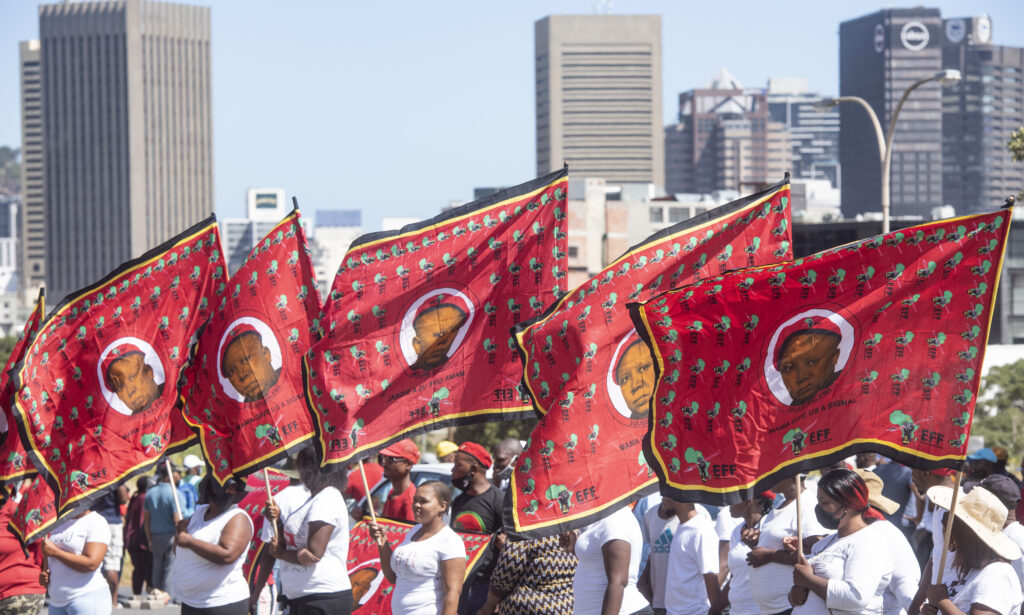
The EFF’s principles are unshakeable
Unlike the ANC, the core values of the freedom fighters do not change with each leader it elects